Editor’s note: We previously reported on the Legionnaires outbreak in a building with a water cooling tower in Harlem, where multiple residents became ill and several died. Unlike other respiratory viruses, such as Covid-19, there is no vaccine available for the virus acquired on the cruise ship, which isn’t a respiratory virus. The vacation became a 42 plus day removal from life due to this outbreak on board the ship, with multiple people having died on board the ship. According to reporting on MSNBC, the hantavirus may be more easily transmitted than public health officials are presently revealing. According to a Harvard professor, which is backed up by a case study from Argentina, there were ten people who got infected by being at a funeral with a carrier, and there was another group of people infected from a single person passing nearby them at a party where they said little more than ‘hello.’ In general, though, these types of virus strains are only transmitted by contact with rodents such as rats or mice, in particular their droppings. While infestations of rodents are supposedly rare on cruise ships, this may prove to be the case as the investigation continues. Otherwise, this is a strain that can apparently being passed person to person in a somewhat unique manner. This may be related to the strain from Argentina related above.
STATEMENT FROM NYC HEALTH COMMISSIONER DR. ALISTER MARTIN ON NEW YORK RESIDENTS RETURNING FROM THE MV HONDIUS CRUISE SHIP
NEW YORK, NY – The New York City Health Department issued the following statement on behalf of New York City Health Commissioner Dr. Alister Martin following New York City resident disembarking the MV Hondius cruise ship:
“Today, three New York state residents who were passengers on the MV Hondius cruise ship arrived at Offutt Air Force Base in Nebraska. One passenger is from New York City. All three are expected to be subject to a 42-day monitoring period.
The NYC Health Department is working in close coordination with the U.S. Centers for Disease Control and Prevention, the New York State Department of Health, and other local health departments to monitor the situation. At this point we do not know how long these individuals will stay in Nebraska and whether or when those individuals will return to New York.
Currently the risk to New Yorkers remains extremely low. We will keep New Yorkers informed as we monitor and respond to the situation.”
NEW LEGIONELLA TESTING REGULATIONS FOR COOLING TOWERS GO INTO EFFECT CITYWIDE AS SUMMER NEARS
Beginning Today, New Rules Require Building Owners to Test Cooling Towers for Legionella Bacteria Every 31 Days, Up From Every 90 Days
NYC Health Department Reminds Building Owners With Registered Cooling Towers of Water Management Requirements as Weather Warms and Cooling Tower Season Approaches
NEW YORK, NY —For the first time today, new citywide regulations issued by the NYC Health Department are in effect requiring building owners to test cooling towers for Legionella bacteria more frequently than anywhere else in the country. The amendments mandate building owners test for Legionella bacteria every 31 days when the cooling tower is operating — three times more frequently than was previously required — further strengthening one of the nation’s most rigorous and protective laws. The NYC Health Department has notified building owners of actions required to meet the new cooling tower mandates and reminds them of the critical role owners play in keeping New Yorkers safe.
“The Mamdani Administration is enacting commonsense policies that prioritize New Yorkers’ health and safety,” said Deputy Mayor for Health and Human Services Dr. Helen Arteaga. “Today, we are announcing new amendments that will strengthen safety standards for cooling towers and help us respond to the existence of harmful bacteria more quickly and efficiently. As the temperatures rise, it is increasingly important that we monitor for and protect every New Yorker against Legionella, and that’s exactly what these regulations aim to do.”
“Protecting the health and safety of New Yorkers is my top priority,” said NYC Health Commissioner Dr. Alister Martin. “Today’s new regulations requiring more frequent testing of cooling towers is public health at work. We thank the NYC Mayor’s Office, City Council, and community advocates for their partnership and unwavering dedication to this issue. Together, we are building a healthier, safer future for all New Yorkers.”
“Protecting New Yorkers’ health and safety is paramount, and we are proud to work with the NYC Health Department and all of our sister agencies to help protect against Legionella,” said NYC Department of Citywide Administrative Services (DCAS) Commissioner Yume Kitasei. “As the summer approaches, we are working collaboratively to ensure that the City is utilizing every tool in the toolbox to monitor for this bacteria and help keep our residents safe.”
“The New York City Health Department continues to be the gold standard in public health oversight,” said NYC Department of Buildings (DOB) Commissioner Ahmed Tigani. “These new regulations will help owners discover a potential problem before members of their community are exposed to harmful bacteria. We are proud to continue working closely with our agency partners on ways to help protect the health and safety of our fellow New Yorkers.”
On August 29, 2025, the NYC Health Department announced the end of the Central Harlem community cluster of Legionnaires’ disease. By the end of the cluster, there had been 118 cases of Legionnaires’ disease; 92 people had been hospitalized; and sadly, seven people had died in connection with this cluster. In collaboration with the NYC Health Department, the New York City Council enacted amendments to New York City’s landmark cooling tower law, authorizing the more rigorous testing schedule to require buildings to demonstrate effective Legionella control and increase fines for property owners who fail to comply with the law. The new requirements guide building owners in improving management practices and technical capacity for even safer cooling tower operation.
The NYC Mayor’s Office proposed a package of resources and policy changes to implement these changes. The NYC Health Department was allocated an additional $13 million in the fiscal year 2027 budget to support the agency’s routine cooling tower inspections and any future response to Legionnaires’ disease clusters. This includes:
-
Hiring 23 new water ecologists, increasing staff to 54 cooling tower inspectors. These new staff are currently in the onboarding process and will help the City meet its goal of annually inspecting all NYC cooling towers.
-
Establishing a community engagement team staffed by community health workers based in the Health Department’s Neighborhood Health Action Centers to be rapidly deployed to provide information and education to neighborhood residents during a community cluster investigation and to focus on improving the health of New Yorkers year-round.
-
Identifying and developing partnerships with local organizations that can help reach community members and strengthen messaging.
The NYC Health Department notified all cooling tower operators that the new rule is in effect and is conducting outreach and education about the requirements to help owners comply. There are approximately 4,000 buildings with registered cooling towers across the five boroughs.
The NYC Health Department is also working with other City agencies, including DCAS and DOB, to identify new ways to improve cooling tower monitoring and maintenance at City-owned buildings, including increasing awareness of a citywide contract available for maintenance, testing, and remediation services, and to strengthen the registration of cooling towers at buildings under construction.
The NYC Health Department has an extensive investigation and notification system for Legionnaires’ disease and response, investigating every case of Legionnaires’ disease and monitoring daily for patterns in cases.
Legionnaires’ disease is a type of pneumonia that is caused by a bacterium of Legionella, which grows in warm, stagnant water. People — especially those at higher risk — can get sick by breathing in water vapor if it has Legionella bacteria. Symptoms resemble other types of pneumonia and can include fever, chills, muscle aches, and cough. It is not transmitted from person to person and can be treated with antibiotics when caught early. Individuals at higher risk for Legionnaires’ disease include those ages 50 and above, cigarette smokers, and people with chronic lung disease or weakened immune systems.
If there is a pattern of multiple cases reported across a community in a short span of time, the NYC Health Department investigates cooling towers as a potential source. Cooling towers present a risk of spreading Legionnaires’ disease at a community level because they operate with warm water and their fans generate water vapor that may contain Legionella that’s traveling outside in the environment.
The NYC Health Department also evaluates a building’s internal water system when two or more cases of Legionnaires’ disease are detected at a single address in a 12-month period. Building evaluations are sporadic and the exposure is only to residents of the building. These pose no risk to the surrounding community.
“After the disturbing deaths and harm caused to individuals and families last year in the deadly Legionnaires’ outbreak, I introduced legislation to counter the danger of unchecked and contaminated cooling towers,” said State Senator Cordell Cleare.“I am encouraged that the New York City Health Department will announce the amended cooling tower regulations and enforce more frequent Legionella testing ahead of the cooling tower season. My legislation, S8472, similarly aims to strengthen New York City’s laws on cooling towers by requiring biannual certification of cooling towers and increasing fines for violations by negligent building owners. So, this amendment to the cooling tower legislation is great news.”
“New Yorkers deserve strong public health protections that prevent disease outbreaks and save lives,” said Council Member Lynn Schulman, Chair of the Committee on Health. “The new cooling tower regulations taking effect today implement the legislation I was proud to champion last year following the Legionnaires’ flare-up in Central Harlem and establish a more rigorous testing schedule for Legionella bacteria citywide. More frequent testing will help buildings identify potential problems earlier and strengthen safeguards for tenants, workers, and surrounding communities. I thank Commissioner Dr. Alister Martin and the New York City Health Department for their partnership in advancing these important protections and their continued commitment to keeping New Yorkers safe.”
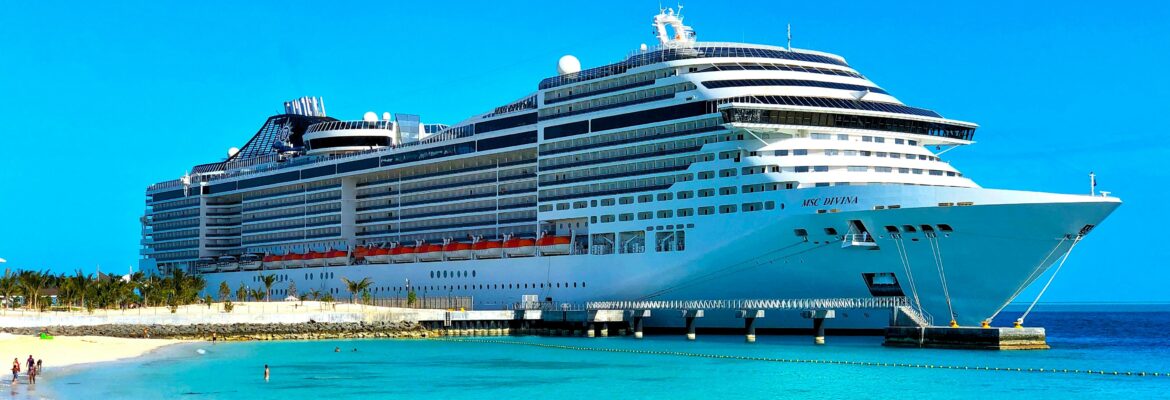
Banner Image: Cruise ship. Image Credit – Georgy Trofimov
About The Author

The New York City Department of Health and Mental Hygiene is the department of the government of New York City responsible for public health along with issuing birth certificates, dog licenses, and conducting restaurant inspection and enforcement. The New York City Board of Health is part of the department. Its regulations are compiled in title 24 of the New York City Rules (the New York City Health Code). Since March 2022, the commissioner has been Ashwin Vasan.



Why in the world would anyone go on a cruise? It’s like a floating apartment building. When I am on holiday I want to get away. Not be awaound thousands of others and can’t escape them! haha
[…] note: Readers may remember our coverage of the initial announcement of the presence of New Yorkers who were on the cru… where they were exposed to this virus, which normally is not transmitted person to person. At that […]