
Staten Island Gardeners: Rodale Institute Regenerative Agriculture Applied to Home Container, Patio, Small Plot Gardening
Rodale Institute has been pioneering organic farming and now regenerative organic farming for decades. We talked with them about the principles and future of this movement toward caring about our shared environment and future.
Dan Kemper has worked with Rodale for decades. Dan Kemper is a Master Trainer at Rodale Institute, and a former farmer training program manager and farm manager, also at Rodale Institute. He studied biology at Kutztown University of Pennsylvania. He has been working with the Rodale Institute for over 20 years, and specializes in organic and regenerative agriculture. We asked questions and discussed topics related to regenerative and organic agriculture that are tailored to small farms and container gardening.
Readers who watched any of the Kiss The Ground trilogy films will recognize the name of Rodale Institute, who featured prominently in these films, as they have been pioneering organic, sustainable, and regenerative agricultural practices for decades, with a strong commitment to improving the food delivery system in the US and Worldwide to prevent desertification, ecosystem destruction, and other issues related to conventional methods of agricultural production. These issues are extremely important, since desertification means less cropland available for food production, and the long-term consequences can be devastating for local populations that have experienced this.
The Dust Bowl in the 1930s is an example of this desertification and subsequent mass-migration. This was compounded by, and may have been caused by, the already-in-progress Great Depression, which caused farmers to over-cultivate to increase their income, with concomitant chemicals and lack of rotation, leading to black blizzards where the topsoil blew away. This led to the planting of the Great Plains Shelterbelt, also known as the Prairie States Forestry Project. It is often referred to historically as America’s “Great Wall of Trees”. It runs from North Dakota to Texas and contributed to the alleviation of the Dust Bowl. Some of this shelterbelt is still intact.
Rodale Institute is a 501(c)(3) nonprofit dedicated to growing the regenerative organic agriculture movement through rigorous research, farmer training, and education. Their groundbreaking science and direct farmer-support programs serve as a catalyst for change in farming and food production worldwide. Over our 75-year history, we have proven that organic farming is not only viable, but essential to humanity’s survival.
We discussed the following questions and topics:
1-What is regenerative agriculture?

2- How can it be applied to a home garden with containers or on patios and in small spaces? What would replace the roller crimper to create mulch from ground cover, what types of ground cover would work well in containers as opposed to in the ground, and what is recommended to have (worm bin, compost pile, peat moss mixed with compost for potting soil, etc.)?
3- What plants work well and bring about the most change for the environment? For example, blueberries to bring back bees, hummingbirds, and other pollinators; oak trees and milkweed pods; creating an environment that bees, caterpillars, butterflies, and other bugs will return to, etc.
The following were more specific, relating to how regenerative agriculture might be able to help with certain ‘undesirable’ bugs, plants, or pathogens – instead of the current control methods of Roundup for the ivy and other plant pests here in New York (in parks especially):
Regenerative agriculture (or non-chemical control) of:
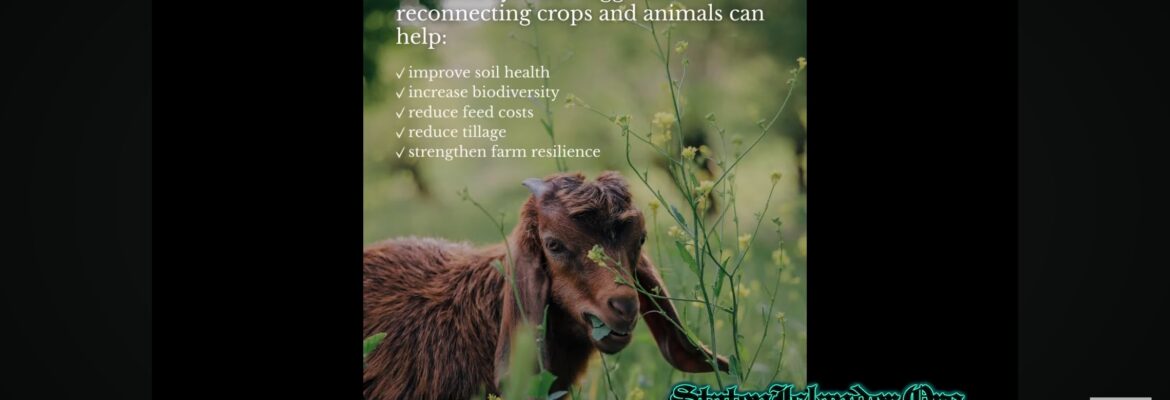
Poison ivy (this might mean a comparison between using herbicides vs just using a weed whacker in terms of salary and effectiveness over the long term, or perhaps competing plants that would reduce this species). It turned out goats and other livestock are ideal for controlling this invasive plant.
Chestnut Blight on American Chestnut trees (perhaps there is a vine that would be able to control the mold before it can destroy the trees or some other method involving co-planting or specific minerals or nutrients that could help – such as copper).
Potato Blight – an oomycete – and control of this organism without chemicals. Research has shown that crop rotation with legumes is very effective, but maybe co-planting would be helpful if crop rotation isn’t an option. Any non-chemical regenerative agriculture methods of control would be helpful to discuss
– Remediation for and detection of pesticides and herbicides:
Is it possible to know from resulting symptoms or markers that plants are showing whether they are suffering from chemical contaminants or disease such as blight or bacteria or even underwatering, and how these are different and similar? This might help know what remediation is necessary in a given area. We briefly discussed remediation of herbicides and pesticides when they are suspected.
For instance, if there is suspicion that someone is using agricultural chemicals such as herbicides on a plot of land, particularly when a location close-by is having herbicides applied to it, how would that be confirmed without expensive testing and knowing exactly which contaminants one is looking for? If there appears to be herbicide contamination, are there methods that can be used to remediate it without damaging growing plants, such as beneficial bacteria or fungi or other amendments that can be introduced?
The second portion of that question was not discussed. However, research has shown that the best way to cause herbicides to break down is by adding enzymes and beneficial bacteria to the soil. Since these are natural byproducts of regenerative agriculture, it can be presumed that these herbicides will break down more quickly and become harmless more thoroughly on a regenerative organic farm.
Banner Image: Sustainable farming. Image Credit – Rodale Institute



There are no comments yet
Why not be the first