
NYC Mayor: Making NYC Fleet Safer, Flood Protections, City Groceries Required Discounts, New NYC Sheriff, Sports & Tech Challenge For Young New Yorkers, Education Policy Panel, $100M For Delivery Workers,100th Tenant Union
Making NYC Fleet Safer, Flood Protections, City Groceries Required Discounts, New NYC Sheriff, Sports & Tech Challenge For Young New Yorkers, Education Policy Panel, $100M For Delivery Workers,100th Tenant Union: Mayor Mamdani
Editor’s note: See above for the Mayor’s ‘site-seeing’ tour of NYC housing developments across several locations. We have covered some of the East Side Coastal Resiliency project in the past, particularly when the floodgates for the area, which can be manually closed and opened, were beginning to be installed. We have also covered the coming City-run grocery stores, and will be publishing additional information in the future. These new grocery stores, particularly the one in Harlem, are not being installed in food deserts. In Harlem, specifically, there are about a dozen or so grocery stores and delis within walking distance of the proposed location. With already-thin margins in a severe economy, this may be the final straw for some of them. And delis and grocery stores was one of those areas of business where hard work really did pay off. If you were willing to work long hours, employ your spouse and children, and become part of the fabric of your community, you could make a decent living and even afford to buy a home instead of renting in some instances. While that may still be the case for some, including liquor stores as our previous conversation with an owner touched
on, it has become increasingly difficult to compete. Adding in a competitor like the City is not likely to be welcome. And it isn’t. A lawsuit has been started against the prospect.

Mayor Zohran Kwame Mamdani meets soccer legend Thierry Henry and visits his street sign in Midtown Manhattan on Saturday, July 18, 2026. Michael Appleton/Mayoral Photography Office
Mayor Mamdani Signs Executive Order to Make City Fleet Safer for Pedestrians, Cyclists and Drivers
4,000 municipal trucks to install audible pedestrian alerts by June 2029
All new non-emergency municipal vehicles will feature pedestrian alerts and speed-limiting technology shown to reduce dangerous speeding by 64%
New York City has implemented the largest intelligent speed assistance fleet in the country
NEW YORK – Mayor Zohran Kwame Mamdani today signed Executive Order 19, codifying the administration’s commitment to a safer, more modern municipal fleet. At the direction of Executive Order 19, the Department of Citywide Administrative Services (DCAS) will retrofit all non-emergency municipal trucks with pedestrian alerts and require pedestrian alerts and intelligent speed assistance for all new non-emergency vehicle and truck procurements.
Pedestrian alerts connect to a vehicle’s turn signals and make an audible alert to warn pedestrians, cyclists and other street users of the driver’s plan to turn. DCAS will retrofit all of the roughly 4,000 existing civilian City fleet trucks with pedestrian alerts by June 2029.
Intelligent speed assistance is a safety system that limits vehicle acceleration once the vehicle exceeds the local speed limit or a speed threshold set by DCAS. Under Executive Order 19, any contract for the purchase or lease of a non-emergency municipal fleet vehicle will require intelligent speed assistance technology. In June, DCAS completed the 1,000th City vehicle retrofit with the speed-limiting technology and will work to retrofit additional vehicles as feasible.
DCAS has pioneered municipal intelligent speed assistance technology, successfully implementing the largest intelligent speed assistance-equipped fleet in the country, with 1,000 vehicles at 21 agencies across 23 vehicle types that have already logged over 8 million miles using the technology since August 2022. The program has reduced dangerous speeding among equipped vehicles by 64%.

“Our administration expects every driver to do their part to keep our streets safe for everyone, and that begins with those behind the wheel of our City vehicles,” said Mayor Mamdani. “Pedestrian alerts and speed-limiting technology deliver immediate results, and we can waste no time in keeping our neighbors safe.”
“Safer streets mean safer communities, and with this Executive Order, Mayor Mamdani is affirming our ability at DCAS to directly impact the lives of New Yorkers through our municipal fleet,” said DCAS Commissioner Yume Kitasei. “We are proud to build on our efforts to modernize our fleet; through speed assistance technology, pedestrian turn alerts and telematics tracking, we are protecting drivers and pedestrians alike.”
“Mayor Mamdani’s Executive Order is our next big step for fleet safety,” said DCAS Deputy Commissioner and NYC Chief Fleet Officer Keith Kerman. “Pedestrian alerts on trucks will help warn and safeguard road users when trucks are making turns in the city, and the expansion of intelligent speed assistance will slow the fleet down. DCAS looks forward to working with all agencies and vehicle suppliers to get these safe new technologies installed.”
DCAS manages the functionality and operations of intelligent speed assistance on City vehicles through the Fleet Office of Real Time Tracking (FORT). At FORT, DCAS monitors the movements of over 29,000 vehicles and manages the speed limit maps, tracking and controls required for intelligent speed assistance technology.
New York City is a national leader in sustainable, safe and efficient fleet operations. DCAS has installed over 105,000 safety upgrades — including truck side guards, backup alerts and surround cameras — in the City fleet in under a decade. The agency manages the largest electric vehicle fleet and charging networks in New York State with 5,850 EVs and 2,500 chargers and the first large fleet on the East Coast to completely transition from fossil diesel fuel to renewable diesel.
“Traveling on our streets shouldn’t mean putting your life at risk. We have the tools to make streets safer for every New Yorker, and I’m thrilled New York City is investing in them,” said State Senator Andrew Gounardes. “Pedestrian alert systems and intelligent speed assistance are proven technologies that reduce crashes and traffic deaths. That’s why I fought so hard to pass my Stop Super Speeders Act, and why I applaud DCAS for taking this step to save New Yorkers’ lives. We’re laying the groundwork for a future where no New Yorker has to mourn the loss of a loved one to a preventable crash.”
“I’m thrilled that these life-saving features are coming to our City’s fleet of vehicles,” said Assemblymember Emily Gallagher. “The City’s current ISA program has already led the way in making our streets safer for everyone who uses them, and I’m grateful that the mayor and his administration is furthering that commitment to these built-in safety measures.”
“New York City is leading the way with intelligent speed assistance and pedestrian alerts for new non-emergency vehicles, and there’s no doubt that this effort will make the streets safer for everyone who shares the road,” said City Council Majority Leader Shaun Abreu. “I applaud DCAS for their commitment to street safety, and I hope we inspire other cities to take similar action. This is yet another critical step forward for good government and safe streets.”
“Every New Yorker deserves to get home safely. Adding pedestrian alerts and intelligent speed assistance to the City’s fleet is a commonsense step that will help prevent crashes, protect pedestrians, cyclists and drivers, and make our streets safer for everyone,” said Council Member Shahana Hanif. “I’m grateful to DCAS for advancing these life-saving improvements and look forward to seeing them implemented across the City’s fleet.”
“Every New Yorker deserves to safely get around our city,” said Council Member Lincoln Restler. “I’m pleased that DCAS is leading the way with innovative safety policies that will ensure our existing fleet of non-emergency municipal trucks — and all new non-emergency municipal vehicles and trucks — will have new technological features designed to protect pedestrians and cyclists.

Mayor Zohran Kwame Mamdani visits the United Senior Center in Brooklyn on Friday July 17, 2026. Michael Appleton/Mayoral Photography Office
Mayor Mamdani Announces Major Expansion of the Bureau of Coastal Resilience to Protect City from Future Storm Surges and Coastal Flooding Events
City to hire for nearly 70 positions — from engineers to city planners to field inspectors — to strengthen flood protections and prepare New York City for future climate threats
The Bureau centralizes the planning, operations and maintenance of multibillion-dollar coastal resilience projects across City agencies
Coastal protections complement Mayor Mamdani’s investments to address in-land flooding, including $108 million to improve sewer performance citywide and $95 million to address flooding hotspots in Brooklyn
NEW YORK – Mayor Zohran Kwame Mamdani and Department of Environmental Protection (DEP) Commissioner Lisa F. Garcia today announced a dramatic expansion of the Bureau of Coastal Resilience to better protect communities against rising sea levels and the growing threat of stronger, more severe coastal storms worsened by climate change.
The Bureau centralizes the planning, operation and maintenance of the City’s growing network of coastal flood-protection infrastructure, and for years, has relied on a team of six staff and the support of borrowed crew members from across DEP. Mayor Mamdani is investing in a Bureau of Coastal Resilience that has the expertise and manpower necessary to meet the moment and protect our coastal communities for generations to come.
The Mayor has invested $43.2 million across the City’s financial plan, including $10.6 million in the current fiscal year, to hire 69 additional staff members to the Bureau, including engineers, field crews, city planners and other flood experts. The funding also supports several major studies that will strengthen the City’s long-term coastal resilience strategy, including a roadmap for protecting all 520 miles of New York City’s coastline.
“As climate change accelerates, so too must our efforts to protect our communities from flooding and extreme weather,” said Mayor Mamdani. “This investment ensures the Bureau can keep pace with the billions of dollars in flood prevention and mitigation infrastructure being built and mobilized in the next few years. Staffed with engineers, flood-risk management experts and maintenance crews, the Bureau of Coastal Resilience will drive resiliency job opportunities while making sure our city is prepared for whatever comes our way.”
“Mayor Mamdani and this administration are committed to protecting New Yorkers from hurricanes, intense rainfall and other climate change risks and recognize that this requires sustained investment in infrastructure and the people who keep it running,” said DEP Commissioner Lisa F. Garcia. “Expanding the Bureau of Coastal Resilience strengthens our ability to safeguard our shoreline, prepare for climate impacts and protect the communities, businesses and critical facilities that power our city.”
There are currently 15 active infrastructure projects in the Bureau’s portfolio, including the City’s first major coastal flood protection system: the $1.45 billion East Side Coastal Resiliency (ESCR) project, which features raised parkland, floodwalls and 18 swinging or sliding flood gates to create a continuous line of protection. ESCR will come online next year and protect more than 110,000 New Yorkers, including approximately 28,000 public residents, on the Lower East Side from storms like Hurricane Sandy.

Mayor Zohran Kwame Mamdani attends a World Cup watch party on Rikers Island on Wednesday, July 15, 2026. Michael Appleton/Mayoral Photography Office
Hurricane Sandy killed 44 New Yorkers and caused nearly $19 billion in damage in 2012, catalyzing an ambitious portfolio of long-term coastal protection projects that will prevent flooding while improving public waterfront spaces. Today, nearly 440,000 New Yorkers, 14,500 businesses and roughly $250 billion in property value reside within the city’s 100-year floodplain.
As extreme weather events become more frequent, the Mamdani administration is building climate preparedness into the features of the city. The administration has invested $108 million to upgrade and replace thousands of catch basins to improve the city’s street drainage network, $95 million to protect the flood-prone neighborhood of Homecrest in Brooklyn from cloudbursts and completed phase one of Battery Coastal Resilience, a landmark $200 million investment in the long-term safety and resilience of Lower Manhattan.
In addition to ESCR, several other major coastal flooding protection systems will come online in the next four years, including Brooklyn Bridge-Montgomery Coastal Resilience, Seaport Coastal Resilience, and Red Hook Coastal Resiliency. The Bureau works closely with City agencies — including NYC Parks, Economic Development Corporation (EDC), Small Business Services (SBS), Department of Buildings (DOB), Department of Design and Construction (DDC), Department of Transportation (DOT), Department of City Planning (DCP) and the Mayor’s Office of Climate and Environmental Justice (MOCEJ) — to advance these critical coastal resilience projects across the five boroughs.
“These past couple of weeks, we have seen how strong rainstorms have wreaked havoc on our communities. As the effects of climate change heighten, we are further motivated to protect New Yorkers from flooding and rising sea levels,” said DDC Commissioner Paul A. Ochoa. “DDC is currently building innovative coastal resiliency infrastructure and flooding mitigation across the City, like flood walls, flood gates and street raisings, while also maintaining access to the waterfront and providing New Yorkers with upgraded recreational areas. DDC is proud to collaborate with DEP on these projects, and we are glad that the infrastructure we are working on will be better-supported thanks to Mayor Mamdani’s expansion of DEP’s Bureau of Coastal Resilience.”
“For a family, a flooded home means a repair bill they can’t afford and an insurance premium that spikes,” said Chief Climate Officer Louise Yeung. “By funding the Bureau of Coastal Resilience, the City will have the in-house engineering, planning and capacity to build, operate and maintain our flood protection systems now and into the future.”
“As we face the effects of climate change and encounter severe storms with greater frequency, it’s more vital than ever that we bolster our coastlines to protect our most flood-prone areas. By expanding the Bureau of Coastal Resilience, the City will be better equipped to deal with future impacts and keep our communities safe,” said NYC Parks Commissioner Tricia Shimamura. “Through transformative projects like East Side Coastal Resiliency and our continued partnership with DEP and sister agencies, we are protecting New Yorkers from future coastal flooding while creating stronger, greener and more accessible public spaces.”
“As New Yorkers grapple with more frequent and intense coastal storms and flooding, the City must continue investing in the infrastructure needed to keep people safe,” said NYCEM Commissioner Christina Farrell. “Expanding the Bureau of Coastal Resilience is a necessary investment that strengthens New York City’s ability to prepare for severe weather, protect vulnerable communities and build the long-term resilience needed to confront the growing challenges of climate change.”
“The expansion of the Bureau of Coastal Resilience is a critical investment in the safety of all New Yorkers and the future of our city when, if we didn’t take action, even minor coastal storms could become damaging as sea levels continue to rise,” said NYC DOT Commissioner Mike Flynn. “The Bureau has been critical in advancing major resiliency projects to protect New Yorkers and, with additional resources, can more urgently address our climate crisis. We are proud to work with the Bureau to help move forward resiliency projects involving street infrastructure and are working every day to build a more sustainable city.”
“Severe weather is no longer a distant threat, but is a reality New Yorkers are experiencing with increasing frequency,” said DOB Commissioner Ahmed Tigani. “Investing in resilient coastal infrastructure will go a long way toward protecting our buildings, neighborhoods and the people who call them home. Through DOB’s enforcement of the city’s strong flood protection requirements for new construction projects, each new development we approve is helping to improve the resiliency of the city’s built environment. This expansion announced today reflects the City’s commitment to preparing for the challenges ahead while preserving the safety and strength of our built environment. Congratulations to DEP on this significant investment, we look forward to continuing to partner with you on this important work.”
“Climate resilience must be built into how New York City plans for its future,” said DCP Director Sideya Sherman. “Expanding the Bureau of Coastal Resilience will strengthen the City’s ability to protect vulnerable communities, coordinate major investments and prepare waterfront neighborhoods for growing climate change risks. City Planning is proud to support this important work as we advance a safer, more resilient city for generations to come.”
“Preparing for the impacts of climate change is one of the City’s most important responsibilities. And strengthening the Bureau of Coastal Resilience is a smart investment that will help ensure these critical flood protection systems are properly planned, maintained, and ready when New Yorkers need them most,” said Council Member James F. Gennaro. “From Superstorm Sandy to the increasingly frequent severe storms we experience today — including as recently as last week — we know the cost of inaction is far greater than the cost of preparedness. I look forward to working with DEP and this administration to advance resilient infrastructure that will help to protect New York City.”

Mayor Zohran Kwame Mamdani and New York City Department of Transportation (NYC DOT) Commissioner Mike Flynn advance major transit projects in the Bronx and Brooklyn that will speed commutes for nearly 200,000 bus riders every day. Flatbush Avenue, Brooklyn. Wednesday, July 15, 2026. Credit: Ed Reed/Mayoral Photography Office.
“We’re thrilled to see Mayor Mamdani invest $10.6 million in the Bureau of Coastal Resilience through the FY27 budget,” said Julie Raskin, President and CEO at Waterfront Alliance. “Since its creation in 2023, the Bureau has been tasked with an enormous responsibility: helping protect New York City’s 520 miles of coastline from increasing flood risks. This funding is an important step toward ensuring the Bureau has the resources it needs to meet that challenge, and we look forward to continuing to work with the City to build a more resilient waterfront for all New Yorkers.”
“New York City’s waterfront communities are on the front lines of the climate crisis, and today’s investment recognizes that protecting New Yorkers means preparing for the storms and rising seas of tomorrow,” said Tracy Brown, President of Riverkeeper. “Riverkeeper supports the expansion of the Bureau of Coastal Resilience as an important step toward building the expertise and capacity needed to deliver the large-scale protections our city requires. At Riverkeeper, we know that resilient coastlines and healthy waterways go hand in hand. We’re encouraged to see the City making long-term investments that strengthen both public safety and the health of our shared waters. We look forward to partnering with the BCR as they design and deliver on strategies to protect our communities while advancing a more resilient and sustainable future for all New Yorkers.”
“We are thrilled that Mayor Mamdani is expanding the Bureau of Coastal Resilience,” said Amy Chester, Director of Rebuild by Design. “As we have seen firsthand this summer, flooding is a high priority for New Yorkers. If we invest smartly and design with communities, our flood infrastructure can benefit neighborhoods every day, from improved health outcomes to local jobs, to new local parks where you can know your neighbors.”
“NYLCV commends Mayor Mamdani and Commissioner Garcia for not only recognizing the serious and growing threat that climate change poses to our communities, but for taking action to prepare for its impacts,” said Alia Soomro, Deputy Director for New York City Policy, New York League of Conservation Voters. “Expanding the Bureau of Coastal Resilience is a smart investment that will help protect New Yorkers from powerful storms and coastal flooding, and we look forward to working with the Administration and DEP to create a more resilient waterfront for generations to come.”
“For the first time, New York City’s coastal flood manager will have a robustly staffed team dedicated to protecting New Yorkers from growing flood risks,” said Kate Boicourt, New York State Director for Environmental Defense Fund. “I commend Mayor Mamdani and Commissioner Garcia for recognizing that building a resilience workforce is essential to keeping New York safe, livable and economically vibrant for generations to come.”
“The Coney Island Beautification Project applauds Mayor Mamdani’s expansion of the Bureau of Coastal Resiliency,” said Pamela Pettyjohn, President of the Coney Island Beautification Project. “Climate threats continue to loom large and for coastal communities like ours. Strong leadership and smart investments are essential for a safe and secure future for everyone who lives in or loves Coney Island.”
“New Yorkers have seen firsthand this summer how devastating flooding can be,” said Esther Rosario, Executive Director of Climate Jobs New York. “Meeting this moment requires bold public investment in the infrastructure that keeps our communities safe. We applaud Mayor Mamdani and Commissioner Garcia for expanding the Bureau of Coastal Resilience and taking meaningful action to prepare New York City for a changing climate. These investments will help protect New Yorkers from future storms while putting people to work building a more resilient city.”
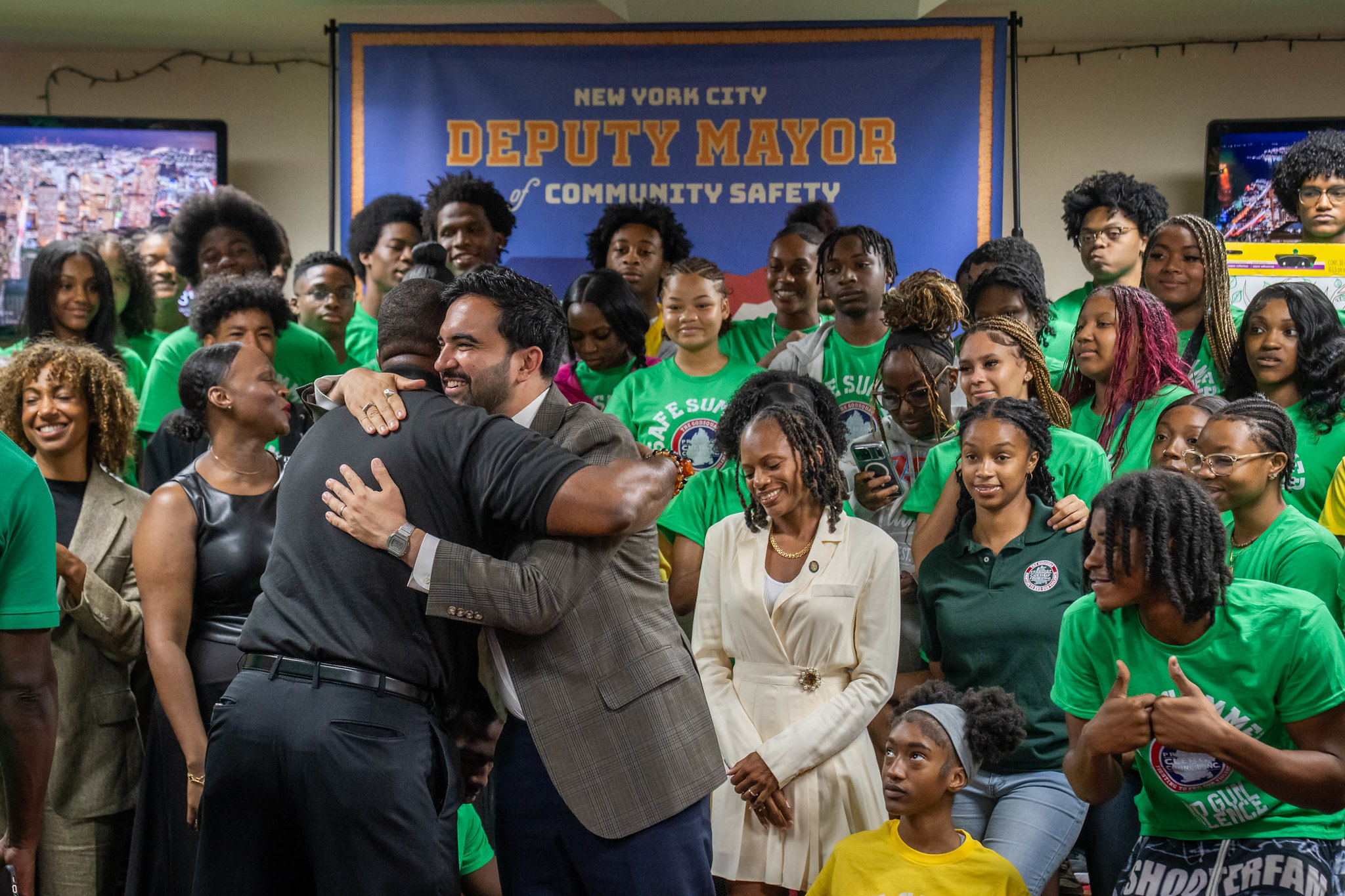
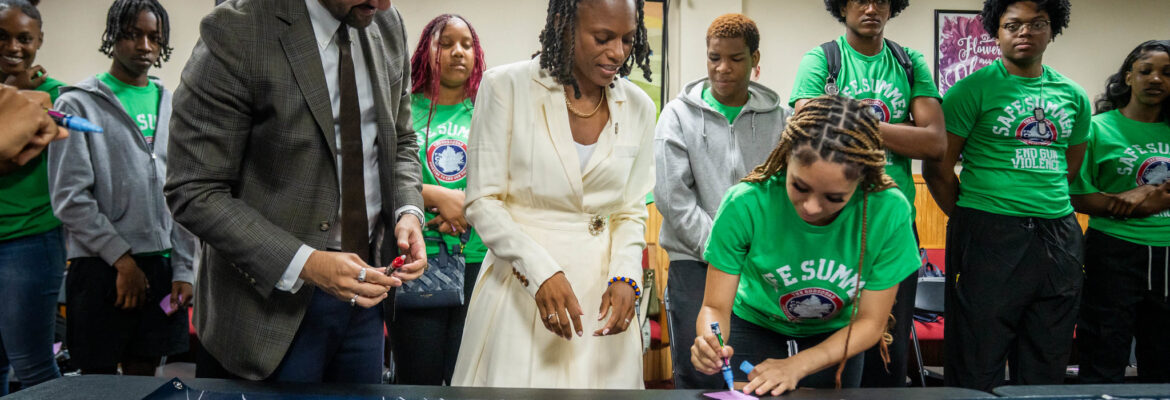
Mayor Mamdani visits the 67th Precinct Clergy Council (“The GodSquad”)/Project ECHO’s “Another Way” Initiative, which equips young people with leadership, communications, and conflict resolution skills through youth-led violence prevention. Reflections Church, Brooklyn. Friday, July 17, 2026. Credit: Ed Reed/Mayoral Photography Office.
Mayor Mamdani Unveils 30% Discount — Including All Produce, All Meat and Key Pantry Staples — at New Municipal Grocery Stores
Grocery costs have risen 33% nationwide since 2019
Mayor also released RFP for Operators to Manage Five Municipal Grocery Stores Expected to Open by 2029
Discount projected to save New Yorkers an average of $90 a month — or $1,000 a year
NEW YORK—Today, Mayor Zohran Kwame Mamdani, Deputy Mayor for Economic Justice Julie Su and New York City Economic Development Corporation (NYCEDC) announced that a core basket of everyday groceries will be 30 percent cheaper at the five new municipal grocery stores. The basket will include all fresh produce, meat and seafood, along with roughly 20 additional categories of pantry staples, dairy and refrigerated goods. The discount will apply to all regardless of income, with prices locked in and predictable rather than fluctuating week to week as is the case at private grocers. Combined, the savings are projected to cut New Yorkers’ average grocery bill by 15 percent, about $90 a month, or roughly $1,000 a year.
The Mayor also issued a request for proposals (RFP) from qualified grocers or firms to serve as operators of one or more N.Y.C. Groceries stores. The selected operator will be responsible for day-to-day store operations, including merchandising, staffing and adherence to strong labor practices.
The Mamdani administration’s network of municipal grocery stores — a core pillar of the Mayor’s Affordability Agenda — will guarantee lower prices for New Yorkers across the five boroughs, including the more than 40% of families who struggle to afford food. The first grocery store will open by the end of 2027 at Hunts Point in the Bronx, a neighborhood where 77% of households struggle to afford basic necessities. All five stores — one per borough — will be open by the end of the Mayor’s first term, including La Marqueta in East Harlem. The Mayor has allocated $70 million in the capital budget to deliver on this core commitment to New Yorkers, in partnership with NYCEDC.
“Every week, New Yorkers walk into a grocery store hoping the prices haven’t gone up again,” said Mayor Mamdani. “A trip to the grocery store shouldn’t spell dread for New Yorkers. That’s why we are guaranteeing a 30% discount on the most common and most critical groceries for families across the five boroughs — including eggs, milk, chicken and fresh fruits and vegetables. In a city that’s defined by unpredictability, you deserve stability — no matter what aisle you’re in.”
“Groceries are one of the clearest places New Yorkers feel the cost of living every week,”said Julie Su, Deputy Mayor for Economic Justice. “This administration is building a grocery store model that puts affordability first, with a 30 percent discount on essential foods and quality jobs for the people who run these stores. That’s what it means to make this city work for working people.”
“N.Y.C. Groceries: A Recipe for Affordability’ is a plan that clearly and transparently defines Mayor Mamdani and the Administration’s goal of making basic groceries more affordable for all New Yorkers and with the 30% discount on essential items, this first-of-its-kind municipal program has the potential to become an essential public service,” said NYCEDC Interim President & CEO Jeanny Pak. “We are thrilled to be leading this RFP in search of private operator who is going to be a key partner in the success of this initiative and serve as another example of how public-private partnerships can help make New York City more affordable for everyone.”
“N.Y.C. Groceries: A Recipe for Affordability” is structured into nine sections that consist of:
- The Need: Food affordability means that New Yorkers can meet their basic grocery needs without spending an unreasonable share of their income. Today, nearly 80% of New Yorkers report concern about rising food prices.
- N.Y.C. Groceries: The initiative will establish a first-of-its-kind model in major US cities: Municipal supermarkets with private grocery store operators to lower prices, improve access and set clear standards for quality and accountability.
- How We Measure Affordability: N.Y.C. Groceries is designed to make that expectation real by delivering consistent, everyday savings on the essential foods families need most. Operators will be required to stock items across key food categories and offer clear, reliable pricing on the shelf, with prices for core items locked in monthly and updated periodically to reflect market conditions.
- The Operating model: The City sets the mission, the standards and the store design; experienced third-party operators run the stores day to day under those requirements.
- Site selection: N.Y.C. Groceries stores are going where need is highest, but that need looks different across the City. The City is using a data-driven approach to identify priority neighborhoods facing the greatest challenges with grocery affordability and access.
- Public & Stakeholder engagement: To guide this work, City Hall has convened an interagency taskforce bringing together agencies responsible for food policy, labor and worker protection, consumer protection and planning. New Yorkers will have multiple ways to share feedback and directly shape how N.Y.C. Groceries stores operate in their communities.
- Good jobs: N.Y.C. Groceries will deliver quality jobs alongside affordable groceries. Operators will be required to provide family sustaining wages and benefits and commit to a Labor Peace Agreement so that workers who want to organize can do so without interference. Affordability for shoppers and dignity for workers are part of the same commitment to working people.
- Supporting the broader grocery ecosystem: N.Y.C Groceries is not a stand-alone initiative. It is designed to work alongside and strengthen the broader food and grocery systems that the City has built and that New Yorkers rely on every day.
- Path forward: The City has already begun moving N.Y.C. Groceries from vision to execution. Following the Mayor’s initial announcement and call for public input in spring 2026, New Yorkers, workers and industry experts have helped shape this initiative through ongoing roundtables and focus groups.
The RFP seeks operator(s) to accomplish the following goals:
- Managing N.Y.C. Groceries at one or more sites, handling a comprehensive set of grocery store operating responsibilities, including but not limited to:
- Merchandising: Operator(s) must consistently stock items across standard grocery departments
- Product Sourcing: Operator(s) must develop reliable, cost-effective supply chains that support merchandising.
- Private label: Operator(s), in collaboration with NYCEDC, will identify and pursue opportunities to launch an N.Y.C. Groceries private label across a variety of product categories.
- Quality assurance: Operator(s) will manage operational and supply chain food safety and quality assurance functions.
- Staffing: Operator(s) must design and implement staffing models that ensure reliable store operations, including but not limited to adequate stocking levels, coverage at all operating hours, customer service standards and inventory management
- Security: Operator(s) will be responsible for securing N.Y.C. Groceries sites for shoppers and workers, managing crime and loss prevention.
“N.Y.C. Groceries: A Recipe for Affordability” builds on a number of past announcements for this initiative including the selection of the first two sites in East Harlem and Hunts Point; the N.Y.C. Groceries Sites Portal to identify potential locations for future stores in Brooklyn, Queens, and Staten Island; and, most recently, the Request for Proposals for design firms to develop the N.Y.C. Groceries brand identity.
For more information about the private operator RFP, visit the NYCEDC RFP webpage. NYCEDC will facilitate a virtual information session on Wednesday, August 5, 2026, at 9:00 a.m. Prospective respondents must RSVP by Monday, August 3. Responses to the RFP are due by 4:00 p.m. ET on Friday, October 16, 2026. For more information about N.Y.C. Groceries, please visit the N.Y.C. Groceries webpage.
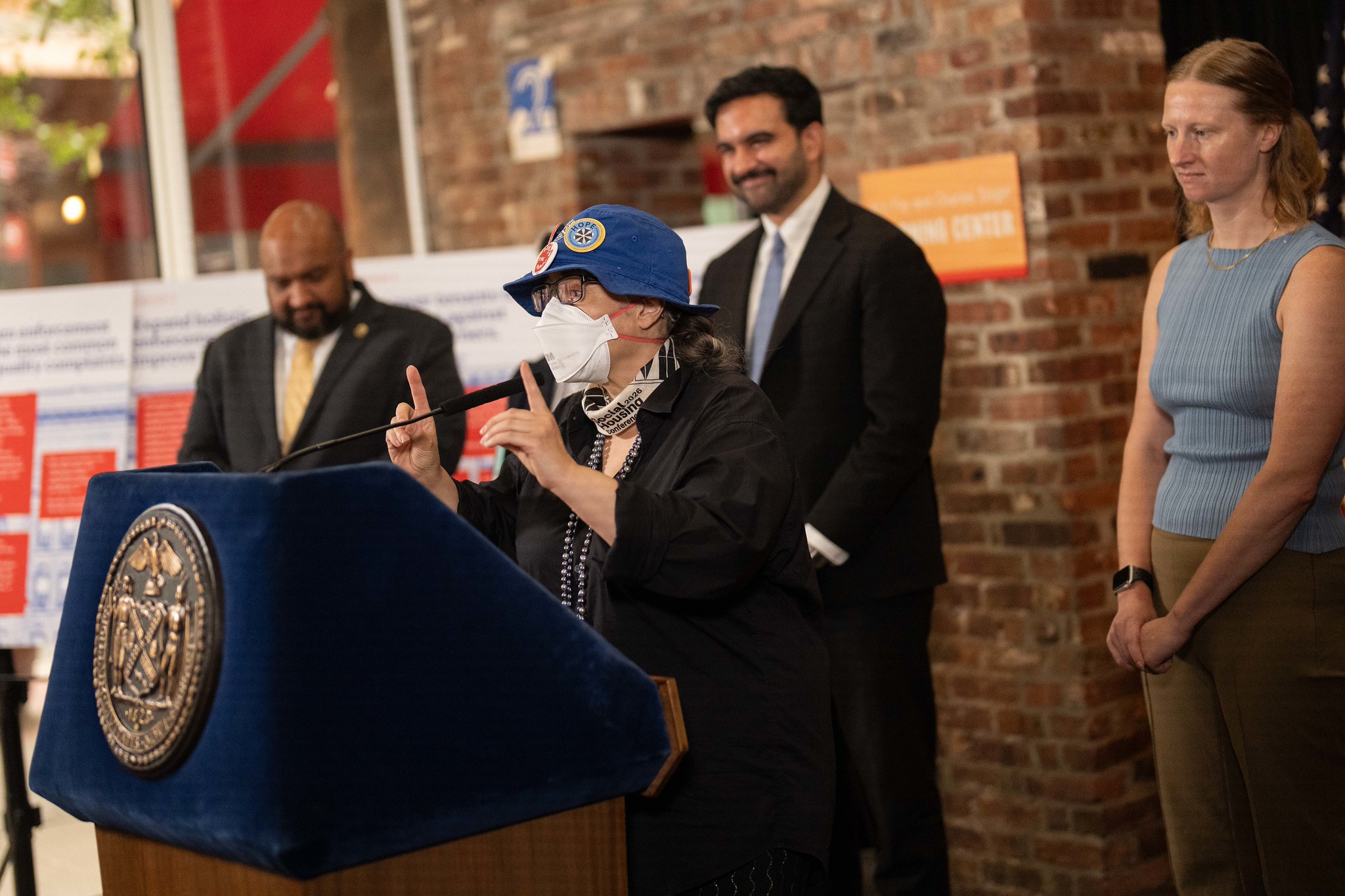
Mayor Zohran Kwame Mamdani releasedsthe Rental Ripoff Report, a package of 23 policy actions shaped by testimony from thousands of New Yorkers at Rental Ripoff Hearings held across the five boroughs on Thursday. July 16,, 2026. Michael Appleton/Mayoral Photography Office
REMARKS AS PREPARED: MAYOR MAMDANI DELIVERS REMARKS AT THE SWEARING-IN CEREMONY FOR NYC SHERIFF EDWIN RAYMOND
Mayor Zohran Kwame Mamdani: Good morning. It is a privilege to be at Brooklyn College with so many partners in City government committed to keeping New Yorkers safe. I’ve waited a long time to say this and for it to actually make sense: There is a new sheriff in town. Sheriff Raymond is a man who has dedicated himself not only to protecting the safety of the people of New York City but [also] to bettering the institutions tasked with that work.
He grew up in East Flatbush as the son of Haitian immigrants. There, he experienced firsthand the way that safety and justice are often made to feel at odds. Yet he chose to become an NYPD officer himself to build bridges between the NYPD and the people they serve and to help write a new legacy. I am struck by a story he told in his book, “An Inconvenient Cop,” about his first swearing-in as an officer in the NYPD nearly 20 years ago. He described how his friend’s father, Mr. Faustin, a fellow Caribbean man, dropped him off at Queens College for the day’s ceremonies and said, “You know, Edwin, you are every immigrant father’s dream…This is our dream.” I wonder if Mr. Faustin could have predicted then just how far Sheriff Raymond would carry that dream.
Through his long career, he has not only emerged as a public servant of incredible integrity, but [also] a rare leader of exceptional courage. As an officer, he did the very thing he set out to do: build that bridge. He made the decision to continue to live in East Flatbush, where he grew up just down the road from the grocery store he worked in as a teenager. He wanted the young people in the neighborhood to see him not just as an example of what they could become but also as an example of what trust could look like.
And his commitment to trust was there on the block and in the precinct. He rose through the ranks — from sergeant to lieutenant to platoon commander to commanding officer of Community Affairs for Patrol Borough Brooklyn North. Throughout his career in the NYPD, he kept a central question in mind: “How do we find the balance between providing public safety and maintaining people’s basic rights?” He took that guiding question with him when he retired from the force and served as our nation’s first social justice liaison under State Attorney General [Letitia] James. Today, I can think of no one better to serve as the sheriff of the City of New York. I am proud to say that Sheriff Raymond will be the first Haitian New Yorker to lead a major law enforcement office here in our city.
I know this proud moment comes at the same time that the Supreme Court has allowed the federal administration to end TPS for Haitians. To any Haitian New Yorkers feeling afraid right now, I want you to know that City Hall stands with you. We will continue to urge Congress for a permanent resolution. No one should have to live with this kind of uncertainty.
Sheriff Raymond, I know, is someone who is as proud of his Haitian heritage as he is of his public service. As we look to the future, his appointment marks a new chapter for this essential office — one rooted in concern for both justice and safety in equal measure. Those values will define how the office fulfills its core responsibility: overseeing the enforcement of civil law. That includes everything from executing orders of protection for domestic violence survivors to investigating cases of deed theft under our newly created Office of Deed Theft Prevention.
I am confident he will bring the same dedication he has always shown to the people of New York City as he works to build a public safety system grounded in accountability and trust. Congratulations, Sheriff Raymond. I look forward to continuing to partner together. Thank you.

Mayor Mamdani joins NYC Parks to greet campers playing an indoor soccer match to highlight how agencies are adapting to air quality conditions and maintaining summer programming for kids. St. James Recreation Center, Bronx. Thursday, July 16, 2026. Credit: Ed Reed/Mayoral Photography Office.
Mayor Mamdani, DYCD, New York City FC and City in the Community Launch New Sports and Technology Challenge for Young New Yorkers
New York City Sports and Technology Innovation Challenge will engage hundreds of young people through the City’s Summer Youth Employment Program
Students will design projects exploring the future of sports, technology and climate-resilient infrastructure
NEW YORK — As New York City celebrates the success of the 2026 FIFA World Cup™, Mayor Zohran Kwame Mamdani, the Department of Youth and Community Development (DYCD), New York City FC and City in the Community today announced the launch of the New York City Sports and Technology Innovation Challenge, a new citywide initiative that will introduce hundreds of young people to careers at the intersection of sports, innovation and technology.
Offered through the City’s Summer Youth Employment Program (SYEP) the challenge brings students together in teams to develop ideas that expand access to soccer, improve public infrastructure and imagine the future of sports in New York City.
Over six weeks, participants will collaborate with industry leaders from government, education, technology and sports.
The challenge is part of the Mamdani administration’s broader effort to ensure the World Cup leaves a lasting legacy for New Yorkers. In recent weeks, the administration has announced plans to transform 50 school blocks into World Cup field days, add 4,000 hours of play on City athletic fields, open five soccer pitches overnight throughout the tournament and expand free opportunities for young people to play the game.
“The World Cup is inspiring our young people, not just to perfect their stepover but to imagine the next great sports stadium, design soccer fields that combat climate change, build new platforms to connect their friends to matches, and much more,” said Mayor Mamdani. “This new Summer Youth Employment Program will help create the next generation of architects, engineers, and scientists right here in New York City, kicking off lifelong careers that will change the world long after the final whistle blows.”
“SYEP is about helping young people see what is possible for their future, and especially in their city” said DYCD Commissioner Sandra Escamilla-Davies. “Through this partnership with New York City FC and City in the Community, SYEP participants will gain exposure to emerging industries, build workforce-ready skills, and apply their creativity to challenges that matter in their own neighborhoods. We are excited for them to be involved in such an exciting, once-in-a-lifetime event with the World Cup this summer.”
“New York City FC’s commitment to this city extends far beyond the pitch, and City in the Community is central to how we deliver on that commitment,” said Jennifer O’Sullivan, New York City FC COO. “Investing in young people is also an investment in the future of our industry. This Challenge gives SYEP participants the chance to build skills, think entrepreneurially, and explore real career pathways in sports, technology, live events, and community impact. We are proud to work alongside Mayor Mamdani and DYCD to help ensure this historic moment creates lasting opportunity for young New Yorkers.”
“City in the Community exists to turn the power of soccer into meaningful opportunities for young New Yorkers,” said Bailee Eaglin, Executive Director of City in the Community. “This challenge builds on our experience bringing together youth development, curriculum-based learning, academic and community partners, and workforce pathways. Our goal is to ensure young people across all five boroughs have the tools, access, and support to help shape the legacy of this moment.”
Funded and designed by City in the Community, the nonprofit foundation supported by New York City FC, and delivered in partnership with DYCD, the initiative began on July 6 and will run for six weeks.
Participants are working with New York City FC professionals and faculty from New York University’s (NYU) School of Professional Studies to explore topics including Video Assistant Referee (VAR) technology, the globalization of sports, artificial intelligence and careers across the sports industry.
Students will tackle projects such as:
- Smart Stadium of the Future: Design a stadium and transportation system that allows more than 50,000 fans to travel to games efficiently and sustainably.
- Sports for All: Create a digital platform connecting young people and communities to sports opportunities across New York City.
- Innovative Community Spaces: Design inclusive, climate-resilient public spaces that expand access to recreation and athletics.
Students may also propose projects of their own in coordination with their SYEP providers.
The New York City Sports and Technology Innovation Challenge is designed to become an annual SYEP initiative that connects young New Yorkers to internships, paid work experience and long-term careers in sports, technology, live events and community development.
SYEP is the nation’s largest youth employment program, providing paid summer work experiences and career exploration opportunities for young people across New York City. Research has linked participation in SYEP to improved school attendance, stronger workforce outcomes and lower rates of incarceration. A 2021 study found participation reduced the likelihood of arrest by 17% overall and felony arrests by 23%. Participants are also significantly less likely to be incarcerated in New York State more than five years after completing the program.
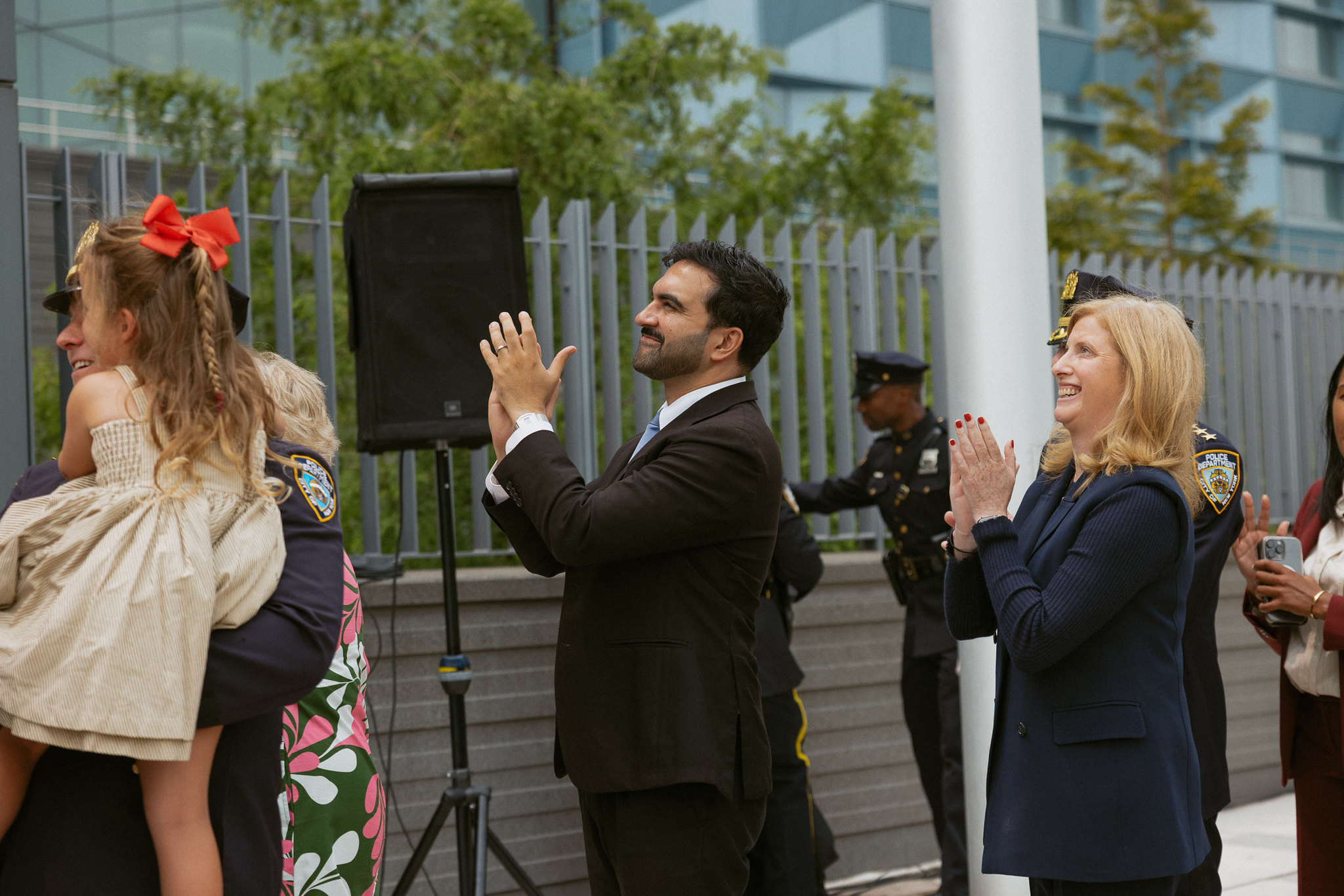
New York City Mayor Zohran Kwame Mamadani joins New York City Police Department (NYPD) Commissioner Jessica S. Tisch to deliver remarks at the NYPD Dedication to Detective Steven McDonald at the NYPD Police Academy in Queens on Thursday, July 16, 2026. Kara McCurdy/Mayoral Photography Office.
Mayor Mamdani Announces Appointments to Panel for Educational Policy
NEW YORK — Mayor Zohran Kwame Mamdani appointed 13 members to the Panel for Educational Policy (PEP) ahead of the panel’s inaugural 2026-27 meeting on Wednesday, July 29.
The new slate includes both returning and newly appointed members from a wide range of backgrounds and experiences who share a commitment to strengthening New York City’s public schools and ensuring every student has access to a rigorous, welcoming and safe education.
“Public schools belong to New Yorkers, and the families, students and educators who make them what they are deserve a real voice in the decisions that shape them,” said Mayor Mamdani. “The Panel for Educational Policy has a vital responsibility to help guide our school system with transparency and accountability. I am grateful to these members for stepping up to serve our city and for bringing the experience and commitment our students deserve.”
“The Panel for Educational Policy is a critical partner in ensuring that the voices of families and communities are heard and reflected in the decisions that shape our schools,” said Chancellor Samuels. “Meaningful collaboration with the Panel strengthens transparency, accountability and our shared commitment to putting children first. I look forward to working alongside our new members in service of every child and the future of public education.”

New York City Mayor Zohran Mamdani and the New York City Department of Environmental Protection (DEP) work together to distribute free flood kits to New Yorkers in East Elmhurst, Queens, a neighborhood hit hard by Hurricane Ida in 2021. Tuesday, July 14. Kara McCurdy. Mayoral Photography Office.
Appointees
Karla Cordero serves as Chief of Staff at WE ACT for Environmental Justice, where she guides the organization’s strategic direction and organizational change initiatives. Before joining WE ACT, she spent 12 years in New York City government, developing policies and programs serving underserved communities across social services, sustainability and economic development.
Her work included establishing an emergency food reserve program during the COVID-19 pandemic that delivered more than 18 million meals to New Yorkers, overseeing contracts providing client-centered services to more than 50,000 residents and spearheading major sustainability and resiliency projects.
A native New Yorker, Cordero earned a bachelor’s degree in political science from Fordham University and a master’s degree in public administration from Baruch College’s Marxe School of Public and International Affairs.
Tariq Khan works in budget and finance for the MTA. He has spent more than 29 years at MTA New York City Transit, serving in roles including budget analysis manager, maintenance program manager, principal transportation planner, computer specialist and associate staff analyst.
Khan earned an MBA from the New York Institute of Technology and a bachelor’s degree with honors from the University of Benin in Nigeria. He has been a Queens resident for 38 years and spent that time actively engaging school communities and their parent leadership.
Mehrain Mahdi is an education advocate and parent leader who served on the School Leadership Team (SLT) at a District 2 school, where she established an after-school Spanish program. She is also the founder of Little Leaping Leaders, a leadership and enrichment program for young girls.
Mahdi earned a bachelor’s degree in economics from Rutgers University and has more than 20 years of experience leading strategic initiatives and digital transformation efforts, most recently in the health care industry.
She lives in Manhattan with her husband and children.
Alan Ong is a longtime parent and community leader in Queens. He previously served as a PTA president before joining the Community Education Council (CEC) District 26, where he later served as president. Ong has held numerous leadership positions while advocating on education, civic and community issues.
Amy Fair is a community advocate and educational leader with more than 25 years of experience in higher education administration. She serves as director of strategic initiatives and special projects at NYU Steinhardt, where she oversees operational planning, cross-functional initiatives, emergency preparedness and institutional projects.
Fair has served as a Bronx Borough President appointee to CEC District 11, the District 11 Neighborhood Advisory Board, a previous mayoral appointee to the Panel for Educational Policy and in several community leadership roles supporting students, families and schools. She earned a bachelor’s degree in social sciences and a master’s degree in professional writing from New York University, as well as an associate degree in business management from Trinity College.
Courtney Rajwani is a managing consultant at The Lewin Group. She previously served as executive director for policy development and support in the New York City Public Schools (NYCPS) Division of Early Childhood Education during the de Blasio administration. Rajwani began her career at an educational nonprofit in Jackson Heights, Queens.
She earned an MBA from NYU Stern School of Business and a bachelor’s degree from Binghamton University. She has two children enrolled in NYCPS.
Crystal Vera-Montalvo has served as director of community educational engagement at the College of Staten Island (CSI) since 2018. She oversees CUNY continuing education English as a Second Language and GED programs, along with lifelong learning programs for older adults and adults with intellectual and developmental disabilities.
She previously spent more than a decade working in education and the nonprofit sector. Vera-Montalvo is the parent of a NYCPS student and serves on the boards of Nonprofit Staten Island, La Colmena, and Segunda Quimbamba. She is pursuing a doctorate in community-based leadership at CSI and earned both her bachelor’s degree in government and politics and her master’s degree in global development and social justice from St. John’s University.
Marjorie Dienstag is a mother of three whose children have attended both public and private schools in New York City, including a current student in a District 75 school.
A graduate of New York University, Dienstag has served for the past decade as president of the Charles Street Block Association. She also led advocacy efforts to build a middle school serving the West Village that includes District 75 programming and has supported her local Community Board. She immigrated to New York City from Haiti as a child.
Lucas Koehler is chief financial officer at the Foundation for City College, where he oversees financial management for a $500 million endowment. He previously played a key role in expanding New York City’s early childhood education system and worked at the Mayor’s Office of Management and Budget and as a seventh-grade math teacher in the Bronx.
He lives in the Bronx with his wife and three sons.
Primo Lasana is chief impact officer at the Forum for Youth Investment. He previously served as executive director of Reading Partners and director of new site development at iMentor.
Lasana also serves as chair of the Finance and Development Committee of the Kings County Hospital Community Advisory Board and previously served as first vice chair of Brooklyn Community Board 9. He earned his bachelor’s degree in English from Hunter College and a master’s degree in public administration from NYU Wagner.
Kristin Jefferson is a senior education consultant at Teaching Matters and founder of KJ-Ed Solutions LLC. She previously served as academic director and network multilingual learner coordinator at Explore Charter Schools and as director of recruitment in the New York City Department of Education’s Office of New Schools.
Jefferson earned bachelor’s degrees in sociology and Latin American studies from Rice University, a master’s degree in bilingual and bicultural education from Columbia University and a master’s degree in educational leadership from Brooklyn College.
Dr. Maddy Fox is an associate professor of Children and Youth Studies and Sociology at Brooklyn College. She is also a faculty member in urban education and critical psychology at the CUNY Graduate Center and a founding researcher with the Public Science Project.
A parent of two NYCPS students, Fox is an organizer, union member and participatory action researcher whose work focuses on partnering with young people and communities to shape public policy. She facilitated the District 15 participatory action research project, which centered community leadership in the school rezoning process.
Fox earned her doctorate in critical social-personality psychology from the CUNY Graduate Center.
Raysa Rodriguez is the executive director of Citizens’ Committee for Children (CCC) of New York, a role she assumed in 2025. A lifelong child advocate, she has spent more than two decades advancing equity in education, housing, child welfare and economic justice.
Rodriguez previously served as chief program and policy officer at FPWA, vice president of policy and planning at WIN and associate vice president for education at United Way of New York City. Earlier in her career, she served as senior advisor on children’s issues in the Office of the Deputy Mayor for Health and Human Services under Mayor Michael Bloomberg.
A graduate of New York City’s public schools, Rodriguez was born and raised in the Bronx and began her career as a kindergarten teacher. She earned a bachelor’s degree in human development from Cornell University and a master’s degree in social work from Columbia University, where she also serves as an adjunct professor. She lives in Queens with her husband and two children.
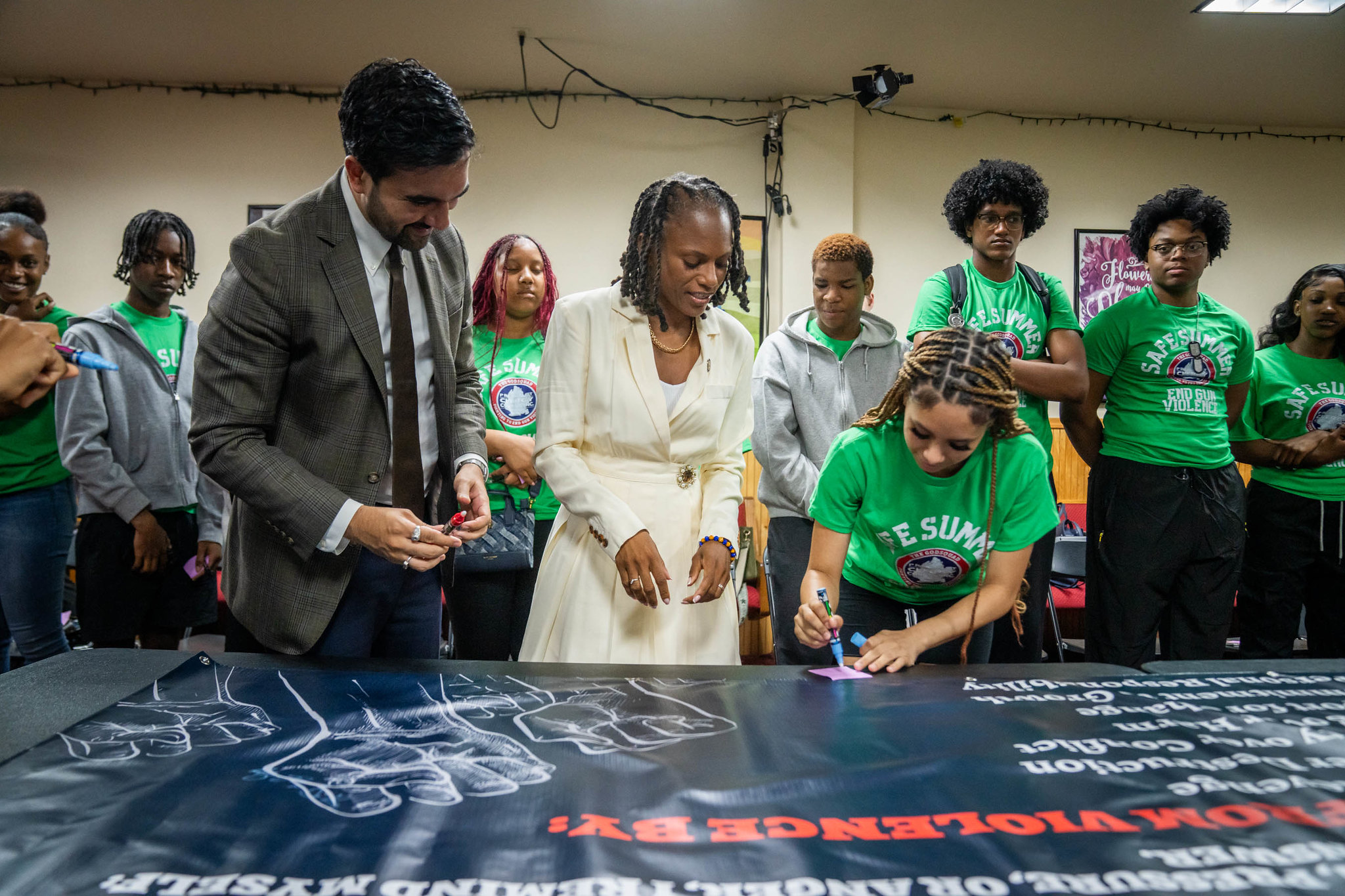
Mayor Mamdani visits the 67th Precinct Clergy Council (“The GodSquad”)/Project ECHO’s “Another Way” Initiative, which equips young people with leadership, communications, and conflict resolution skills through youth-led violence prevention. Reflections Church, Brooklyn. Friday, July 17, 2026. Credit: Ed Reed/Mayoral Photography Office.
Mayor Mamdani Delivers More Than $100 Million for Delivery Workers Since January
New report shows workers are on pace to earn $184 million more in tips annually following aggressive City enforcement against deceptive Big Tech app practices
*** Read the report here ***
NEW YORK – Mayor Zohran Kwame Mamdani and New York City Department of Consumer and Worker Protection (DCWP) Commissioner Samuel A.A. Levine released a new report showing the City’s crackdown on deceptive tipping practices by app-based delivery platforms has secured an estimated $104 million in additional tips for delivery workers since January.
Since the City began enforcing new tipping protections on January 26, 2026, tips have doubled, and the city’s approximately 70,000 app-based delivery workers are on pace to earn an additional $184 million annually in tips, or about $2,287 more each year for the average worker.
“For years, delivery apps buried the tip button to pad their own bottom line, and delivery workers paid the price,” said Mayor Mamdani. “We changed the law, enforced it, and it’s working: $104 million has gone back into the pockets of the workers who keep this city fed, rain or shine. New York will not allow billion-dollar tech companies to boost their profits by taking money from working people.”
“When a customer leaves a tip, that money belongs to the delivery worker, not to the app,” said Deputy Mayor for Economic Justice Julie Su. “It belongs to the worker who carried our food up four flights of stairs or biked through the rain to make sure dinner arrived at your door. Since January, delivery workers across New York City have earned $104 million more because we made these companies play by the rules. We’re not done. We’ll keep enforcing this law and keep going after any platform that tries to shortchange its workers.”
“New York is a city that tips—and I don’t just mean OG Anunoby’s game winner at the Garden. The data is clear: allowing consumers the clear ability to tip hardworking deliveristas benefits our workers and strengthens our economy,” said DCWP Commissioner Samuel A.A. Levine. “I said it when DCWP blew the whistle on delivery apps’ design tricks in January, and I’ll say it again: under Mayor Mamdani, the biggest corporations in the world will no longer be able to rake in record profits on the backs of New Yorkers.”
The report highlights the impact of the Mamdani administration’s efforts to enforce New York City’s Delivery Worker Laws and curb industry practices that reduced delivery workers’ earnings by an estimated $550 million in tips. It also demonstrates that stronger worker protections can increase earnings while maintaining consumer demand for food delivery.
“Delivery workers fought for years to win fair pay, only to watch app companies find new ways to take money out of workers’ pockets,” said Ligia Guallpa, Executive Director of Worker’s Justice Project and Co-Founder of its Los Deliveristas Unidos organizing campaign. “Today’s announcement is proof that organized workers can overcome even the most powerful corporations when government chooses to stand with working people. We are grateful to Mayor Mamdani, Commissioner Levine, and the entire DCWP team for showing that workers’ rights don’t end when legislation is passed – they become real only through strong enforcement. This victory is about far more than tips. It’s about demonstrating that New York will not allow corporations to profit by undermining the rights of the people who keep this city running.”
“When we passed the minimum pay guarantee for deliveristas in 2023, the apps responded by hiding the tip option from their customers,” said Majority Leader Shaun Abreu. “That cost deliveristas over half a billion dollars in earnings. We refused to let that stand, and I was proud to sponsor the law to restore tipping at checkout. The apps sued us over it, the judges said we were right, and the deliveristas won big. $104 million in earnings going back into their pockets since the law went into effect in January is money that helps them put food on their own tables. None of this is possible without DCWP’s continued enforcement, and we will continue to fight alongside them and the deliveristas until they get every cent they’ve earned.”
“When mega corporations implemented design tricks to cheat workers out of an average of $5,800 a year, the Council took action and the data shows the local laws that became effective earlier this year are working,” said Councilmember Harvey Epstein, Chair of the Consumer and Worker Protection Committee. “These tipping fairness laws don’t just protect workers—they strengthen our local economy by putting money back in New Yorkers’ pockets, so they can spend it in our communities. When workers are prospering our city thrives.”
“A city is judged by how it treats the people who do its hardest work,” said Assemblyman Charles D. Fall. “Delivery workers have shown up for New Yorkers through every season, every storm, and every hour of the day, asking for little more than the chance to earn an honest living. Putting more than $104 million back into their pockets is a reminder that hard work deserves dignity, sacrifice deserves respect, and the people who keep this city moving should never be left behind.”
Protecting Delivery Workers’ Tips
When New York City’s historic minimum pay standard for 70,000 app-based delivery workers took effect in December 2023, major tech platforms like Uber Eats and DoorDash responded by hiding tipping menus. DCWP estimates those changes cost workers an estimated $550 million in tips. Since January 26, 2026, delivery apps operating in New York City have been required to provide customers with a clear tipping option at checkout, including a selectable 10% tip, a custom tip amount, or the option to leave no tip.
Report Highlights
Tips per Delivery at Restaurant Delivery Apps Before and After DCWP Tipping Law:

- During the four weeks before the law took effect, deliver workers earned an average of $1.18 per delivery. During the four weeks after implementation, average tips increased to $2.29 per delivery, an increase of $1.11 per trip.
- The new tipping requirements had no measurable impact on demand for food delivery. Customers continued placing record-high numbers of orders on apps, with 3.3 million orders placed each week. That is 700,000 more weekly orders than in December 2023, when the City first began enforcing the minimum pay standard.
- Since December 2023, delivery workers’ total hourly earnings — including pay and tips — have increased from $10.48 per hour to $27.32 per hour, an increase of $16.84 per hour, or 161%.
- To date, New York City’s minimum pay standard has resulted in more than $2 billion in additional earnings for delivery workers.
Delivery workers can learn more about their rights under Delivery Worker Laws at nyc.gov/deliveryapps. Delivery workers who believe a restaurant or grocery delivery app has failed to pay the required minimum rate of $22.13 per hour, excluding tips, for time spent preparing or making deliveries are encouraged to file a complaint at nyc.gov/workers.
Mayor Zohran Kwame Mamdani releasedsthe Rental Ripoff Report, a package of 23 policy actions shaped by testimony from thousands of New Yorkers at Rental Ripoff Hearings held across the five boroughs on Thursday. July 16,, 2026. Michael Appleton/Mayoral Photography Office
Mamdani Administration Celebrates Formation of 100th City-Supported Tenant Union
8609 Bay 16th St. is the 100th tenant association organized through HPD’s Partners in Preservation program (PiP), which supports tenants fighting unsafe conditions and landlord harassment
Milestone comes as the administration advances legal recognition of tenant unions through the Rental Ripoff Report and Block by Block housing plan
NEW YORK – Mayor Zohran Kwame Mamdani, New York City Department of Housing Preservation and Development (HPD) Commissioner Dina Levy and Mayor’s Office to Protect Tenants (MOPT) Director Cea Weaver yesterday celebrated a major milestone in HPD’s Partners in Preservation (PiP) program: the formation of the 100th City-supported tenant union, at 8609 Bay 16th St. in Brooklyn.
Through PiP, HPD partners with community-based tenant organizing groups to help residents confront unsafe living conditions, landlord harassment and neglect. PiP funds organizers at 20 trusted organizations across 39 community districts, supporting tenants as they form associations, build collective power and hold negligent landlords accountable.
“Housing is about more than four walls and a roof, it’s about feeling safe when you come back at the end of the day. When tenants organize together, they can win repairs, improve building conditions and collectively bargain with their landlords. Reaching our 100th City-supported tenant union is proof that collective action works, and it’s only the beginning. Through our Block by Block housing plan, we will legally recognize tenant unions and support tenant organizing so more New Yorkers have the power to fight for the homes they deserve,” said Mayor Mamdani.
“Partners in Preservation has supported thousands of New Yorkers in fighting for their rights and better building conditions. Through Block by Block and the Rental Ripoff actions, we will build on that work by working hand-in-hand with organized tenants to strengthen code enforcement and preserve affordable housing,” said Leila Bozorg, Deputy Mayor for Housing and Planning. “Congratulations to the tenants, organizing partners, and HPD staff who have played a part in reaching this milestone!”
“Partners in Preservation is a groundbreaking program that empowers tenants to advocate for better conditions and a better future,” said HPD Commissioner Dina Levy. “Organized tenants make housing safer, stronger, and more stable. HPD is proud to lead this incredible program and to support organized tenants in every borough across New York City.”
“The most protected tenant is an organized tenant. Reaching 100 tenant associations is a testament to the dedication of tenants, organizers and community partners across this city. We’re building on that momentum by making it easier for New Yorkers to organize and fight for the safe, affordable housing they deserve,” said Cea Weaver, Director of the Mayor’s Office to Protect Tenants.
“Neighbors Helping Neighbors is proud to organize alongside the 8609 Bay 16th Street tenants. In a few short months, we have secured a commitment to repair building issues that have persisted for over 15 years, and we will continue to work together to make those commitments reality,” said Michelle de la Uz, Executive Director of Neighbors Helping Neighbors. “We are especially thrilled to celebrate this milestone at the New Utrecht Library, whose upcoming redevelopment will bring much-needed affordable housing opportunities to South Brooklyn. Thank you to the City of New York for its commitment to housing justice and to expanding affordable housing and building tenant power.”
The tenant association at 8609 Bay 16th St. was organized by Neighbors Helping Neighbors, an affiliate of Fifth Avenue Committee. Organizers first canvassed the building in December 2025, identified widespread concerns and returned five more times early in 2026 to help residents establish a tenant association.
Tenants reported pest infestations, inconsistent heat and hot water, unresolved lead paint complaints, poor apartment maintenance, neglected common spaces, stairwell accessibility issues and difficulty reaching building management. After tenants sent a demand letter to the landlord in March 2026 outlining these issues and requesting immediate action, the landlord initially denied the claims. Following sustained organizing, the landlord has begun to work with tenants to address several longstanding housing issues.

This milestone comes as the Mamdani administration expands support for tenant organizing across the city. Earlier this month, the administration released the Rental Ripoff Report, which identifies empowering tenants as one of four key strategies for holding negligent landlords accountable. Among its proposals is legally recognizing tenant unions, building on commitments outlined in Block by Block, the administration’s housing plan.
The Mayor’s Office of Mass Engagement (OME) and MOPT also recently launched “Talk to Tenants,” a citywide organizing effort in which volunteers contact New Yorkers to inform them of their right to organize and connect them with resources to advocate for safer, healthier homes.
Together, these efforts reflect the Mamdani administration’s broader approach to preserving affordable housing and improving housing quality across the city. Organized tenants are better equipped to win repairs, challenge negligent landlords and protect their rights – not only for themselves, but for future generations of New Yorkers.
Since its launch, PiP has established more than 100 tenant associations. Organizers have knocked on more than 30,000 doors in over 700 buildings, held more than 600 workshops and trainings, and provided more than 3,500 one-on-one counseling sessions.
Banner Image: Mayor Mamdani visits the 67th Precinct Clergy Council (“The GodSquad”)/Project ECHO’s “Another Way” Initiative, which equips young people with leadership, communications, and conflict resolution skills through youth-led violence prevention. Reflections Church, Brooklyn. Friday, July 17, 2026. Image Credit – Ed Reed/Mayoral Photography Office.

NYC Mayor Zohran Mamdani
Zohran Mamdani was sworn in as Mayor of the City of New York on January 1st, 2026. Prior to becoming Mayor, he represented the 36th New York State Assembly District and its neighborhoods of Astoria, Ditmars-Steinway, and Astoria Heights.
[…] note: While the below article claims that the possibility of many of the existing grocery stores closing is less real due to their reliance on cigarettes and beer for profit, since the profit margins are […]