

NYC Mayor: Home-Based Childcare Microgrants, Protecting Delivery Workers, Harnessing Subway Heat, Childcare Costs Covered, Other Updates
Home-Based Childcare Microgrants, Delivery Protection Act, Harnessing Subway Heat, 12K Affordable Homes Financed, Bronx Busway Groundbreaking, Free Childcare Costs For Low-Income: Mayor Mamdani
Editor’s note: See last week’s rundown from the mayor here. You can also learn about the lawsuit against the millionaire second home tax (pied-a-terre), where the judge has issued an injunction about the rollout.

Mayor Zohran Kwame Mamdani visits the 100th tenant association to join the New York City Department of Housing Preservation and Development (HPD)’s Partners in Preservation tenant organizing program and celebrates the work of tenant organizing in Brooklyn on Tuesday, July 28, 2026. Credit: Ed Reed/Mayoral Photography Office.
Mayor Mamdani Announces New Emergency Microgrant Program for Home-Based Child Care Providers
Administration launches first step toward the City’s $3 million Emergency Microgrant Fund dedicated to licensed home-based child care providers
City issues RFP to administer new fund
NEW YORK – Today, Mayor Zohran Kwame Mamdani announced a new $3 million Emergency Microgrant Fund to support licensed home-based child care providers across New York City. The fund will provide direct financial assistance to providers facing urgent emergencies that threaten their ability to remain open and continue serving families. As the first step in launching the program, the City today issued a request for proposals (RFP) to identify an organization to administer the fund.
“Home-based child care providers are the backbone of our child care system. They should not have to shoulder emergencies on their own. When a refrigerator breaks, a pipe bursts or a storm damages a home, families can lose access to the care they rely on overnight,” said Mayor Mamdani. “This microgrant program is about making sure government shows up before a crisis becomes a closure. It’s one more step toward building a child care system that values every provider and every family.”
“For too long, our child care system hasn’t had the infrastructure in place to help providers weather unexpected emergencies. This new microgrant program recognizes that home-based child care providers are essential to our city’s child care system,” said Emmy Liss, Executive Director of the Mayor’s Office of Child Care and Early Childhood Education. “We designed this initiative alongside child care providers themselves because the best public policy is built with the people it serves.”
Home-based child care providers are a vital part of New York City’s early child care ecosystem, serving up to 100,000 children linguistic and culturally responsive care directly within their communities. Through the new fund, more than 500 licensed providers will be eligible for emergency microgrants ranging from $1,000 to $10,000 to address urgent needs that could otherwise disrupt or end their operations.

The Mayor’s Office of Child Care and Early Childhood Education will work with the selected administrator to finalize the program’s design and launch the initiative before the end of 2026.

Mayor Mamdani and NYPD Commissioner Tisch host the 1st Anniversary Memorial Ceremony for Detective Didarul Islam. 47th Precinct, Bronx. Tuesday, July 28, 2026. Credit: Ed Reed/Mayoral Photography Office.
The Emergency Microgrant Fund was co-designed by the Mayor’s Office of Child Care and Early Childhood Education and a working group of home-based child care providers and advocates. Together, they identified emergency financial assistance as a top priority and collaborated to design the initiative’s guiding principles, goals and eligibility.
In April, Mayor Mamdani launched the Child Care Action Fund through the Mayor’s Fund to Advance New York City to help build a high-quality universal child care system that supports families, educators and providers. The microgrant program will be funded through the Child Care Action Fund and complements the administration’s broader investments in free, accessible and universal child care.
“For so many of us that rely on home-based providers, we know how a single maintenance issue in their home can impact not only the service they provide, but their livelihood too,” said Council Member Jennifer Gutierrez, Chair for the Subcommittee on Early Childcare Education. “We’ve heard from so many providers who often take matters into their own hands rather than wait on their nonresponsive landlord. This microgrant could provide a small safety net in these instances, so that they can continue operating safely and pay their staff. I am so grateful Mayor Mamdani and the Mayor’s Office of Child Care continue to work closely with providers to offer real solutions and support working families.”
“Home-based childcare providers are the backbone of our early childhood system, caring for our youngest New Yorkers while allowing parents to work, attend school, and support their families. Yet too many providers operate on razor-thin margins, where one unexpected emergency can force them to close their doors. I applaud Mayor Mamdani for establishing this $3 million Emergency Microgrant Fund to provide the timely support these small businesses need to remain open and continue serving our communities. As Chair of the New York City Council Committee on Higher Education and a lifelong educator, I know that strengthening the educational pipeline begins with investing in our youngest learners and the dedicated caregivers who nurture them every day. This investment is an important step toward ensuring that families have access to stable, high-quality childcare and that the providers who make that care possible receive the support they deserve,” said Council Member Rita Joseph.
“Too often, we treat child care as a family issue when it is also an economic issue. Working parents cannot stay in the workforce without reliable child care, and for thousands of New York City families, licensed home-based child care is what makes work possible. Supporting these providers strengthens families, neighborhoods, our city’s economy and quality early education teaching. I thank Mayor Mamdani for making this investment,” said Council Member Gale A. Brewer.
“Securing childcare for all means investing in all forms of childcare, including supporting home-based providers that are already providing critical support to working families. I applaud the Mayor for this microgrant initiative,” said Councilwoman Kayla Santosuosso.
“Family child care providers are the backbone of New York City’s early childhood system, yet they are often the first to face hardship and the last to receive support. This microgrant fund recognizes that when we invest in providers, we protect children, families and entire communities. It’s an important step toward building a stronger, more equitable child care system where no provider has to face a crisis alone,” said Gladys Jones, Founder & CEO, ECE on the Move, member of the Microgrant working group.
“This microgrant fund shows what’s possible when providers, partners, and the city unite for early childhood education. Every investment in childcare strengthens families and communities. I’m proud to have been part of this work and excited to see it reach the providers who give so much to children every day,” said Ayan Wilson, home-based child care provider in the Bronx, member of the Microgrant working group.
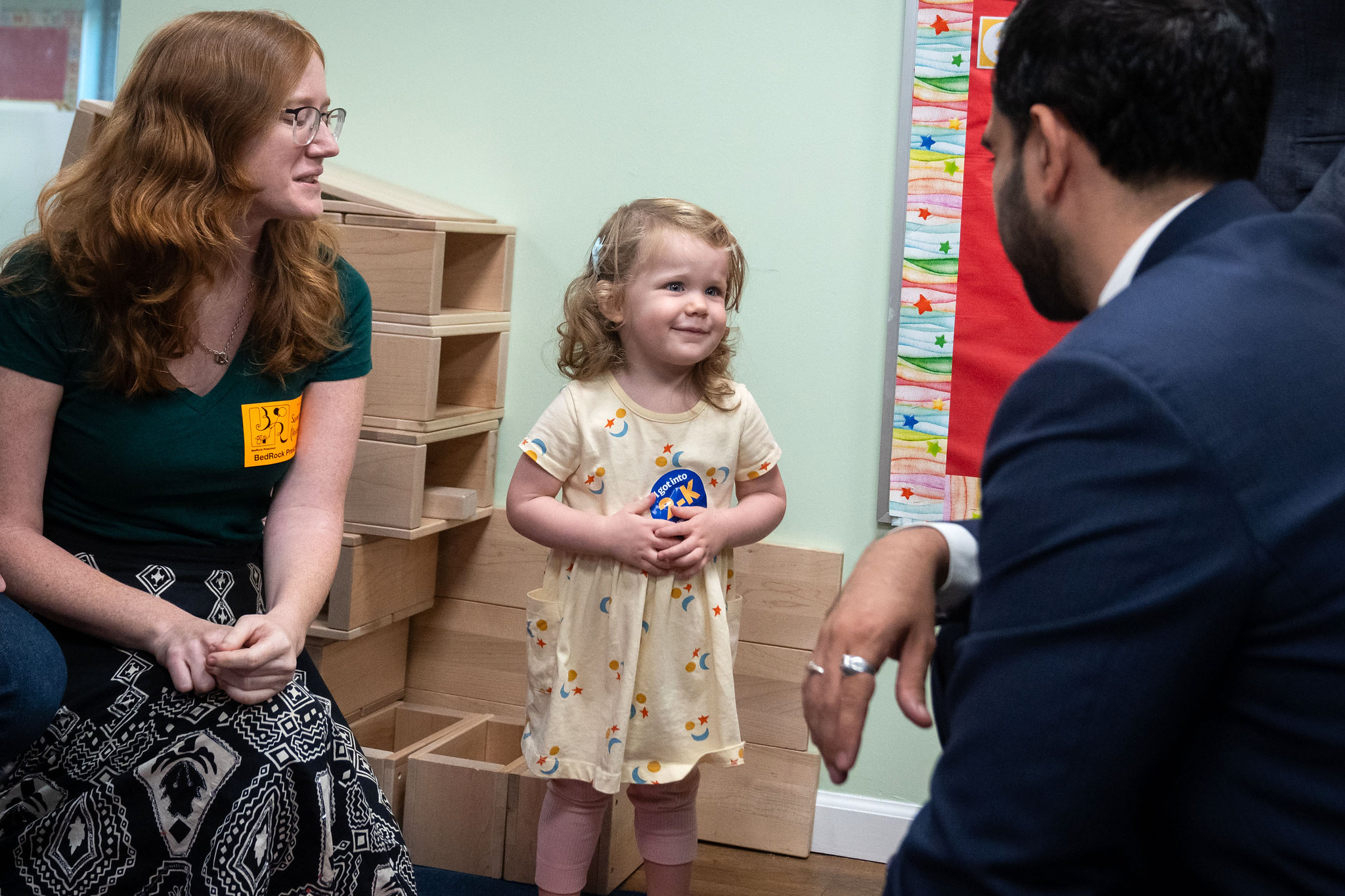
Mayor Zohran Kwame Mamdani and Governor Kathy Hochul announce that more than 2,000 children are receiving offers to join New York City’s inaugural 2-K class. Bedrock Preschool, Bronx. Tuesday, August 4, 2026. Credit: Ed Reed/Mayoral Photography Office.
Mayor Mamdani Backs “Delivery Protection Act” to Rein in Amazon’s Power Over New York City Streets
Legislation would crack down on subcontracting model that allows corporations like Amazon to evade responsibility for dangerous working conditions and unsafe streets
Bill would establish City oversight of “last mile facilities,” hold big corporations responsible for employing delivery workers and create new safety and worker protection standards
***Watch new video announcing Mayor Mamdani’s support here***
NEW YORK — Today, Mayor Zohran Kwame Mamdani announced his support for the Delivery Protection Act, legislation that would rein in the power of corporate delivery giants like Amazon, hold them accountable for their exploitative business model and make New York City’s streets safer for workers, drivers and pedestrians.
Major corporations like Amazon have built billion-dollar businesses on a subcontracting system designed to shield them from responsibility. Through delivery subcontractors, corporations dictate hiring standards, delivery routes, steep productivity quotas and workplace expectations while denying that the workers making those deliveries are employees. The result is a system that leaves workers vulnerable and corporations free to avoid accountability for reckless conditions on city streets.
Sponsored by New York City Council Member Tiffany L. Cabán, the Delivery Protection Act would create a licensing system for certain last-mile warehouses and distribution facilities while establishing new safety, training and labor standards.
The legislation would also hold the company operating the facility, such as Amazon, responsible for employing the workers performing core services, such as delivery. That would give the City the tools to regulate last-mile operations and ensure major companies like Amazon are responsible for the consequences of the business decisions they make.
“Corporations like Amazon build billion-dollar business models by insulating themselves from accountability through a system of exploitative subcontracting. As last-mile delivery centers have exploded across New York, so too have traffic accidents and worker injuries. The Delivery Protection Act is commonsense regulation that protects delivery workers, safeguards the communities where these facilities operate and ensures that the corporations benefiting from workers’ labor are responsible for the consequences of their business practices,” said Mayor Mamdani. “New Yorkers should not be forced to subsidize corporate profits with less safe streets and more precarious jobs. The people who make these companies run deserve dignity, stability and a safe workplace. It’s time to end the subcontracting model that puts profits over people and build an economy that works for working New Yorkers.”
“New York City should be a place where working people, consumers, small businesses and companies that play by the rules know they’ll get a fair shake. Corporations that rely on cheap, exploited labor undercut that promise,” said Deputy Mayor for Economic Justice Julie Su. “For years, Amazon has relied on a convoluted subcontracting system that denies last-mile drivers the protections other workers get, while maintaining extraordinary control over their schedules, workloads, and uniforms. The Delivery Protection Act would close this loophole, improve safety for drivers and communities and begin to correct the imbalance of power that massive corporations like Amazon have accumulated.”
“An economy that rewards exploitation, shields powerful corporations from responsibility and forces workers to gamble with their lives to earn a paycheck is not worthy of this city. The Delivery Protection Act affirms a simple idea: those who profit from our labor and public spaces must also be responsible for the people and communities that make it possible,” said Samuel A.A. Levine, Commissioner of the NYC Department of Consumer and Worker Protection (DCWP). “DCWP will use every ounce of our authority to protect workers and fight for safe streets. Because this city doesn’t run because multi-billion-dollar corporations say so. It runs because working people show up every single day.”
Last mile facilities are warehouses where packages are sorted and dispatched for final delivery. Since 2017, at least 18 large last-mile facilities have opened across New York City, including 11 since 2020. Although major delivery companies like Amazon do not always employ the drivers working out of these facilities directly, they nonetheless exert significant control over their actions and workplaces. For instance, a recent Bloomberg Businessweek investigation found that Amazon controls “which drivers [delivery subcontractors] can hire, when they work, where they drive, what they say, how they [dress] and much more.”
These facilities have also been linked to worsening traffic safety. A 2025 report from the Office of the Comptroller found that 78% of nearby areas experienced an increase in injury-causing crashes after last-mile facilities opened. In Maspeth, crashes near major FedEx and Amazon warehouses increased by 53% percent and 48% percent, respectively, while a cluster of facilities in East New York also experienced sharp increases in crashes within a half-mile radius.
The Delivery Protection Act would require last-mile facilities to obtain licenses from DCWP and establish minimum safety, training and worker protection standards. The legislation would also ensure companies are accountable for the quotas, schedules and routes that shape working conditions and affect public safety.
Mayor Mamdani’s support for the Delivery Protection Act builds on his administration’s broader effort to challenge concentrated corporate power and deliver a fairer economy for working New Yorkers.
Earlier this year, the Mamdani administration recovered $9 million in unpaid vehicle idling fines from Amazon. Last month, Mayor Mamdani announced the nation’s first municipal “Click-to-Cancel” rule and banned junk fees, making it easier for New Yorkers to understand the true cost of goods and services and cancel unwanted subscriptions. The administration has also taken action against predatory practices in the self-storage industry, cracked down on illegal towing companies and secured $104 million in additional tips for delivery workers through aggressive City enforcement against deceptive tipping practices by Big Tech.
“For too long, companies like Amazon have operated in our city like it’s the Wild West, ignoring workers’ rights, putting our communities in danger, and acting with impunity. It’s time to pass my bill, the Delivery Protection Act to keep workers and our streets safe and to end the charade of huge corporations hiding behind third party contractors to evade accountability,” said New York City Council member Tiffany Cabán. “I look forward to working with the Mayor and the Department of Consumer and Worker Protection to make this a reality.”
“From exploiting workers to polluting communities with unregulated last-mile facilities, Amazon has harmed working-class communities like mine for long enough,” said New York City Council Member Alexa Avilés. “I’m proud to stand with Mayor Mamdani in the fight for the Delivery Protection Act, and urge my City Council colleagues to stand with workers and environmental justice communities and sign on to this vital legislation.”
“Amazon’s Delivery Service Partner model is the most dangerous business model in America today. It allows Amazon to break the law while hiding behind shell companies it has total control over,” said Teamsters General President Sean M. O’Brien. “The Delivery Protection Act is the blueprint for how workers can fight back against Amazon’s greed. The New York City Council must pass this critical legislation and do its part to protect American workers.”
“Amazon’s cowardly business model lets them hide behind third parties and shirk responsibility while workers and our neighbors get hurt. We commend Mayor Mamdani for supporting our movement to hold Amazon accountable. The Delivery Protection Act will deliver justice for Amazon workers and make a trillion-dollar corporation finally take responsibility for their part in our city’s safety,” said Theodore Moore, ALIGN Executive Director and leader of the New Yorkers for a Fair Economy coalition.
“Employers like Amazon put their workers in danger through unsafe working conditions and illegal activity that threatens the safety of the broader public. The Delivery Protection Act will force irresponsible corporations to take accountability of their operations, and finally bring white-collar crime to heel,” said Vincent Perrone, President of Local 804 IBT. “We appreciate Council Member Caban and Mayor Mamdani supporting swift passage of this important bill, and for standing in solidarity with working people across the city of New York.”
“Last-mile delivery is now part of everyday life in New York City, but the rules have not kept up, and workers and communities are paying the price. New Yorkers shouldn’t have to choose between the convenience of delivery and safe jobs, safe streets, and accountability,” said Brendan Griffith, President, New York City Central Labor Council, AFL-CIO. “The Delivery Protection Act will establish stronger protections for worker safety, employment, and responsible operations while bringing long-overdue oversight to an industry where major operators have too often hidden behind subcontractors. To be clear: when these companies “raise the alarm” of fewer jobs, higher prices, or service reductions, they are describing choices that they may make, not in the best interest of consumers and workers but to protect their bottom line. We thank Mayor Mamdani for standing with the Amazon Teamsters and the Labor Movement in support of this legislation that puts NYC workers — who are also consumers — first, and we urge the City Council to pass it without delay.”

Mayor Zohran Kwame Mamdani and Governor Kathy Hochul announce that more than 2,000 children are receiving offers to join New York City’s inaugural 2-K class. Bedrock Preschool, Bronx. Tuesday, August 4, 2026. Credit: Ed Reed/Mayoral Photography Office.
Mayor Mamdani, Governor Hochul and MTA Announce Plan to Lower Subway Platform Temperatures and Harness Thermal Energy in Lower Manhattan
City and State partnership will study first Thermal Energy Network (TEN) in a U.S. transit system as part of the Chambers Street J/Z station renewal project
City and MTA-led study at Brooklyn Bridge-City Hall 4/5/6 and Chambers Street J/Z stations will explore reducing platform heat and recycling excess heat to nearby municipal buildings during colder months
NEW YORK – Mayor Mamdani, Governor Hochul and the Metropolitan Transportation Authority (MTA) announced today a partnership to study a Thermal Energy Network (TEN) in the Brooklyn Bridge-City Hall 4/5/6 and Chambers Street J/Z station complex. The project will explore how to combat extreme heat on subway platforms while capturing and recycling excess heat to warm nearby municipal buildings during the winter.
The project would be the first thermal energy network installed in a U.S. transit system. The announcement comes days after Governor Hochul and the MTA announced plans for a comprehensive renewal project at the Chambers Street station, which is among the oldest in the subway system.
Brooklyn Bridge-City Hall 4/5/6 is one of the hottest stations in the subway system, with average temperatures reaching 96 Fahrenheit during the summer months, in 2025. While the MTA prioritizes reliable service in the short-term to get customers on air-conditioned trains and spend less time on platforms, this study will help identify ways to reduce heat, improve rider comfort, and mitigate heat-related issues that can lead to service delays.
The revitalization of Chambers Street J/Z, which will rebuild structures, replace tiles, upgrade stairways and restore the station from top to bottom, is being funded through congestion pricing. The project provides the MTA and City with a unique opportunity to study TENs as a tool to cool subway platforms while capturing and reusing excess heat in nearby municipal buildings during the winter, lowering energy costs over the long term.
“There are few feelings worse than escaping the extreme summer heat only to find yourself on a subway platform that is even hotter. Unfortunately, for millions of commuters that is the reality of our transit system — with some stations soaring up to 20 degrees hotter than the outside temperatures,” said Mayor Mamdani. “We now have an opportunity to do more than rebuild Chambers Street top to bottom. We can make our subway platforms cooler and more comfortable while putting wasted heat to work during the winter. That means lower energy costs, a more resilient subway system and a cleaner energy future for New York City.”
“For years, New Yorkers have suffered through sweltering summer heat on subway platforms, with seemingly no hope for a cooler ride in sight. Today, I can assure riders during this hot summer week that help is on the way,” said Governor Hochul. “Working with Mayor Mamdani and the MTA, we are harnessing cutting-edge climate technology for a truly cool purpose: making our subway stations tolerable during the summer and heating critical city buildings during the winter. This is what effective partnership between city and state government can yield – innovative solutions that have the potential to help millions of subway riders.”
“Bringing down the temperature is a real challenge in a century-old system with open entrances and vents everywhere,” said MTA Chair and CEO Janno Lieber. “Together with Governor Hochul and Mayor Mamdani, we’re exploring solutions — previously untested in transit — to make stations more comfortable while helping to reduce energy costs. Everybody wins.”
“Every time New Yorkers are stuck on a hot subway platform, we are confronted with the reality of the climate crisis,” said Chief Climate Officer Louise Yeung. “Advancing a thermal energy network that will sustainably cool the Chambers Street subway station and heat the surrounding city buildings is a testament to our administration’s bold and innovative agenda to deliver climate solutions that protect New Yorkers. From advancing the nation’s first subway thermal energy network to piloting heat-resilient bus shelters and outdoor cooling centers, the City is committed to making our transit systems safer and more comfortable as New York City faces rising temperatures.”
“The City of New York is meeting the realities of climate change head-on by investing in infrastructure that is both resilient and innovative,” said Department of Citywide Administrative Services Commissioner Yume Kitasei. “DCAS is proud to partner on this study to identify the next generation of upgrades that will make our public buildings and infrastructure more efficient, sustainable, and prepared for the future.”
TENs, already in use at several hospitals and universities, move heat between buildings, significantly reducing reliance on fossil fuels. The MTA and City will assess the feasibility of using TENs and geothermal infrastructure to absorb, store and transport excess heat between subway stations and adjacent municipal buildings.
The initial feasibility study will help determine how much cooling can be achieved and the potential energy cost savings for the City.
The proposed geothermal network would capture, store and redirect excess heat that accumulates in the Brooklyn Bridge-City Hall and Chambers Street station complex to municipal buildings. Radiant cooling technology would absorb heat from Brooklyn Bridge-City Hall platforms, and potentially Chamber Street as well, and transfer it through pipes to geothermal boreholes drilled beneath the abandoned center platform at Chambers Street. The excess heat could then be stored in the boreholes and used during colder months to heat nearby municipal buildings.
The study will be conducted in partnership with New York City Department of City Administrative Services (DCAS), the Mayor’s Office of Climate and Environmental Justice, the Office of the Deputy Mayor for Operations and the MTA. The contract for the feasibility study is expected to be awarded this fall. Pending confirmation of geothermal feasibility, design work will begin in early 2027.
This initiative is part of the City and MTA’s broader efforts to address the threat climate change poses to the future of the transit system, including the growing impacts of extreme heat. Radiant cooling, which can be 25 to 35% more energy efficient than traditional air conditioning, removes heat by circulating chilled water through panels on walls and ceiling or through tubing embedded in the floors, allowing cool surfaces to absorb heat directly.
The Chambers Street station is particularly well suited for the study because its abandoned center platform would allow the MTA to test technology without disrupting passenger areas. Brooklyn Bridge – City Hall also experiences significant heat in part because of heat generated by trains dwelling at the 6 line terminal.
“Every New Yorker who has spent even two minutes waiting on a sweltering subway platform knows how urgently we need better solutions to extreme heat underground,” said City Comptroller Mark Levine. “This study will explore whether we can make stations more comfortable while capturing that heat for a productive use. I’m glad to see the Mayor and Governor working together to pursue innovative solutions that can simultaneously improve the experience of subway riders and build a greener, more efficient and lower-cost energy system.”
“As climate change only continues to increase the frequency and severity of extreme heat waves, this study offers a creative solution for cooling, boosting our energy efficiency, and strengthening our city’s climate resilience,” said NYC Public Advocate Jumaane D. Williams. “It’s especially exciting that this new technology will be explored at one of the city’s hottest subway stations, bringing relief to riders who need it the most. I thank the MTA, MOCEJ and DCAS for their leadership in addressing one of our most persistent transit challenges to ensure the safety and accessibility of our subway system for all New Yorkers.”
“Every Manhattanite knows the Chambers J/Z station needs serious work — and I’m elated Governor Hochul, Mayor Mamdani and the MTA are stepping up and getting to work,” said Manhattan Borough President Brad Hoylman-Sigal. “The goal of this innovative study will be to capture excess subway heat and store it to heat the buildings above, providing a first-in-the-nation model for cooler, more comfortable subway stations, especially in the humid summer months. I’m grateful to Governor Hochul, Mayor Mamdani and NYSERDA for fostering and expanding upon an already-productive City-State partnership, which will deliver a far better ride for millions of New Yorkers.”
“I am glad to see that the city and state government and the MTA are joining forces to study how to use thermal energy networks to bring down heat levels in our subway system. Every New Yorker knows the feeling when you go to take the train on a hot summer day and find yourself waiting on a stuffy, overheated subway platform,” said New York State Senator Liz Krueger. “As climate change continues to increase temperatures in our city and across the world, it is more essential than ever that we work together to find solutions which can mitigate overheating and prevent an inconvenience from turning into a potentially life-threatening situation, while generating renewable energy in the process.”
“Every summer, I hear from my constituents about how brutal the heat on subway platforms across my district and the City can be,” said State Senator Brian Kavanagh. “As we face the growing dangers of climate change and prolonged extreme heat, exploring sustainable solutions to the high temperatures in our transit system is a critical task. I’m thrilled that the MTA is working to turn this harmful summer heat into a resource, joining SUNY campuses across the state and innovators across the world working with thermal energy networks to cut costs, provide effective heating and cooling, and reduce emissions. This study is exactly the kind of practical, climate-smart infrastructure that New York should be leading on, and I thank Mayor Zohran Mamdani, Janno Lieber and Jamie Torres-Springer, Doreen Harris, and everyone at the Mayor’s Office, the MTA, NYSERDA and DCAS for their commitment to this important work.”
“Anyone who has waited for a train at a subway station on a hot day knows how unbearable it can get,” said Assemblymember Grace Lee. “As extreme heat becomes more common, we need innovative ways to adapt our century-old transit system. I am proud that Lower Manhattan is leading the way in testing a solution that could make stations more comfortable and our city more climate resilient. Thank you to Mayor Mamdani, MTA Chair Lieber and our partners at the MTA and City for investing in innovative solutions for New Yorkers.”
“Many subway stations are more than a century old and weren’t designed to handle today’s extreme heat, making creative solutions essential,” said MTA Construction & Development President Jamie Torres-Springer. “Exploring a Thermal Energy Network model is a major step forward that has the potential to turn excess heat into a valuable asset for riders and the city.”
The partnership with the MTA builds on the Mamdani administration’s efforts to confront the climate crisis and build a greener, more resilient city. Earlier this year, the administration released its Urban Forest Plan, plotting a course toward 30% tree coverage citywide. As temperatures rise, expanded tree canopy will help reduce heat and protect New Yorkers for years to come.
The administration is also making historic investments in renewable energy, including the construction of 130 solar installations on schools across New York City that will provide 27.5 megawatts of electricity. An additional 86 projects are in the pipeline and would add another 17.2 megawatts.
As part of the administration’s mission to reduce citywide emissions, the City is also accelerating vehicle electrification. The administration has already surpassed 1,000 electric vehicles for law enforcement and is on track to fully electrify the Sanitation Department, Parks Department and DCAS enforcement fleets by 2030 — five years ahead of the timeline required by local law.
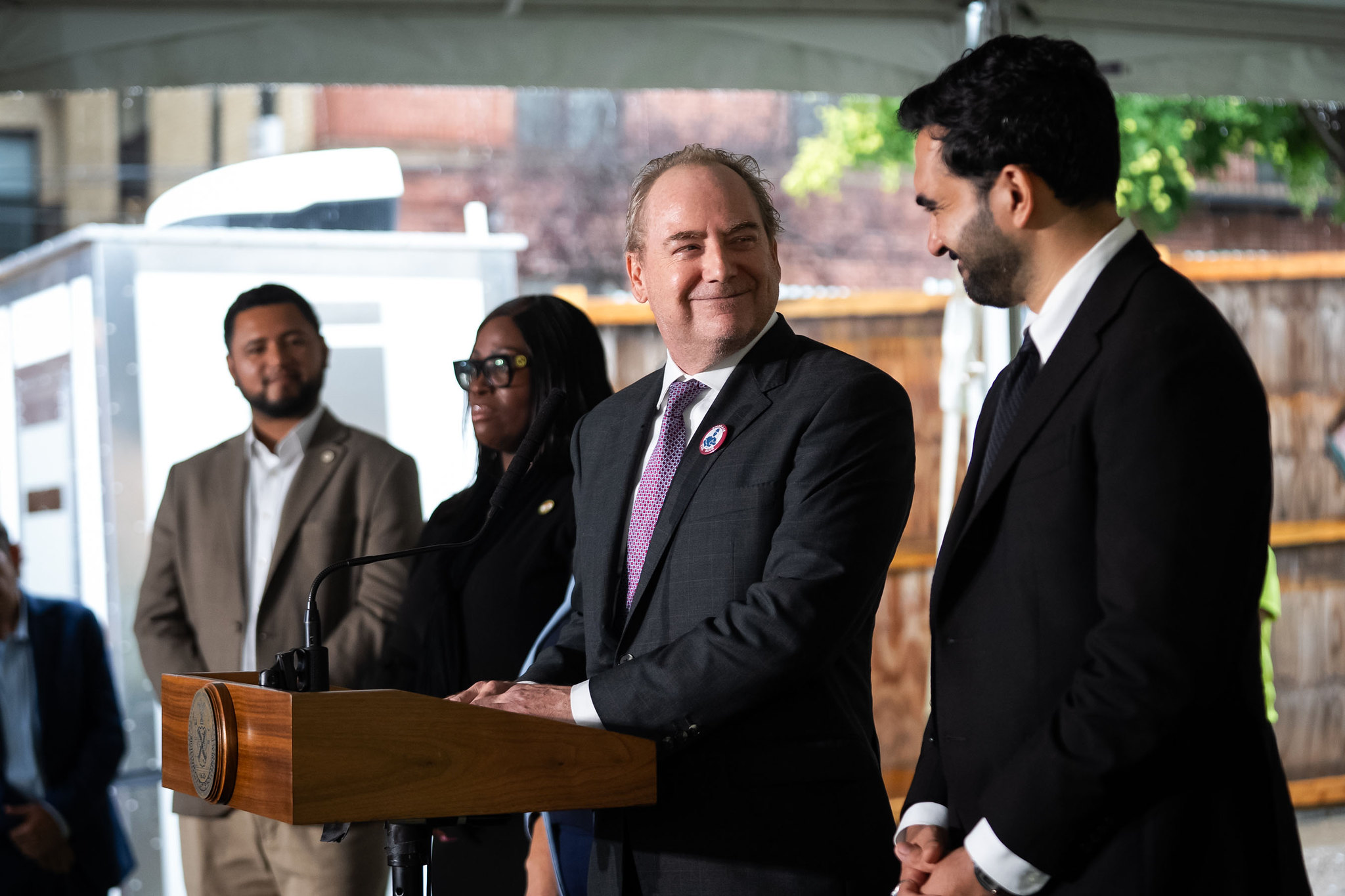
Mayor Zohran Kwame Mamdani is joined by The Doe Fund and local leaders to break ground on the Casanova Residence, a new supportive and affordable housing development in Hunts Point, the Bronx. Monday, August 3, 2026. Credit: Ed Reed/Mayoral Photography Office.
Mamdani Administration Financed More Than 12,000 Affordable Homes in First Six Months in Office
Nearly 10,000 New Yorkers connected to affordable housing from January through June 2026
Administration working to scale up investment, speed permitting and accelerate lease-ups
NEW YORK – Today, Mayor Zohran Kwame Mamdani and Deputy Mayor for Housing and Planning Leila Bozorg announced that the City financed the creation and preservation of 12,491 affordable homes in the first six months of 2026, including more than 2,000 homes for formerly homeless New Yorkers.
More than half of the homes will serve extremely and very low-income New Yorkers earning less than 50% of the area median income (AMI) – or less than roughly $68,000 annually for a two-person household. During the same period, the Mamdani administration connected 9,970 New Yorkers, including 4,370 formerly homeless people, to affordable housing.
These accomplishments, from the second half of fiscal year 2026, come as Mayor Mamdani is making a historic $22 billion capital investment in affordable housing over five years as part of his first budget as mayor. As part of its comprehensive Block by Block housing plan, the Mamdani administration is deploying innovative financing tools to help develop affordable homes more efficiently. The administration has also proposed a suite of “SPEED” reforms to cut up to two years from the pre-development, permitting and lease-up processes for affordable housing.
“Affordable housing is a lifeline for millions of New Yorkers, and we made it our responsibility to meet the housing crisis with the scale and urgency it demands. In just our first six months, we financed more than 12,000 affordable homes,” said Mayor Mamdani. “And with a historic $22 billion investment over five years, we are just getting started. We are going to build more, preserve more and move more New Yorkers into homes faster than ever before.”
“We are making historic investments and cutting through red tape to deliver the housing relief that New Yorkers need, more quickly. In our first six months in office, we have already taken important steps to finance affordable housing, permit new construction and help New Yorkers move into affordable homes more quickly, and we will scale up this work in the years to come,” said Leila Bozorg, Deputy Mayor for Housing and Planning.
NYCHA investments
At public housing properties, NYCHA completed 32 capital projects between January and June 2026, covering 29 developments and benefiting more than 50,000 residents. The projects included heating, elevator, roof, facade, waste management and community center improvements.
The administration also financed the preservation of more than 900 NYCHA apartments through the Permanent Affordability Commitment Together (PACT) program during the first six months of the year.
Investments across the housing system
The affordable homes financed during the first six months of 2026 include:
- 1,428 affordable homes for seniors
- 1,287 units of supportive housing
- Preservation financing for 1,198 apartments in Mitchell-Lama developments
“In our first 6 months, we are already off to a running start. With new initiatives like SPEED and LIFT, we’re building more affordable housing faster than ever. This year, we’re building 50% more homeownership units and 40% more senior and supportive housing units than over the last 4 years,” said Department of Housing Preservation and Development (HPD) Commissioner Dina Levy. “But our work is just getting started. We are ramping up to deliver an unprecedented amount of housing, including a record 200,000 affordable homes over the next decade. New Yorkers are struggling with high housing costs — and bringing them down is this administration’s top priority.”
“Today’s production announcement reflects our shared commitment to addressing the housing crisis with urgency and at scale,” said New York City Housing Development Corporation (HDC) President Eric Enderlin. “HDC is proud to continue this important work with the Administration, and our colleagues at HPD and NYCHA, to build and preserve affordable and public housing, expand opportunities for our most vulnerable residents and help more New Yorkers access safe, stable and affordable homes.”
“The Mamdani administration has made it clear that housing is a top priority, and we are grateful for their commitment to ensuring NYCHA residents are at the center of that work,” said NYCHA Chief Executive Officer Lisa Bova-Hiatt. “Through meaningful investment in both new affordable housing opportunities and the preservation of our existing housing stock, together we are strengthening NYCHA communities across the city. This critical work protects and improves the homes New Yorkers depend on today and positions NYCHA to remain a cornerstone of affordable housing in New York City for generations to come.”
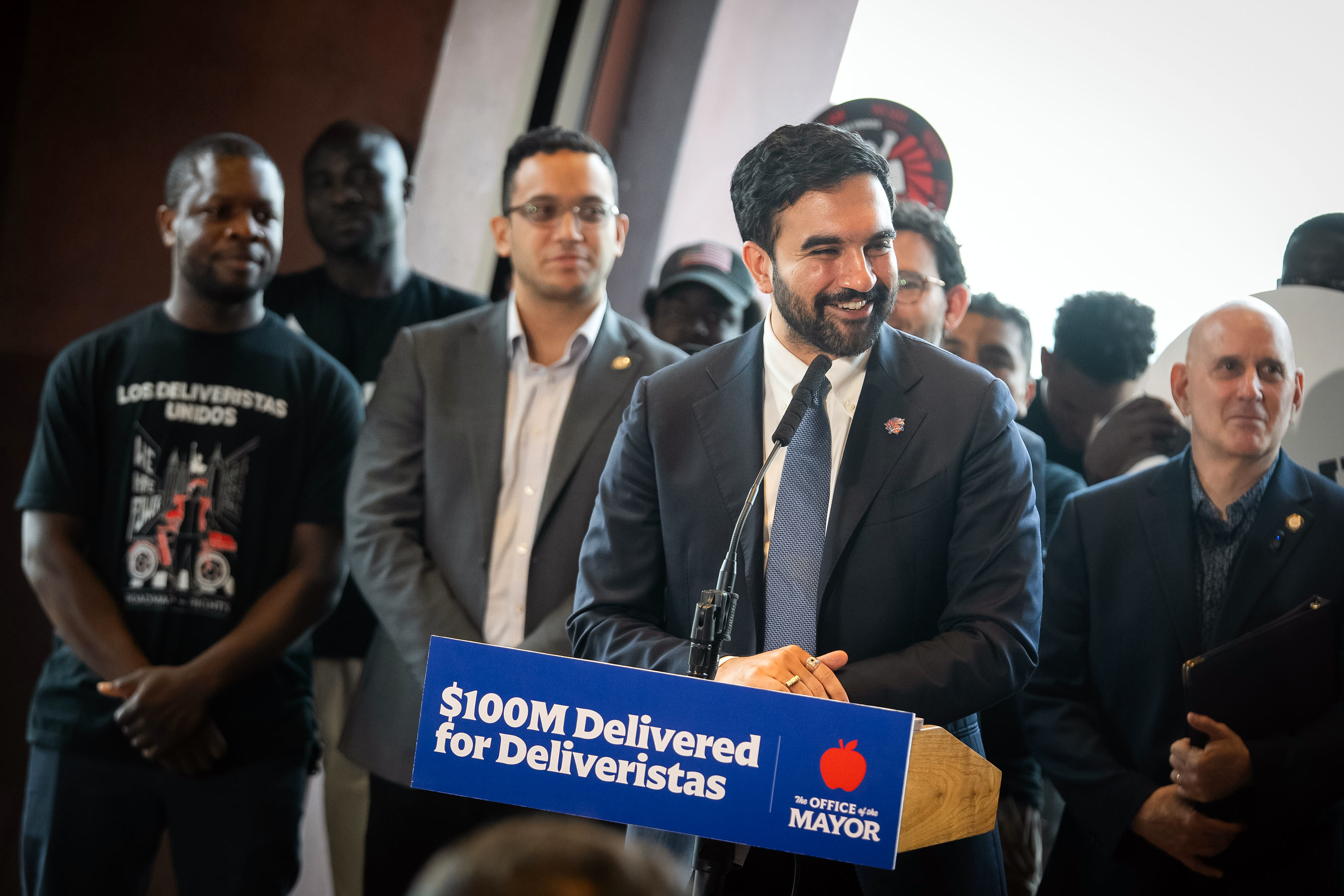
Mayor Zohran Kwame Mamdani and New York City Department of Consumer and Worker Protection (DCWP) Commissioner Samuel A.A. Levine release a new report showing the City’s crackdown on deceptive tipping practices by app-based delivery platforms has secured an estimated $104 million in additional tips for delivery workers since January. Robert F. Wagner Jr. Park, Manhattan. Wednesday, July 29, 2026. Credit: Ed Reed/Mayoral Photography Office.
“As we face an unprecedented housing crisis, every new home is a win. Today’s numbers show what’s possible when we use all our tools — including policies like Mandatory Inclusionary Housing — to create permanently affordable homes and give New Yorkers the stability they need to thrive. And we’re just getting started. Through our Block by Block housing plan and SPEED reforms, we’ll keep breaking down barriers to housing and building a more affordable, equitable city,” said Department of City Planning (DCP) Director Sideya Sherman.
“Affordable housing does double duty in this work,” said Department of Social Services (DSS) Commissioner Erin Dalton. “It’s both the exit ramp out of shelter and the guardrail that keeps New Yorkers from falling into homelessness in the first place. When more than 12,000 households can afford to stay in their homes, they never have to become part of our system at all.”

Mayor Mamdani Marches in the Annual Ecuadorian Independence Day Parade in Queens. Sunday, August 2, 2026. credit: Ed Reed/Mayoral Photography Office.
Fast Buses: Mayor Mamdani Breaks Ground on Bronx’s First Busway Along Tremont Avenue
Redesign will help 39,000 New Yorkers save time with faster, more reliable bus service and deliver safer streets
Tremont Avenue is a Priority Corridor in Next Stop action plan and will undergo future upgrades to create world-class bus service
NEW YORK — New York City Mayor Zohran Kwame Mamdani and New York City Department of Transportation (NYC DOT) Commissioner Mike Flynn announced today that construction has begun on the long-stalled Tremont Avenue busway and safety upgrades in the Bronx.
The project will deliver safer streets and faster, more reliable bus service along one of the busiest bus routes in the borough, helping 39,000 daily bus riders spend less time stuck in traffic and more time where they want to be. Tremont Avenue is one of the Priority Corridors identified for its high ridership and frequent delays in the Next Stop action plan, the City’s historic partnership with New York State and the MTA to make bus service faster and more reliable along 175 bus routes.
“After years of slow and unreliable service, Tremont Avenue is finally getting the upgrades that Bx36 bus riders have long deserved,” said Mayor Mamdani. “Time is money, and this project will give 39,000 daily bus riders more of it back while making Tremont Avenue safer and easier to navigate for everyone. We are going to keep working with our partners at MTA to build better busways and make getting around our city faster, safer and easier for every New Yorker.”
“Bronx residents deserve world-class bus service — and that starts with finally delivering on upgrades promised years ago. This project will bring badly needed bus and safety upgrades on a critical crosstown route in the borough.” said NYC DOT Commissioner Mike Flynn. “Every day, 39,000 bus riders will spend less time stuck in traffic and more time where they need to be: with their families, loved ones and friends, or at work and appointments. We look forward to building off the success of this busway and working with the community to develop Tremont Avenue into a world-class rapid transit corridor.”
The Bronx’s first busway will lay the foundation for future bus rapid transit along a broader Tremont corridor, as outlined in Next Stop. Future upgrades will include streetscape improvements, station-like bus stops with improved shelter and other investments to create world-class bus service.
The redesign will deliver one mile of new busway and another 0.26 miles of bus lane. The project also includes safety-focused intersection redesigns along the corridor and on neighboring streets, as well as new bus priority treatments stretching from Webster Avenue to Southern Boulevard. These improvements will make it easier for riders to connect to eight subway routes, Metro North and several local bus routes. Busways in New York City have improved bus speeds by up to 60% and reduced pedestrian and cyclist injuries by up to 45%.
Tremont Avenue serves riders on the Bx36, where buses travel at less than 5 mph during rush hours and more than two traffic injuries are reported each week along the corridor. Faster bus service will be better connect riders to the nearby 1, 2, 4, 5, 6, A, B and D subway lines, Metro-North Railroad and other local bus routes. Along Tremont Avenue, 72% of households do not own a private vehicle, and 78% of residents commute to work by public transit, walking or biking.
The Tremont busway is also one of the key projects included in the City’s Reimagine the Cross Bronx vision. During more than two years of community outreach on rethinking the Cross Bronx Expressway, residents called for stronger east-west connections that serve as alternatives to the interstate built by Robert Moses, which divided the Tremont neighborhood in the 1950s. Residents also highlighted the long, unreliable bus commutes many Bronx residents face and the need for better bike infrastructure.
Since January, the Mamdani administration has advanced major projects to speed up bus service across the five boroughs, including on Fordham Road, 161st Street and Tremont Avenue in the Bronx; 34th Street, 116th Street, Madison Avenue and Lexington Avenue in Manhattan; Marcy Avenue, Flatbush Avenue, Utica Avenue, Church Avenue and Linden Boulevard in Brooklyn; Victory Boulevard on Staten Island; and Broadway in Queens.
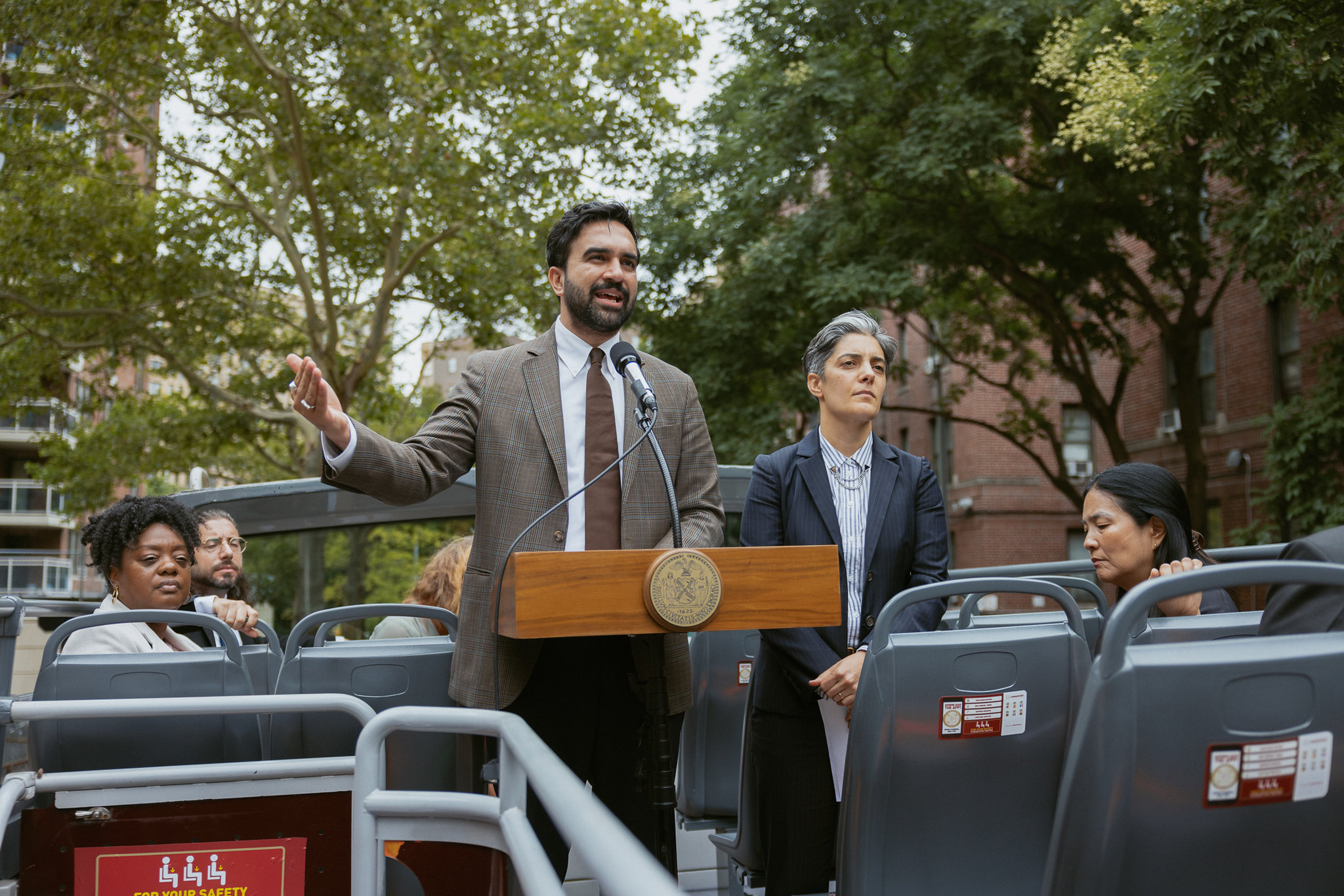
New York City Mayor Zohran Kwame Mamdani announces the release of the LIFT (Land Inventory Fast Track) Tracker, a database of the City’s work to develop affordable housing on City-owned land by giving a site-seeing tour on a double decker bus in The Bronx on Thursday, July 30, 2026. Kara McCurdy. Mayoral Photography Office.
BUSWAY DESIGN
The new street design will include an eastbound busway from Third Avenue to Southern Boulevard, a westbound busway from Southern Boulevard to Belmont Avenue, and an offset shared bus/bike lane eastbound from Webster Avenue to Third Avenue.
The shorter westbound busway segment will preserve vehicle access to every block for local pick-ups and drop-offs, truck loading and unloading and on-street parking.
The busway will be the eighth installed in New York City and will operate seven days a week, from 6 a.m. to 8 p.m. Buses, trucks with six or more wheels, emergency vehicles and Access-a-Ride vans can travel through the entire corridor. All other vehicles, including taxis and for-hire vehicles, may enter from side streets for local access but must leave the corridor at the next available right turn.
The busway will be enforced through stationary cameras along the route, bus-mounted cameras and NYPD enforcement.
NYC DOT will also adjust curb regulations and install new loading zones to reduce double parking and provide dedicated space for loading, deliveries and parking while maintaining access for cyclists.
TRAFFIC SAFETY UPGRADES
Tremont Avenue is a Vision Zero Priority Corridor, meaning it is among the most dangerous streets in the Bronx, with among the highest rates of pedestrian deaths and serious injuries per mile. Between 2020 and 2024, nearly 630 people were injured in crashes on Tremont Avenue — an average of two injuries every week. During that period, 46 people suffered severe injuries and four people were killed. As part of the busway installation, NYC DOT will add safety improvements at eight intersections along the corridor and on nearby streets:
- Tremont Avenue at Webster Avenue
- Tremont Avenue at Third Avenue
- Tremont Avenue at Southern Boulevard and Crotona Parkway
- Third Avenue at East 175th Street
- Southern Boulevard at Crotona Parkway and 180th Street
- Crotona Avenue and 180th Street
- Third Avenue and 180th Street
- Tremont Avenue and Washington Avenue
The redesigns will feature new painted sidewalk extensions that shorten pedestrian crossing distances and naturally slow turning drivers. Intersections were selected based on crash history and to accommodate traffic pattern changes resulting from Tremont Avenue’s redesign.
Painted sidewalk extensions will be reinforced with plastic flex posts, granite blocks and bicycle parking to deter illegal parking.

Mayor Mamdani meets with Haitian community leaders. City Hall. Thursday, July 30, 2026. Credit: Ed Reed/Mayoral Photography Office.
Mayor Mamdani Announces City Will Cover All Out-of-Pocket Child Care Costs for Families Receiving Child Care Subsidies
Mamdani administration will make child care completely free for all families currently receiving child care assistance through contracts and vouchers
NEW YORK – Mayor Zohran Kwame Mamdani announced today that the City will make child care completely free for all families receiving child care assistance through vouchers and contracts across New York City. The policy will benefit approximately 22,000 low-income families who currently receive subsidized child care through the Child Care Assistance Program and pay a sliding-scale fee. Beginning in September, the Mamdani Administration will cover the $5.2 million in annual out-of-pocket costs those families currently pay for care. Funding has been baselined in the budget at $6.24M beginning in FY28.
New York City Mayor Zohran Kwame Mamdani announces the release of the LIFT (Land Inventory Fast Track) Tracker, a database of the City’s work to develop affordable housing on City-owned land by giving a site-seeing tour on a double decker bus in The Bronx on Thursday, July 30, 2026. Kara McCurdy. Mayoral Photography Office.
“For thousands of families, a weekly child care fee means another bill they simply can’t afford. Making that care truly free can make all the difference,” said Mayor Mamdani. “As part of our promise to deliver universal child care, we are eliminating these fees for families receiving child care assistance across the city. No family should have to choose between staying in the city they love and affording care for their child. This is another step toward making affordable child care something every New York family can count on.”
“The rising cost of child care is one of the single largest expenses facing families across New York,” said Governor Kathy Hochul. “That’s why I was proud to stand with Mayor Mamdani in January to announce that we would put New York on a path to universal child care. The State has since allocated $1.2 billion to support and expand the City’s child care infrastructure, an investment that is already paying dividends for working families. This commitment is one more way we are putting money back in New Yorkers’ pockets, putting families first and ensuring they have the resources they need to thrive.”
“The Child Care Assistance Program has been a lifeline to thousands of families, but they still shoulder millions of dollars in out-of-pocket costs,” said Emmy Liss, Executive Director of the Mayor’s Office of Child Care and Early Childhood Education. “Thanks to Mayor Mamdani, we’re putting money directly back into the pockets of New Yorkers. Child care costs should never be a barrier to a family’s stability, and the Mayor has made delivering on that promise central to his administration. As we prepare to launch free 2-K this fall, we are making all publicly-funded care free for families.”
“Making child care free for the thousands of families with ACS child care vouchers is another crucial investment the Mamdani Administration is making to support families and make New York City more affordable,” said Rebecca Jones Gaston, Commissioner of the Administration for Children’s Services. “With this child care truly free, families have one less worry, one less bill, and opportunities to invest in the futures of their children.”
The Child Care Assistance Program provides subsidized child care for eligible children ages 6 weeks through 13 years old and through age 19 for children with disabilities. Funded through the State’s Child Care Assistance Program, more than 100,000 children currently receive vouchers in New York City, while several thousand more infants, toddlers, and preschoolers access extended-day care through City contracts. The City is required to charge eligible families a fee on a sliding scale, which approximately 22,000 families currently pay. Beginning in September, the Mamdani Administration will cover these costs for all families, making their care completely free. Families who currently receive subsidized care will not need to take any additional action.
Today’s announcement follows the submission of more than 5,700 applications for the City’s first-ever free 2-K program, which will provide universal child care to families regardless of income or immigration status. Demand for 2-K was nearly three times the number of available seats, underscoring the need to expand access to affordable, high-quality care. Mayor Mamdani has made expanding child care access a priority of his first year in office.
In April, Mayor Mamdani announced that the City’s 2-K programming would be full-day and full-year. The administration has also advanced work on the City’s first free child care pilot program and opened seven previously vacant provider sites to create 240 additional 3-K seats, as part of a broader rollout of 2,000 new 3-K seats across all five boroughs.
“Every family deserves access to high-quality child care without having to choose between putting food on the table, paying rent, and making sure their children are cared for. This announcement is a meaningful step toward making child care truly accessible and affordable for working families across New York City. By eliminating out-of-pocket costs for approximately 22,000 low-income families receiving child care assistance, the Mamdani Administration is putting equity into action and recognizing child care for what it is: an essential public investment. I applaud Mayor Mamdani for ensuring that families receiving subsidies can access care without an additional financial burden, and I look forward to continuing the fight for a child care system that works for every New York City family,” said Council Member Rita C. Joseph.
“When a family qualifies for subsidized child care, we already know that the cost of care is more than they can reasonably afford,” said Council Member Gale A. Brewer. “Eliminating the remaining fee gets us closer to what child care assistance is supposed to accomplish: making quality care truly affordable. I thank Mayor Mamdani for taking this additional cost off the shoulders of 22,000 New York City families.”
“New York City just became more affordable for 22,000 families who rely on the voucher system for childcare, but who still struggle to pay their fees. This is another significant step toward the goal of universal childcare, and will provide some much needed relief for these families. I thank the Mayor for this impactful initiative,” said Councilwoman Kayla Santosuosso.
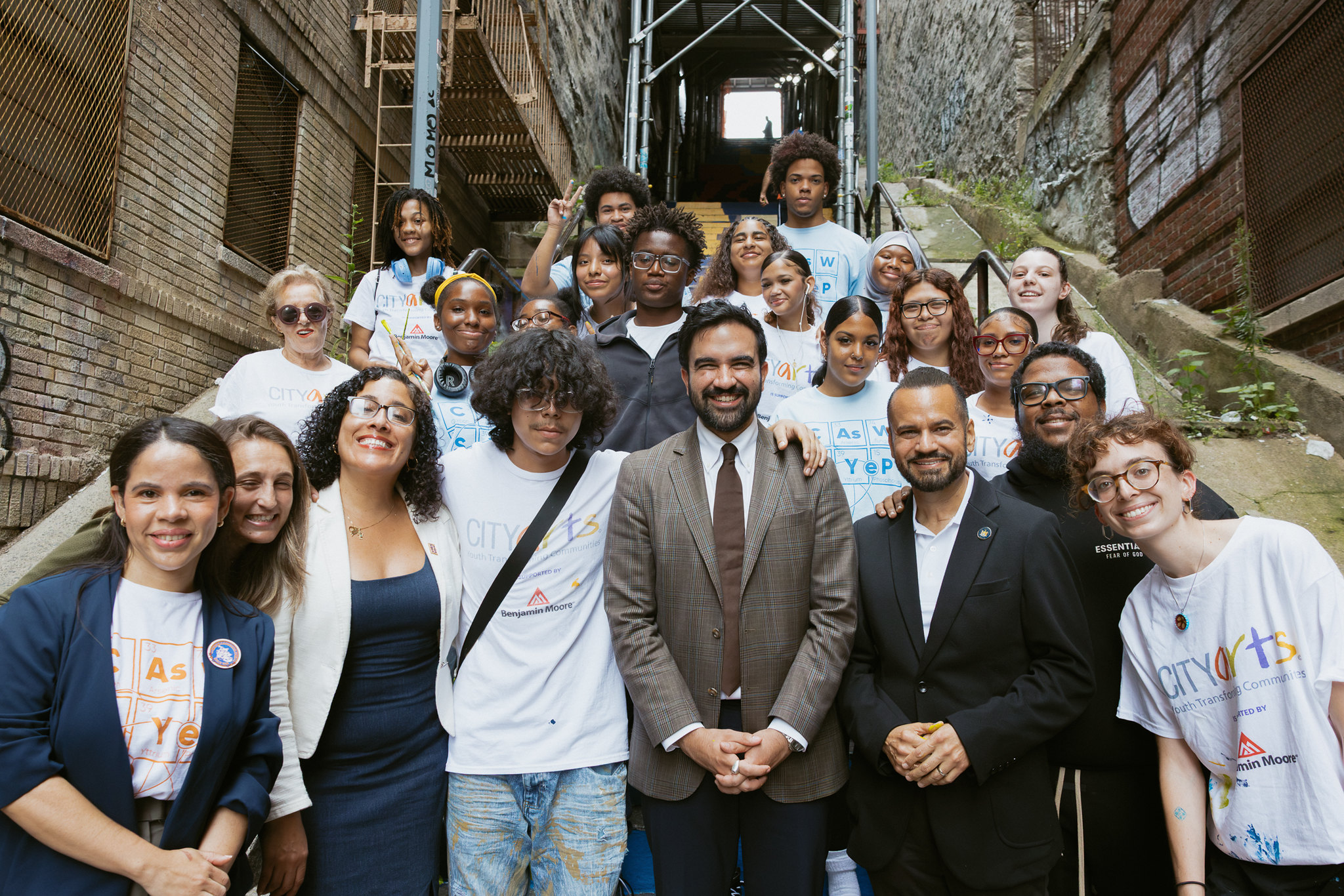
New York City Mayor Zohran Kwame Mamdani joins CITYarts and Summer Youth Employment Program (SYEP) participants to repaint the Shakespeare steps in the Bronx on Thursday, July 30, 2026. Kara McCurdy. Mayoral Photogaphy Office.
Banner image: Mayor Zohran Kwame Mamdani and Governor Kathy Hochul announce that more than 2,000 children are receiving offers to join New York City’s inaugural 2-K class. Bedrock Preschool, Bronx. Tuesday, August 4, 2026. Image Credit: Ed Reed/Mayoral Photography Office.



NYC Mayor Zohran Mamdani
Zohran Mamdani was sworn in as Mayor of the City of New York on January 1st, 2026. Prior to becoming Mayor, he represented the 36th New York State Assembly District and its neighborhoods of Astoria, Ditmars-Steinway, and Astoria Heights.
There are no comments yet
Why not be the first