
New York’s Municipal Disabled Retired Paraprofessionals Share Their Stories Of Impending Pension Cuts – Legislation Needed Immediately
Editor’s note: We have covered this particular story before, and it has evolved now into a place where it is somewhat safe and secure – for the time being. At this moment in time, which was during the writing of our previous story, there is a ‘pause’ on the implementation of the disabled paraprofessionals’ pension checks. That pause is through the end of January, rather than the end of December. There is one caveat, though: Affected paras MUST APPLY ON THEIR OWN. It is NOT automatic. So any paras who had their pay cut and either didn’t notice or didn’t check into it but rather simply accepted it will still have that pension cut in effect. The cut will automatically reverse for them in January, and if they decide to put in a retroactive rule, then they would get back whatever was withheld during this time. However, anyone in this situation who would have needed the extension would have noticed it. They would have bounced a check, or they would have logged into their bank accounts every few days (as everyone should), and they would have been startled to see the reduced pension check. But if they did ANYTHING, including calling the UFT, whose executives did make an informal agreement to do their best to ensure everyone was aware of their option, then they would have applied and their pre-cut amount would be immediately restored.
It is also important to note that this is an election right now. A very critical and possibly chaotic election cycle, especially for a mid-term. The following have occurred THIS election season, very unusual for a generally presumed low voter turnout election cycle. What does it mean when there is low voter turnout? Most of those who come out to vote are homeowners and business owners, those who understand that local policies shape their own lives directly. That means they are usually Republican. However, this cycle might very well be different. Why is that?
First, redistricting. Many already-Red states, such as Texas, redrew their maps mid-decade, which is unusual, in order to favor the dominant party in the state even more. It already worked to get Jasmine Crockett, a strong fighter for ordinary working-class Texans, out of office in favor of James Talorico, a schoolteacher with a more Conservative bent. Normally such map choices are made based on population, which is counted during the US Census. However, this time, many of these states redrew their maps just because they needed to get more Republicans into Congress (we covered this before). These states’ courts, as well as the Supreme Court, generally allowed these changes. New York tried to do the same thing, but their attempt was withdrawn, rather than fighting a long legal battle.
Our conversation with Sal Albanese, of Make Voters the Donors, went into these issues as they relate to voter power. It is much more difficult for voters’ voices to be heard by the politicians that represent them. That is why they are advocating to pass a law that would give campaign dollars to every American to spend on whatever candidate they see fit. On top of redistricting, there was National Republican Senatorial Committee v. Federal Election Commission, which ruled that there can be no federal restrictions on political parties spending directly coordinated with candidates, whereas before there were restrictions on such coordination. Buckley v. Valeo and Citizens United have eroded the ability of the voters to have any real say in their elected officials, since it is all pretty much in the arena of the donors. Buckley ruled that money is speech, and corporations, which have the same rights as citizens due to the Supreme Court decision that never was, have the right to spend unlimited money in election campaigs.
Why does this erode voter power? Elections cost millions of dollars to run and to get covered on television. This money comes from ‘donors,’ which can be anyone from a millionaire or billionaire hoping for laws to pass that are in their favor, big businesses such as ‘Big Oil,’ ‘Big Tech,’ and ‘Big Ag’ (representing the petroleum and petrochemical industry, the tech billionaires and their corporate interests, and the food industry, particularly factory and conventional (or chemical-heavy) forms of crop and animal agriculture, which in turn relies heavily on the petroleum industry for fertilizers and pesticides and also for feed for their livestock, respectively). On top of that, there was a decision 38 days before the election, just a few days ago, that basically said that Department of Homeland Security (DHS) can assist states with voter roll purges based on immigration status. The assumption is that there are many immigrants illegally registered to vote, particularly in those states where it is a felony to do so. However, states like New Jersey, which is a liberal state, has said that of their millions of voters, only 2,000 are illegally registered. This DHS assistance is voluntary, so the states that would want to do that now are able to. On the other hand, another SCOTUS decision protected mail-in ballots from the new rule issued by the postal service that would have thrown mail-in voting into chaos and imposed unreasonable burdens. It is likely this issue will come up again in the next cycle, but it also infringes upon the freedom of expression of the election departments of the respective states that are creating these mail-in ballots.
An organization like the United Federation of Teachers is presently involved in endorsing candidates for office, possibly speaking for or with them, raising money from their members, spending money on mailers and email blasts and social media posts, etc., etc. Once the election is over, and they know who the new representatives are, they will likely start pushing them to help with this issue. When the governor does not HAVE to call a special session (which would have been necessary had the deadline be in December), it is likely preferred that she not be called upon to do so. Thus, starting on the 6th of January, this bill will need to be introduced, pass committee, and get to the floor for a vote. If the focus is kept on simplicity, such as the addition of two words to the already existent bill, it is likely to be speeded up. As long as it passes by January 29th, and is signed by the governor immediately, then it will never go into effect.
In response to the below statement from UFT, which is very vague and non-committal, the statement of the retiree-representing organizations can be found:
“The UFT will continue to pursue solutions that protect our members and their rights,” said UFT spokesperson Alison Gendar
Joint statement from Fix Para Pay, Fix Retiree Benefits, NYC Organization of Public Service Retirees:

Sadly, our union leaders have abandoned retirees, using them as piggy banks rather than people who’ve earned their retirement. This started with the UFT pressuring the Municipal Labor Committee to dump retirees into Medicare Advantage in exchange for a contract for active workers that barely met the cost of living, and continues to this very day. Even as the UFT Retired Teacher Chapter voted overwhelmingly to support Intro 1008, legislation which would protect our health care, union bosses lobby against it, on the outlandish premise it violates the Taylor Law and collective bargaining, neither of which applies to us.Paraprofessionals, the lowest-paid UFT members, have had it worse than most. During the last round of contract negotiations, Michael Mulgrew had $450 million dollars he could have used to give paraprofessionals a pensionable raise of $10,000 each or more. Instead, he used it to grant non-pensionable bonuses to all UFT employees.Fix Para Pay, a small group of paraprofessionals, ran against Mulgrew’s Unity Caucus and beat them by a factor of 3 to 1. At that point, Mulgrew declared paras need “respect,” and started to pursue a non-pensionable bonus check. He promised that last summer they’d be able to use it for a vacation. They’re still waiting as it faces a court challenge.The worst thing done to paraprofessionals, though, has been the targeting of those who retired due to disability. This now threatens to cut their already small pensions in half. At first, TRS was demanding they pay back three years of overpayments. Our activism has, thus far, put a halt to that temporarily. Now we need the UFT to take a stand and help.Before we started bringing this up publicly, the UFT line, essentially, was, “We’re very sorry, but there’s nothing we can do.” Now their statement says more if you read between the lines and look at what they aren’t saying or doing: They will protect “our members and their rights.” The statement is revealing because of whom it did not mention: retirees. That choice of words speaks volumes. Apparently, the obligation to fight for a retired unionist is not the same as for an in-service member. We need them to step up and use their influence with the State Legislature to fix this once and for all. If not, many of these disabled paras will lose their homes and be driven to abject penury.Both TRS and UFT made promises to retirees, and we made decisions based on these promises. It’s time for them to step up, keep their word, and help us.
Paraprofessional Maria:
My name is Maria . I am one of the retired paraprofessionals that has and will have their pensions reduced by half. This is causing a catastrophe for my family. As a retiree, we have a limited and fixed income that will not grow as the years go on. We have built our lives around the amount of pension we were receiving. I have a family that depends on me. I have a mortgage. I have a family to feed as well. I am horrified that I will not be able to do any or all of this if this continues to go through.
Paraprofessional Terri:
Good afternoon, all,
I am a 60-year-old retired paraprofessional who dedicated years to serving New York City’s students and families. I am writing to ask for immediate action regarding the pension reduction scheduled for January.
I was injured and deemed disabled and can no longer work or provide for myself and my family.
I support a developmentally disabled daughter who depends on me for the rest of her life. My pension is our primary source of income, and after the reduction, it will leave us below the poverty line. I am deeply concerned about being able to afford housing, food, utilities, medical care, and other necessities. As of now, it is hard to make ends meet. It is unconscionable to foresee what this impending reduction will mean to me and my family.
I urge you all to work together to support a legislative amendment to RSSL Section 605. Retired paraprofessionals injured in the line of duty deserve the same consideration and protection afforded to other educators.
We dedicated our working lives to New York City’s children, and we should be able to retire with dignity and financial security. The law was rewritten in 2002 by Randi Weingarten to protect teachers from living below the poverty line.
The interpretation of this law now leaves retired para professionals in this catastrophic position.
Please support legislation that would allow us to receive the two-thirds pension benefit we are entitled to, with appropriate consideration of any Workers’ Compensation offset.
This is not merely a legislative issue—it directly affects my ability to support my daughter and meet our basic needs. I respectfully ask you to stand with us and take immediate action before the January reduction causes further hardship.
Thank you for your consideration and leadership.
With sincere hope
Paraprofessional Antanuch:
I don’t feel like I ever retired.
I am a 60-year-old retired paraprofessional, mother, and caregiver who dedicated her working life to serving New York City’s children. After sustaining a job-related injury, I can no longer work. My pension is my only source of income and supports both my developmentally disabled child and myself.
The reduction in my pension threatens our financial security, quality of life, and future. I feel betrayed by the lack of communication and transparency surrounding this issue. We deserve to know what the UFT, TRS, and our elected representatives are doing to address this injustice, including any efforts to amend the law or pursue a legislative solution.
This situation has caused severe anxiety, depression, sleeplessness, and declining physical health. This is not merely a pension calculation—it affects our home, food, medical care, bills, stability, and dignity.
I urge the UFT, TRS, and legislators to take immediate action to protect retirees and families facing similar hardship. Please communicate openly with us, explain what advocacy efforts are underway, and continue fighting until a fair solution is achieved.
I dedicated my life to New York’s children.Now I am asking you to stand up for me and other paraprofessionals who depend on the pensions we earned.
We deserve transparency, advocacy, and the financial security we worked for. Please act before this reduction causes irreparable harm to my family.
Paraprofessional Fatima:
My name is Fatima, and I want to share what this pension reduction means to me on a very personal level.
I retired on August 1, 2022, after years of working as a paraprofessional in special education. I devoted my working life to helping children with disabilities and supporting their education and well-being. I never imagined that after retirement I would have to fight to protect the retirement income I was told I would receive.
Being told years after my retirement that my pension was supposedly calculated incorrectly and could now be reduced has created enormous stress and uncertainty in my everyday life.
When you are retired and living on a fixed income, you cannot simply make up the difference by working more hours. I am disabled and unable to work. My pension is not extra money—it is what I depend on to live.
A reduction affects everything.
It means looking at every bill and wondering what I can afford. It means worrying about whether there will be enough money left after paying the mortgage or rent, electricity, gas, groceries, transportation, insurance, and other necessities. It means thinking twice before buying something that I need because I have to make sure there is enough money to get through the month.
It also takes away something that is difficult to put a dollar amount on: peace of mind.
After working for years, I believed retirement was supposed to give me some security. Instead, I am now living with the fear that the income I planned my life around could be reduced.
I cannot go back and change the decisions I made based on the retirement benefit I was awarded in 2022. I cannot go back and earn the years of income that I have already lost because of my disability. And I cannot simply find another job to replace a reduction in my pension.
That is why this is so frightening.
What has made this situation even more painful is how difficult it has been to feel heard and represented. We have reached out because we need answers. We need communication. We need someone to understand what this means for us as human beings, not just as pension numbers.
I feel hurt and disappointed that we have had to push so hard to get attention to an issue that directly affects our lives.
We trusted our union to represent us. We believed that when retired paraprofessionals were facing a serious financial problem, our concerns would matter. Instead, the lack of meaningful communication has left me feeling that we are fighting this battle largely on our own.
I want people to understand that paraprofessionals are not just employees on a payroll. We are mothers, fathers, grandparents, caregivers, and members of our communities. We have bills to pay and families to support. We have spent our working lives caring for other people’s children, particularly children who needed the most support.
Now, when we are the ones who need support, we deserve to be treated with the same compassion and dignity.
This pension issue is not simply about a calculation on a retirement statement. It affects whether I can live my everyday life with dignity and security.
Every dollar matters to someone living on a fixed income. A pension reduction can mean fewer groceries, putting off necessary purchases, worrying about utility bills, cutting back on transportation, and constantly wondering what expense will come next.
We worked for these benefits. We planned our retirement around them. We trusted the system.
I am asking that our voices finally be heard.
I hope the UFT and the people responsible for these decisions will remember that behind every pension number is a person whose life is being affected.
I am not asking for special treatment. I am asking for fairness, transparency, communication, and respect for the people who spent their working lives serving New York City’s children.
We deserve to retire with dignity—not with fear that the security we worked for can suddenly be taken away.
Fatima
Retired Paraprofessional
Paraprofessional Kathy:
I wanted to share my story with you because this situation has affected me immensely.
I stopped working because of my disability after I was attacked. I have spent years trying to move forward from what happened, and now I feel like I am being forced to relive that painful time all over again.
I am already struggling to pay my bills. Where I live, I am required to have a minimum amount of income, and if my pension is reduced, I will not meet that requirement. My Social Security check is also very small because I had to stop working because of my disability.
I honestly do not know how I will manage if my income is reduced. I worry about being able to pay my rent, my bills and my basic living expenses. This isn’t just about losing money. It is about losing the financial security I depend on to live.
I know I am not alone. There are many paraprofessionals facing the same uncertainty. The Para advocacy effort is important because we are trying to make sure our voices are heard and that the people who dedicated years of their lives to this work are not forgotten.
With December getting closer, I am frightened about what the future holds. We need our elected officials to hear us, understand what this reduction means for our lives, and work with us to find a solution before people are pushed into financial hardship.
I hope that by telling my story, people will understand that behind the numbers are real people — people who worked, contributed and now simply want to be able to live without constantly worrying about how they are going to survive.
Thank you for taking the time to listen.
-Kathy
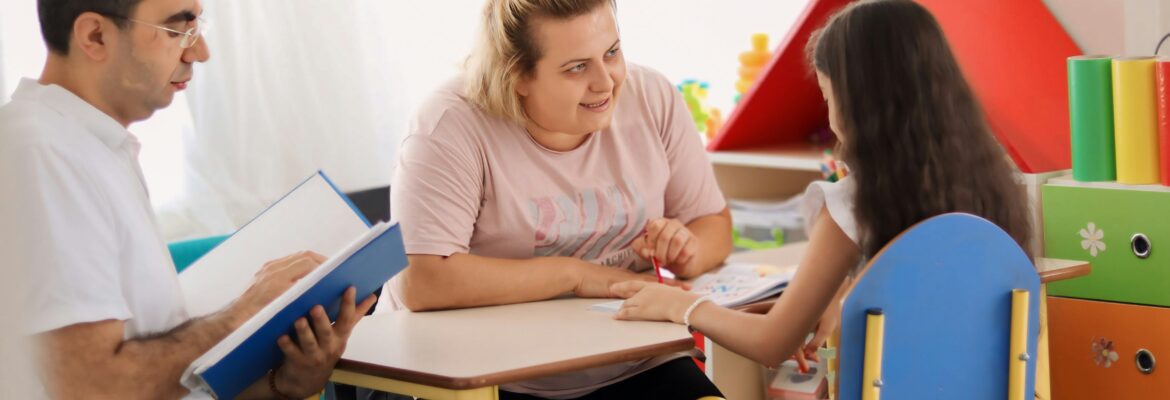
Banner Image: Teaching. Image Credit – Birleşim Özel Eğitim Rehabilitasyon Merkezi



Staten Islander News Service Staff Writer
This byline indicates that this article was penned by a member/members of the Staten Islander News Organization office team. Our staff writers are the backbone of our newspaper, performing all sorts of important tasks like conducting interviews, investigating leads, besides writing the news stories you see.
There are no comments yet
Why not be the first