
OPINION: A New Waterfront Must Leave Real Way Home For Our Neighbors Already Here
Editor’s note: See another opinion piece about this issue, which is important to many islanders, often for different reasons and with vastly different ideas for solutions. This piece offers a faith-based answer to the question of our own local homeless. The issues that were occurring that necessitated the temporary shelters to house migrants has for the most part stopped, since the governor of Texas and other states stopped sending their arriving migrants across the border to states like New York and Chicago.
Note from the Author: Your November 17 reporting on the North Shore waterfront proposal and disagreements over the public process prompted this piece. Rather than taking a side for or against all development, it asks how Staten Island can give residents practical ways to influence decisions and judge whether housing, transit, accessibility and infrastructure promises are being kept. Luke 14 and Luke 10 offer an authentic Christian framework for counting the human costs of a project and respecting neighbors who may disagree. The article was written specifically for your North Shore readers.
A New Waterfront Must Leave a Way Home for the People Already Here
By Douglas Vandergraph
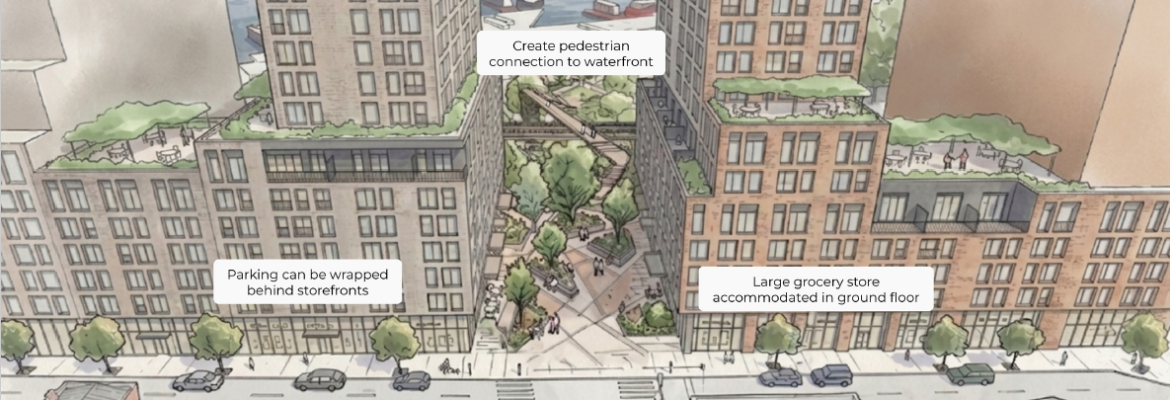
On Staten Island’s North Shore, a waterfront proposal can look hopeful on a presentation screen and uncertain from the front steps of a longtime neighbor’s home. A plan can promise new apartments, jobs, paths and public gathering places. The people who will live with the construction, traffic and rising costs must also be able to see their own future in it. If the drawings are easier to understand than the daily journey to work, the conversation is not finished.
On November 17, StatenIslander.org reported residents’ concerns about a proposed North Shore development described as involving three apartment buildings and roughly 2,500 homes. Its coverage also presented different views of the planning process, including a state assemblymember’s invitation to a November 14 waterfront town hall and a councilmember’s account of prior neighborhood outreach. Those differences matter. The fairest question is not which official spoke last. It is whether residents can follow a clear, public path from their concerns to decisions and, ultimately, to changes they can recognize.
Growth is not a betrayal of a neighborhood. Families need housing, young people need chances to stay close to the places that raised them, and vacant waterfront land should not remain an unused promise forever. But neither is discomfort with a proposal proof that a resident fears change. A parent worrying about the morning bus, an older tenant asking about crossing a busy street, and a worker trying to find an affordable place to park are describing the machinery of everyday life. They are not footnotes to the project.
Jesus offered a surprisingly practical image in Luke 14: before building a tower, a person sits down and counts the cost. The point is not to abandon what might become good. It is to be truthful about what completion requires. On the North Shore, that count should be made in more than dollars and units. It includes reliable connections between housing and transit; safe crossings for people who walk slowly; space for children to play; flood and storm readiness; usable waterfront access; and ways for residents to reach the people who can answer a hard question without sending them from one office to another.
There is also a cost that never appears neatly in a project budget: the loss of trust when people offer testimony but never learn what happened to it. Officials may hold many meetings and still leave some neighbors unheard. A person caring for a sick parent may not be free at the hour of a town hall. A night-shift worker may have to choose between a paycheck and a microphone. Someone who does not speak easily in a crowded room may have a concern no less urgent than the person who commands the floor.
A fair process can make room for them. Publish a plain-language explanation of the plan and what is still undecided. Keep a public list of recurring concerns, with dates and written responses. Offer ways to respond without attending a meeting in person. Explain how a resident can request accessible materials or language assistance. When a proposal changes, identify which questions helped change it. These are not gestures against development. They are the ordinary tools that help a community see that participation can matter.
The parable of the Good Samaritan in Luke 10 is often remembered for one compassionate act on the roadside. But it also turns our attention to the person others could pass without stopping. In a public planning debate, that neighbor may be the tenant who worries about the next rent increase, the wheelchair user whose route ends at a curb, or the small-business owner who fears construction will close the path to a front door. Christian concern does not assign all of them the same political position. It insists they are people before they are obstacles, numbers or talking points.
Some residents will support the North Shore proposal. Others will oppose parts of it. Still others will reserve judgment until the plans grow more specific. They need not pretend to agree in order to belong to one community. The task is to show, by concrete design and transparent decisions, that a waterfront intended for the future will not become a boundary between the people who can afford to stay and those who cannot.
The most meaningful ribbon-cutting may come long after a new building opens. It will happen when an older neighbor can get across the street safely, when a family can reach the water without a car, when a worker can return home without another impossible expense, and when a resident who once asked a difficult question can point to an honest answer. A waterfront is not truly open because a map says it is. It is open when the neighbors already here can find their way into its future.
Source: StatenIslander.org, November 17, 2026, https://statenislander.org/2026/11/17/staten-islanders-on-north-shore-distressed-by-news-of-developments-final-plan-for-their-neighborhood/

Banner Image: North Shore development proposal. Image Credit – North Shore NYC


Douglas Vandergraph
Douglas Vandergraph is a Christian writer and digital creator whose work explores the connection between faith, compassion, and the everyday choices that shape our communities. He shares writing and reflections at https://douglasvandergraph.com and video messages at https://www.youtube.com/@douglasvandergraph.
There are no comments yet
Why not be the first