
Supporting Affordable Co-Op Owners, Protecting Red Hook From Flooding, Quality Of Life, Bin Purchase Rebates, Revitalized Greener Fulton Mall, Eastern European Heritage Reception, Opposing Military In Cities, Downstate Casino Proposals, Record Low Shootings: Mayor Adams
Supporting Affordable Co-Op Owners, Protecting Red Hook From Flooding, Quality Of Life, Bin Purchase Rebates, Revitalized Greener Fulton Mall, Eastern European Heritage Reception, Opposing Military In Cities, Downstate Casino Proposals, Record Low Shootings: Mayor Adams
MOST PRO-HOUSING ADMINISTRATION IN CITY HISTORY: MAYOR ADAMS, ATTORNEY GENERAL JAMES, HPD LAUNCH PILOT PROGRAM TO SUPPORT AFFORDABLE CO-OP OWNERS IN NEW YORK CITY
Through Pilot Program, Urban Homesteading Assistance Board Will Use $750,000 From Office of New York State Attorney General Settlements to Help Co-Ops Stabilize Finances, Resolve Arrears, Manage Renovations, and More
Pilot Program Builds on Adams Administration’s Ongoing Efforts to Support Homeownership and Make New York City Best Place to Raise a Family
NEW YORK – New York City Mayor Eric Adams, New York Attorney General Letitia James, and New York City Department of Housing Preservation and Development (HPD) Acting Commissioner Ahmed Tigani today announced a new pilot program to support struggling Housing Development Fund Corporation (HDFC) cooperatives in New York City and ensure they can continue to offer safe, affordable homeownership opportunities for low- and- moderate-income New Yorkers. Through the pilot program — called the HDFC Cooperative Technical Assistance Program (CTAP), and which is backed by settlement funds from the Office of the New York Attorney General — Urban Homesteading Assistance Board (UHAB) will provide HDFC co-ops in New York City with targeted technical assistance to help improve their financial, operational, and physical health. CTAP builds on the Adams administration’s ongoing work to help more families achieve and maintain homeownership, including by expanding the city’s HomeFirst Down Payment Assistance Program to help more homebuyers with their first down payment or closing costs and launching a new rent reporting pilot to help tenants build credit through monthly rental payments.
“Our administration works every day to make New York City the best place to raise a family, including by helping more New Yorkers buy and keep homes here in the five boroughs. With this new program, we’re doubling down on those efforts, bolstering a critical part of our city’s housing stock and helping more families find an affordable place to live,” said Mayor Adams. “Our thanks to Attorney General James for helping launch this program and for her steadfast support for working-class New Yorkers. Whether it’s shattering affordable housing records year after year, passing the first citywide zoning reform in six decades, or finding creative ways to build more family-friendly neighborhoods, there is simply no other way to say it: we are the most pro-housing administration in New York City history.”
“As New York City faces a housing crisis, we must do everything we can to preserve affordable housing and homeownership opportunities,” said Attorney General James. “This pilot program will help HDFC co-ops continue to provide safe, sustainable, and affordable paths to homeownership for low-income New Yorkers. I am grateful to Mayor Adams, HPD, and UHAB for their partnership in bringing this new program to life.”
HDFC co-ops are an important part of New York City’s affordable housing landscape and provide one of the most reliable paths to homeownership for low- to moderate-income New Yorkers. There are over 1,200 limited equity HDFC cooperatives in New York City. While most HDFC co-ops are financially stable and demonstrate the positive, multigenerational impact of affordable homeownership, some co-ops are struggling to manage their finances and maintenance needs. Many HDFC co-ops in New York City could benefit from technical assistance as well as support with governance issues, shareholder engagement, and legal matters impacting a co-op’s ability to sell units. CTAP will help directly address these challenges and strengthen selected co-ops.
During the two-year program period, HPD will work closely with UHAB to identify a priority list of struggling HDFC co-ops that could benefit from support. Together with HPD, UHAB will assess each HDFC co-op’s operations, governance structure, financial needs, and physical needs to create and implement an actionable stabilization plan tailored to the specific co-op. Participating co-ops will also have access to a low-interest, flexible financing fund offered for urgent financial or physical needs. This technical assistance program expands HPD’s existing work to provide training and technical assistance to limited equity co-ops, as well as financial assistance offered through HPD’s loan and tax exemption offerings. UHAB will assist approximately 20-30 HDFC co-ops through the pilot program and address various common issues, including:
- Address Municipal Arrears and Other Outstanding Payments: Enable the co-op to pay off any debt owed — such as bills that are past due to the New York City Department of Finance, New York City Department of Environmental Protection, and utility companies — through a sustainable repayment plan or by refinancing the arrears with a below-market loan product.
- Stabilize Finances: Take steps to improve the co-op’s financial health by increasing or restructuring maintenance fees, refinancing debt, identifying unnecessary expenses, hiring third-party property management companies, and implementing sustainable cost-saving measures.
- Support Renovations and Address Housing Violations: Help co-ops explore financing options to complete repairs, including bringing vacant units back online so they can be sold to prospective shareholders. Guide the co-op in addressing outstanding building violations that may prevent the co-op from moving forward with rehabilitation projects.
- Establish Good Governance Practices: Aid the co-op in resolving governance issues by establishing or updating rules and regulations.
- Support Estate and Probate Issues: Engage attorneys to help the co-op’s shareholders and boards with estate planning and probate issues.
This pilot program is funded by the Office of the New York State Attorney General as a result of the 2012 National Mortgage Settlement — which secured $25 billion from five of the nation’s largest mortgage services — and the 2013 Residential Mortgage-Backed Securities Working Group — which secured a $13 billion settlement from JPMorgan Chase for the company’s role in the mortgage crisis.
“A severely aged housing stock, an increasingly complex compliance landscape, skyrocketing insurance and utility costs, and the economic ripple effects of the pandemic on low-income New Yorkers have made the operations of affordable co-ops more and more challenging,” said Margy Brown, executive director, UHAB. “UHAB is grateful to see the New York State attorney general and HPD’s generous investment in skilled technical assistance to support HDFCs’ pathway to long term stability.”
Mayor Adams has made historic investments to create more affordable housing and ensure more New Yorkers have a place to call home. Earlier this year, Mayor Adams through its work to date. Mayor Adams also announced that, in Fiscal Year 2025, the Adams administration created the most affordable rental units in city history and celebrated back-to-back-to-back record-breaking years for producing permanently-affordable homes for formerly-homeless New Yorkers, placing homeless New Yorkers into housing, and connecting New Yorkers to housing through the city’s housing lottery.
In addition to creating and preserving record amounts of affordable and market-rate housing for New Yorkers, the Adams administration has passed ambitious plans that will create tens of thousands of new homes. Last December, Mayor Adams celebrated the passage of “City of Yes for Housing Opportunity,” the most pro-housing proposal in city history that will build 80,000 new homes over 15 years and invest $5 billion towards critical infrastructure updates and housing.
The Adams administration is also advancing several robust neighborhood plans that, if adopted, would deliver nearly 50,000 homes over the next 15 years to New York neighborhoods. In addition to the Bronx-Metro North Station Area Plan, the Midtown South plan, and the Atlantic Avenue Mixed-Use Plan — all of which have already been passed by the New York City Council — the Adams administration is also advancing plans in Jamaica and Long Island City in Queens.
Building on the success of City of Yes for Housing Opportunity, Mayor Adams unveiled his “City of Yes for Families” strategy in his State of the City address earlier this year to build more homes and create more family-friendly neighborhoods across New York City. Under City of Yes for Families, the Adams administration is advancing more housing on city-owned sites, creating new tools to support homeownership, and building more housing alongside schools, playgrounds, grocery stores, accessible transit stations, and libraries.
In addition to creating more housing opportunities, the Adams administration is actively working to strengthen tenant protections and support homeowners. The “Partners in Preservation” program was expanded citywide in 2024 through a $24 million investment in local organizations to support tenant organizing and combat harassment in rent-regulated housing. The Homeowner Help Desk, a trusted one-stop shop for low-income homeowners to receive financial and legal counseling from local organizations, was also expanded citywide in 2024 with a $13 million funding commitment.
Finally, Mayor Adams and members of his administration successfully advocated for new tools in the 2024 New York state budget that are already helping spur the creation of urgently needed housing. These tools include a new tax incentive for multifamily rental construction, a tax incentive program to encourage office conversions to create more affordable units, lifting the arbitrary “floor-to-area ratio” cap that held back affordable housing production in certain high-demand areas of the city, and the ability to create a pilot program to legalize and make safe basement apartments.

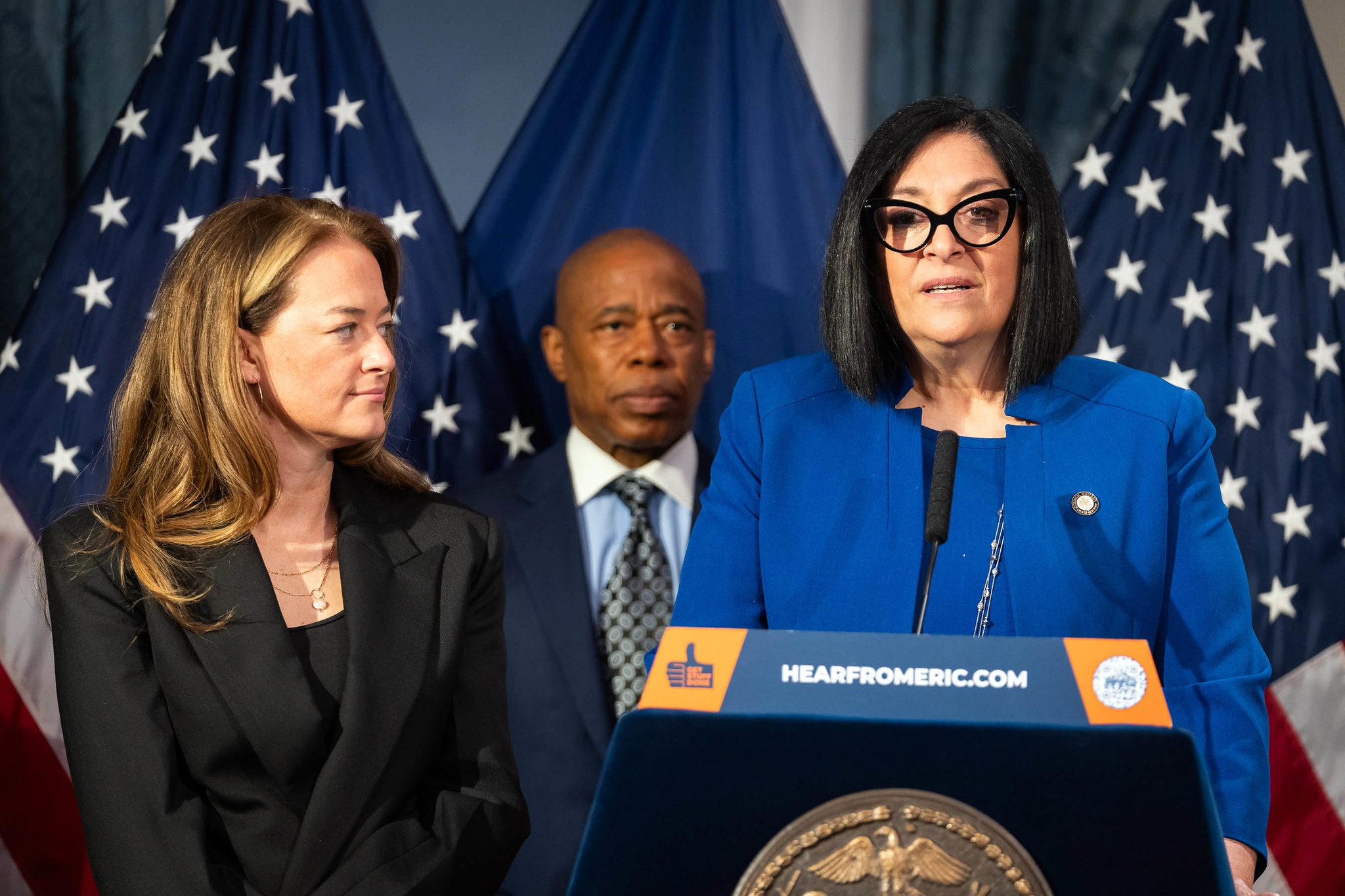
Mayor Eric Adams holds a public hearing and bill signing for Intro. 126 to provide body armor to Fire Department of the City of New York (FDNY) employees who provide emergency medical services and Intro. 127 to provide de-escalation and self-defense training to FDNY employees who provide emergency medical services. City Hall. Wednesday, May 1, 2024. Credit: Ed Reed/Mayoral Photography Office.
MAYOR ADAMS BREAKS GROUND ON $218 MILLION PUBLIC SAFETY PROJECT TO PROTECT RED HOOK FROM COASTAL FLOODING, SAVE HUNDREDS OF MILLIONS OF DOLLARS FOR RESIDENTS IN LOST PROPERTY COSTS
Project Will Install Floodwalls and Floodgates to Mitigate Risk From Future Flooding and Sea Level Rise
Two Miles of Resiliency Features Will Stretch Along Red Hook’s Waterfront, Integrated Into Neighborhood’s Streetscape, Keeping New Yorkers Safe During Extreme Weather
NEW YORK – New York City Mayor Eric Adams’ administration today broke ground on Red Hook Coastal Resiliency (RHCR), a $218 million public safety project that will protect neighborhood residents and businesses from the effects of future storm surges and flooding above sea level — keeping more New Yorkers safe during extreme weather events and saving hundreds of millions of dollars in future repairs from destructive extreme weather events. RHCR will commission a series of floodwalls, floodgates, street redesigns, and other infrastructure enhancements to build a continuous line of long-term resiliency features in the Red Hook neighborhood, creating a two-mile integrated coastal defense system stretching across Atlantic Basin and Beard Street, two of the neighborhood’s most flood-prone areas. Work is scheduled to be completed by the summer of 2028, ensuring a more resilient Red Hook community in the face of future extreme weather and a changing climate, providing protection against storms that have a one in 10 chance of occurring each year, and protecting against sea level rise as projected by the New York City Panel on Climate Change in a low-lying coastal community where these storms are a more frequent flooding threat.
“Keeping people safe includes protecting New Yorkers from the destructive effects of climate change and extreme weather. Today, we are taking action as we break ground on Red Hook Coastal Resiliency and invest in the safety of our people, our neighborhoods, and our city,” said Mayor Adams “This massive $218-million public-safety project demonstrates that our city is leading the nation when it comes to protecting New Yorkers from the dangers of extreme weather, and thinking about how we can avoid infrastructure and residential damage and keep money in New Yorkers’ pockets. The work we begin here today is more than just protective infrastructure, it’s how we are investing in safer, more resilient neighborhoods for generations to come.”
“The Red Hook Coastal Resiliency project will deliver meaningful protection against storm surge flooding caused by climate change,” said New York City Chief Climate Officer and New York City Department of Environmental Protection Commissioner Rohit T. Aggarwala. “This project will bring much-needed coastal relief to Red Hook residents and businesses in this waterfront community. The Department of Environmental Protection, the Mayor’s Office of Climate and Environmental Justice, and our agency partners are delivering critical coastal infrastructure that ensures New Yorkers’ continued access to our waterfronts as sites of industry, transportation, and recreation.”
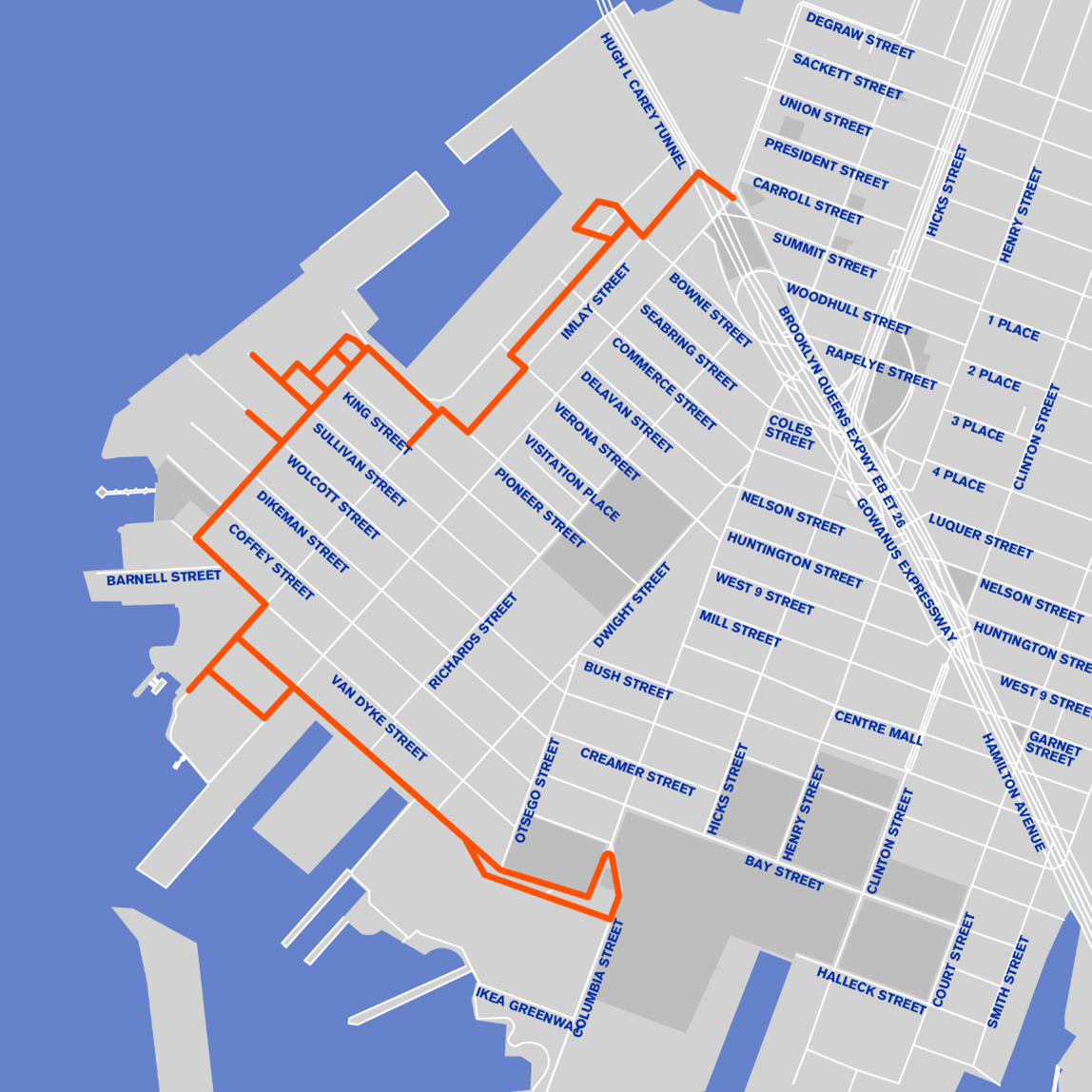
Map showing project area of RHCR. Credit: New York City Department of Design and Construction
RHCR is designed to improve stormwater management and sustainability, while maintaining the Red Hook neighborhood’s character. Public space improvements include a full reconstruction of Todd Triangle — transforming it into a more inviting, plaza-like space with seating and landscaping — and extending the Brooklyn Waterfront Greenway by 1.2 miles with new bike lanes improving pedestrian, bicycle, and vehicle circulation. The IKEA waterfront park will also be upgraded to meet ADA standards, with improved pathways, additional seating, and new plantings for increased accessibility and comfort. Finally, there will be nearly 200 new tree plantings, as well as shrubs and flowers, to enhance greenery and natural water absorption throughout the neighborhood.
Floodwalls
The construction of floodwalls and deployable floodgates, the raising of some streets, and upgrades to local sewers will address flooding. Currently, Red Hook’s lowest point is about four feet above sea level. The project will create a continuous flood protection system that will boost the area’s protection to 10-feet above sea level.
Nearly 1.5 miles of floodwalls, reaching up to five feet in height, along with eight flip-up gates and two roller gates, will be constructed. Some streets within the project area will be raised by up to three feet to support both passive and deployable flood protection measures. Roadways, curbs, and sidewalks will also be reconstructed throughout the project to ensure seamless integration of the resiliency features with existing neighborhood infrastructure.
Floodgates

A design rendering shows a floodgate and street improvements that
will be installed at Van Brunt and Reed Streets. Credit: DDC
Street Redesign
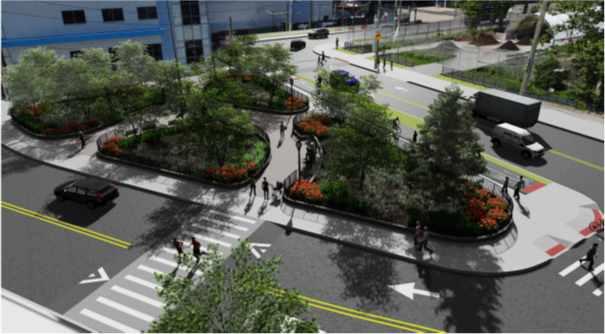
Future roadway and streetscape upgrades at Todd Triangle, which includes a bike lane,
ADA-compliant pedestrian ramps, and street safety upgrades Credit: DDC
RHCR was designed with extensive input from the community and years of planning engagement. Numerous community board meetings, and community and stakeholder meetings, were held throughout the course of the design process to inform the public and take input and feedback on project alternatives and future implementation.
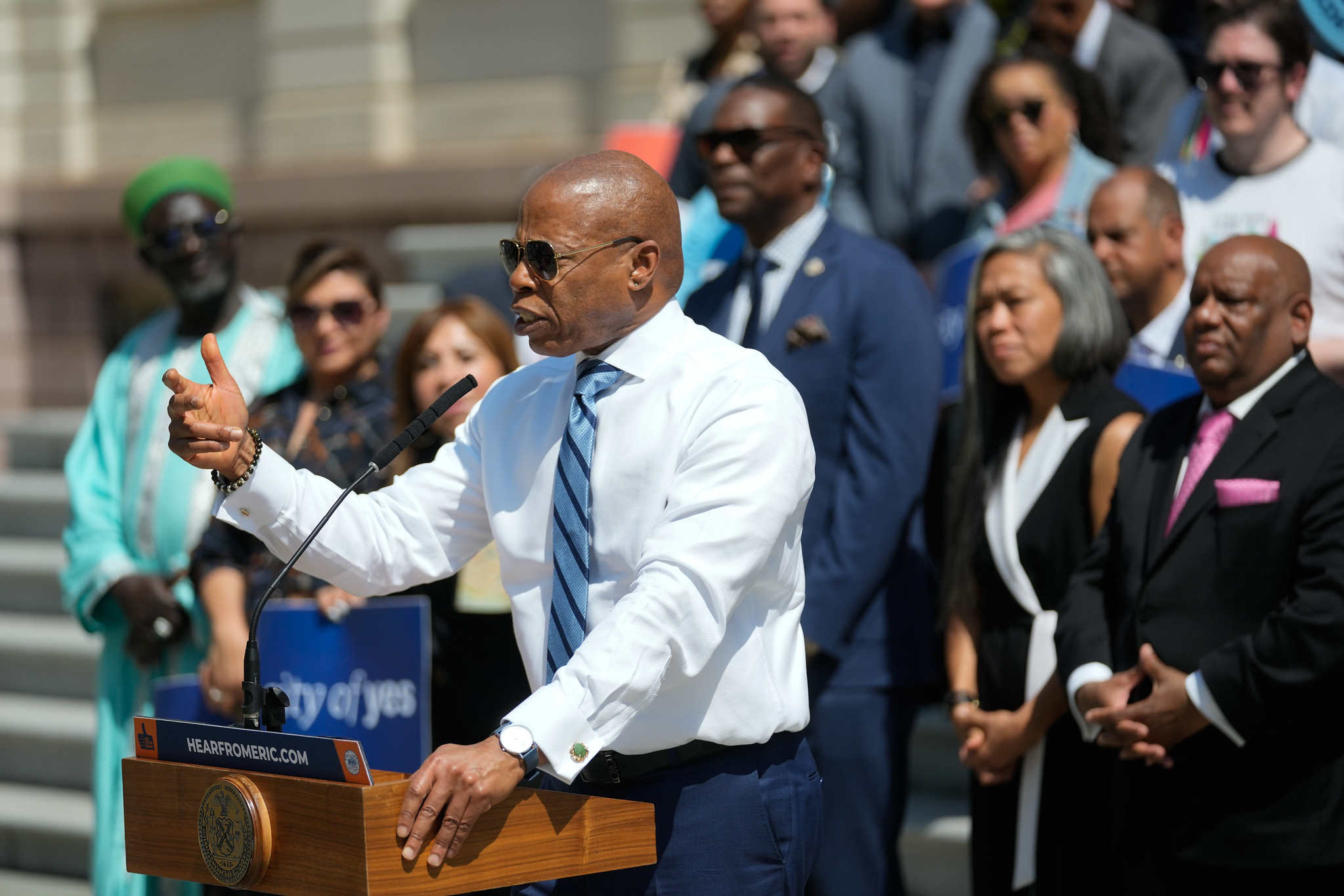
New York City Mayor Eric Adams hosts a rally in support of his “City of Yes for Housing Opportunity” text amendment that will loosen decades-old zoning restrictions and help build a little more housing in every neighborhood on the steps of City Hall on Monday, April 29, 2024. Michael Appleton/Mayoral Photography Office
NEW MAYOR’S MANAGEMENT REPORT SHOWS ADAMS ADMINISTRATION CONTINUES TO DELIVER MAJOR IMPROVEMENTS IN SAFETY, AFFORDABILITY, AND QUALITY OF LIFE FOR NYC RESIDENTS
Report Shows Murder Was Down 6 Percent and Robbery Was Down 17 Percent as New York City Continues Major Crime Declines
28,000 Affordable Housing Units Created or Preserved, Exceeding City Target by 41 Percent; Second Highest Number of New Construction Units Started in City History; Over 13,300 Affordable Housing Units Started Construction
Rat Infestation at Five-Year Low, Street and Highway Pothole Repairs Up 17 Percent as Adams Administration Continues to Improve Neighborhoods’ Quality of Life
NEW YORK – New York City Mayor Eric Adams today announced the release of the Fiscal Year (FY) 2025 Mayor’s Management Report (MMR), evaluating city agency performance from July 1, 2024, to June 30, 2025. The report, once again, demonstrates major improvements and significant progress made under the Adams administration in key areas of importance to New Yorkers, including public safety, housing, affordability, and quality of life — all reflecting the city’s commitment to addressing the needs of its residents.
“This year’s Mayor’s Management Report is another testament to our commitment to a cleaner, safer, and more affordable New York City,” said Mayor Adams. “We are taking on every quality-of-life issue from rats to potholes, breaking affordable housing records, and dropping crime to historic lows. Our city agencies are being held to the highest standards of efficiency and accountability, and the work is showing. With rat infestation signs at their lowest levels in five years, over 28,000 affordable housing units created or preserved, smashing our own target of 20,000 units by 41 percent, and significant reductions in major crimes, including homicides and shootings, we’re building a city that works for everyone. This year’s report proves New York City is not just back, but that we are leading the way and continuing to make steady progress to deliver a safer, more affordable city for New Yorkers that is truly the best place to raise a family.”
“The Mayor’s Management Report is the product of dedicated, year-round performance management and an achievement for public accountability,” said Mayor’s Office of Operations Director Daniel Steinberg. “The report features over 2,000 indicators across 45 city agencies, including narrative explanations for notable trends and an online Dynamic MMR for deeper analysis and monthly updates. By launching the DMMR and adding dozens of new indicators reflecting new challenges and programs, New York City continues to set the standard.”
Highlights of this year’s MMR include:
Keeping New Yorkers Safe:
- Six of the seven major felony crime categories saw decreases in FY 2025, with murder and non-negligent manslaughter dropping 6 percent, and robbery dropping by more than 17 percent. Shooting incidents also decreased 14 percent last fiscal year.
- Major felony crime decreased in parks by 12 percent, in the transit system by 2 percent, and in New York City Housing Authority (NYCHA) developments by 5 percent. Additionally, school safety incidents declined across all categories, including a 9 percent drop in major felony crimes.
- End-to-end average response time to critical crimes in progress by the New York City Police Department decreased by 14 seconds.
- Total traffic fatalities decreased 24 percent and were down across nearly all categories. This includes fatalities related to motorized two-wheelers, which decreased by 39 percent from 99 to 60; motor vehicle occupants, which saw a 32 percent decrease; and pedestrians, which decreased by 8 percent — making FY 2025 one of the best years for Vision Zero’s goals in recent history.
- The New York City Department of Buildings continued to see decreases in construction related incidents and accidents, down 37 percent from FY 2024, due to increased site visits and distribution of safety materials, as well as enduring adequate safety training on worksites.
- Total taxi medallion safety and emissions inspections conducted increased by 11 percent.
- The New York City Department of Design and Construction completed 4,427 feet of coastal protection as part of the East Side Coastal Resiliency and Brooklyn Bridge-Montgomery Coastal Resiliency projects on the Lower East Side of Manhattan, protecting more than 150,000 residents by reducing flood risk due to coastal storms and sea level rise.
Helping Put More Money in New Yorkers’ Pockets:
- Total private sector employment rose for a fourth consecutive year, 2 percent up to 4.22 million, which is nearly 20 percent more than it was in FY 2021, evidence of the city’s sustained economic recovery from the COVID-19 pandemic.
- In total, 2,523 minority-and women-owned business enterprises (M/WBE) were newly certified or recertified, increasing the total number of certified M/WBEs to 11,382 — an over 2 percent increase from FY 2024 and more than 5 percent above the New York City Department of Small Business Services’ 10,800 certified M/WBEs target, building off the work the Adams administration has done to break records on supporting M/WBEs.
- The New York City Industrial Development Agency closed more than double the number of contracts, which is projected to generate $775 million in tax revenue and create over 230 jobs while leveraging nearly $2 billion in private investment.
- People receiving skills training and work experience through New York City Economic Development Corporation programs more than doubled to over 25,000, driven by programming related to entrepreneurship and jobs in the green economy, creative life sciences, and technology industries.
- Fair Fares NYC enrollment increased 11 percent to a record 378,527. Total WeCARE recipients increased 63 percent from 15,133 to 24,620.
- The New York City Department of Consumer and Worker Protection’s (DCWP) Financial Empowerment Centers helped wipe away $136,968,576 in debt for clients — a 13 percent increase — and the cumulative amount of increased savings rose by 11 percent, to $17,673,479. This increase reflects stronger program management that helped counselors connect clients to savings strategies and debt relief resources, including Public Service Loan Forgiveness.
- There were 110,352 tax returns filed for free by DCWP’s NYC Free Tax Prep program during FY 2025, a 9 percent increase from the previous year. Participants saved an estimated $38,181,792 in filing fees during the 2025 tax season, a 17 percent increase from FY 2024.
- The total amount of consumer restitution from DCWP actions reached the second highest amount in five years at over $2.3 million.
- The New York City Human Resources Administration nearly tripled the number of clients helped to obtain employment to nearly 22,000 working-class New Yorkers.
- Nearly 210,000 applications were processed for the city’s IDNYC card, up over 4 percent, and the 197,996 cards issued was 8 percent more than last year, while still maintaining a 97 percent application timeliness rate, meaning nearly all cards were sent within 14 days of the application being received.
Achieving Results in Educating City’s Youth and Supporting Families:
- Applying for child care is as accessible as ever with MyCity, the city’s online portal that provides a centralized, user-friendly platform for New Yorkers and businesses to access, apply for, and track various city services and benefits. Child care applications submitted through MyCity increased 68 percent from FY 2024 to nearly 70,000 applications in FY 2025, including a 26 percent increase in new applications, and a nearly five-fold increase in recertification applications.
- Voucher enrollment was up nearly across the board: The average child care voucher enrollment increased by 28 percent, the average center-based child care voucher enrollment increased by 33 percent, the average family child care voucher enrollment increased by 21 percent, and the average informal home-based child care voucher enrollment increased by 42 percent.
- The New York City Department of Youth and Community Development’s Summer Youth Employment Program (SYEP) served a 97,004 participants across nearly 13,000 sites. The total amount of stipends and wages paid through SYEP accordingly increased by 12 percent from Fiscal Year 2024 to a record high of $139.9 million. Combined with other city agencies, SYEP surpassed the citywide goal of a record 100,000 summer opportunities for young people. Afterschool programs, such as Beacon and Cornerstone, also had record participation. Beacon programs enrolled 62,292 youth participants and 17,353 adults, increases of 10 percent and 4 percent, respectively; Cornerstone programs served 21,122 young people, an increase of 11 percent.
- School class size decreased across all grade bands and the proportion of students chronically absent decreased to the lowest level under the administration.
- Students in grades 3 to 8 meeting or exceeding standards increased seven percentage points, to 56 percent, for English Language Arts and nearly 4 percentage points, to 57 percent, for math — both five-year highs. These increases are a testament to the success of Mayor Adams’ signature initiatives, NYC Reads and NYC Solves, which the city expanded this year so that over 490,000 students can benefit this school year.
Delivering More Affordable Housing:
- The Adams administration created and preserved over 33,000 total units of affordable housing across the city’s housing portfolio in FY 2025, a 15 percent increase from the previous fiscal year. Of the total, over 28,000 affordable housing units were created or preserved by the New York City Housing and Preservation Department (HPD) — exceeding HPD’s target of 20,000 units by 41 percent. This included 13,361 units of new construction, the second highest number of new construction units in the city’s history.
- Affordable units issued through the city’s housing lottery took nearly 50 fewer days to approve — 26 percent faster than last fiscal year.
- Proactive building visits by the HPD Anti-Harassment Unit increased by 24 percent.
- HPD also expanded its reach through alternative enforcement tools with more buildings taking necessary steps to correct violations and exit enforcement programs in Fiscal 2025 compared to Fiscal 2024. The number of units discharged from the Alternative Enforcement Program (AEP) rose by 36 percent, from 3,374 to 4,592 units.
- HPD created or preserved 4,178 units for homeless households, including 1,962 supportive housing units — representing the highest number of homeless units and third highest number of supportive units on record.
- New move-ins at NYCHA have increased significantly, increasing by 42 percent to 4,630.
- NYCHA work order response times continued to improve across several indicators due to reforms made to the work order process. The average time to resolve emergency service requests decreased 17 percent.
- Exits from shelter to permanent housing increased across the board: Single adults increased 6 percent, adult families increased 46 percent, and families with children increased 40 percent.
Improving Quality of Life:
- Initial inspections with active rat signs are at a five-year low at 19.7 percent, reflecting efforts are working, such as citywide waste containerization and public education efforts.
- Response to rat and other pest complaints have improved at NYCHA — the percent of rat complaints responded to within two days and within five days have increased by 17 and 13 points, respectively. Other pest complaints responded to within seven days and within 10 days have increased by 44 and 40 points, respectively.
- The New York City Department of Sanitation (DSNY) deployed 17 percent more illegal dumping cameras, a total of 337 more; 21 percent more summonses were issued for illegal dumping, a total of 872; and the 417 illegal dumping vehicles impounded was 46 percent more than last year.
- DSNY removed over 26,600 vehicles from city streets, more than doubling last year’s total in support of Mayor Adams’ commitment to remove illegal vehicles from city streets.
- The city saw major environmental gains and savings, largely due to composting and recycling. Overall recycling tonnage increased 4 percent, and the diversion rate of recyclables rose for a third consecutive year to 21.8 percent, the highest since FY 2011. Tons of refuse disposed to landfills decreased to the lowest level in at least 15 years, largely due to the tons of organic waste that were diverted, which increased nearly 29 percent. Green infrastructure
- assets implemented increased 19 percent.
- Sewer back up complaints dropped by 36 percent, and resolution time for backed up sewers decreased by 26 percent. Catch basin complaints also decreased 38 percent.
- The New York City Department of Transportation repaired 15 percent more potholes on city streets, an increase of nearly 20,000 potholes, and repaired 23 percent more potholes on city highways. Between streets and highways, over 180,00 potholes were repaired.
- DSNY cleaned nearly 28 percent more miles of highways, an additional 800 miles.
- New Yorkers living within walking distance of a park continued to increase to 84.2 percent, and there were 10 percent more trees planted along city streets. Street trees pruned increased by 19 percent and the annual pruning goal completed was 99 percent, 15 percentage points better than last fiscal year and the highest in the last five years.
- Health-led crisis response and community-based de-escalations increased 22 percent, and individuals who received services from long-term mobile community-based treatment providers increased for a fifth consecutive year, by 10 percent to over 6,200.

New York City Mayor Eric Adams delivers emarks at the launch of “NYC Her Future” as part of “Women Forward NYC,” a 2024 State of the City initiative, at Pier 57 on Monday, April 29, 2024. Michael Appleton/Mayoral Photography Office
CREATING A CLEANER, MORE AFFORDABLE CITY: MAYOR ADAMS, ACTING DSNY COMMISSIONER LOJAN, DOF COMMISSIONER NIBLACK ANNOUNCE AUTOMATIC REBATES TO QUALIFIED HOMEOWNERS FOR PURCHASE OF NYC BIN
Ahead of June 2026 Deadline to Use NYC Bins, Owners of One- and Two-Family Homes Who Receive STAR and E-STAR Will Receive Rebate Checks to Cover Cost of Bins
Rebates Will Go to All Eligible Households, Including Those Who Already Purchased Bins
Announces Steps for Those Who Meet Criteria and Have Yet to Purchase a Bin
NEW YORK – New York City Mayor Eric Adams, New York City Department of Sanitation (DSNY) Acting Commissioner Javier Lojan, and New York City Department of Finance (DOF) Commissioner Preston Niblack today announced that owners of one- and two-family homes who receive the Basic or Enhanced School Tax Relief (STAR or E-STAR) credit or exemption will receive a $59.30 check to pay for the cost of their official NYC Bin. Checks are due to hit mailboxes in the coming weeks. Eligible homeowners will not have to do anything to receive the checks, as DOF will automatically be sending them.
As of November 12, 2024, all properties with one to nine residential units — including one- and two-family homes — are required to use bins, 55 gallons or less, with secure lids for trash set out. Those residents who already use a bin of similar size may continue to use it only until June 2026, when they will be required to use the official NYC Bin.
“Building a cleaner New York City is going to require all of us to work together to keep trash off our streets. To encourage everyone to do their part and to help put more money back into the pockets of working-class New Yorkers, we’ll be covering the cost of the NYC Bin for most one- and two-family homeowners,” said Mayor Adams. “Our ‘Trash Revolution’ is now not only making our city cleaner, but also more affordable. I encourage everyone who has not yet to order an NYC Bin to do so today. There’s no reason to wait — cleaning up our city starts at home, so make sure to get your NYC Bin and get cash back.”
“While NYC Bins were already the most affordable containers of their quality on the market, this rebate makes it even easier for homeowners to purchase their NYC Bins,” said DSNY Acting Commissioner Lojan. “NYC Bins are delivering cleaner streets and sidewalks and fewer rats, and I encourage those who have not yet ordered their bin to use this check to make their purchase in the coming weeks.”
“This rebate is one more way we’re making life in the city more affordable for working-class New Yorkers,” said DOF Commissioner Niblack. “Homeowners don’t need to fill out any forms or applications — if you’re eligible, you’ll get your check in the mail automatically. We’re proud to play a part in keeping our city cleaner, healthier, and more affordable for everyone.”
The DOF will send letters in the coming weeks notifying homeowners of this refund:
- Homeowners who have already purchased their NYC Bin online or by phone will automatically receive a check for $59.30.
- Those who have not yet purchased their NYC Bin will receive a letter notifying them that when they purchase their bin online or by calling 855-692-2467, they will automatically receive a check within 30 days of making their purchase.
- Those who have purchased or will purchase their NYC Bin in person at Home Depot will receive a voucher code that they can use online — with a proof of purchase — to request their reimbursement check.
STAR and E-STAR credits and exemptions are generally for property owners whose total household income is less than $500,000. The DOF will mail checks to homeowners who have applied for this credit in 2024 or 2025.
The rat-resistant NYC Bins are compatible with mechanical tippers being installed on DSNY’s standard rear-loading collection trucks, which facilitate safer and cleaner collection.
Today’s announcement builds on Mayor Adams’ commitment to a cleaner, more affordable city, and is another step in the “Trash Revolution,” the Adams administration’s citywide effort to move trash from black bags on the sidewalk to rat-resistant, closed containers:
- In October 2022, the Adams administration kicked off the Trash Revolution by changing set-out times for both residential and commercial waste from 4:00 PM — one of the earliest set-out times in the country — to 8:00 PM beginning in April 2023, while also allowing earlier set-out if the material is in a container. This incentivization of containerization was paired with major changes to DSNY operations, picking up well over a quarter of all trash at 12:00 AM rather than at 6:00 AM, particularly in high density parts of the city, and ending a practice by which up to one-fifth of trash had been purposefully left out for a full day.
- Later that month, DSNY published the “Future of Trash” report, the first meaningful attempt to study containerization models in New York City, and the playbook to get it done.
- In July 2023, containerization requirements went into effect for all food-related businesses in New York City. These businesses — restaurants, delis, bodegas, bars, grocery stores, caterers, and more — produce an outsized amount of the type of trash that attracts rats.
- That same month, installation of the initial 10-block, 14-school, Manhattan Community Board 9 pilot containers began leading to reductions in rat sightings of approximately 60 percent.
- In September 2023, commercial containerization requirements extended to chain businesses of any type with five or more locations in New York City. These chain businesses tend to produce a large total volume of trash.
- In February 2024, Mayor Adams unveiled a new, automated, side-loading garbage truck and a new data-driven containerization strategy, affirming a commitment from Mayor Adams’ 2024 State of the City address to set New York City on the course to store all trash put out for pickup in containers. This truck was unveiled four years earlier than industry experts thought possible.
- In March 2024, container requirements went into effect for all businesses — of every type — in New York City to get their trash off the streets and into a secure bin.
- In November 2024, container requirements went into effect for low-density residential buildings — those with one to nine units — containerizing approximately 70 percent of all trash in the city.
- In May 2025, Mayor Adams committed over $32 million in permanent funding for DSNY to keep New York City clean as part of the Fiscal Year 2026 Executive Budget, better known as the “Best Budget Ever.” This decision permanently allocates resources to key aspects of Mayor Adams’ cleanliness agenda, establishing permanent high levels of funding to protect the cleanliness and quality of life of city neighborhoods for generations to come.
- In June 2025, Mayor Adams announced that — following the installation of approximately 1,100 on-street containers for residential trash from the largest buildings — 100 percent of trash in Manhattan Community Board 9 is now covered by containerization requirements.
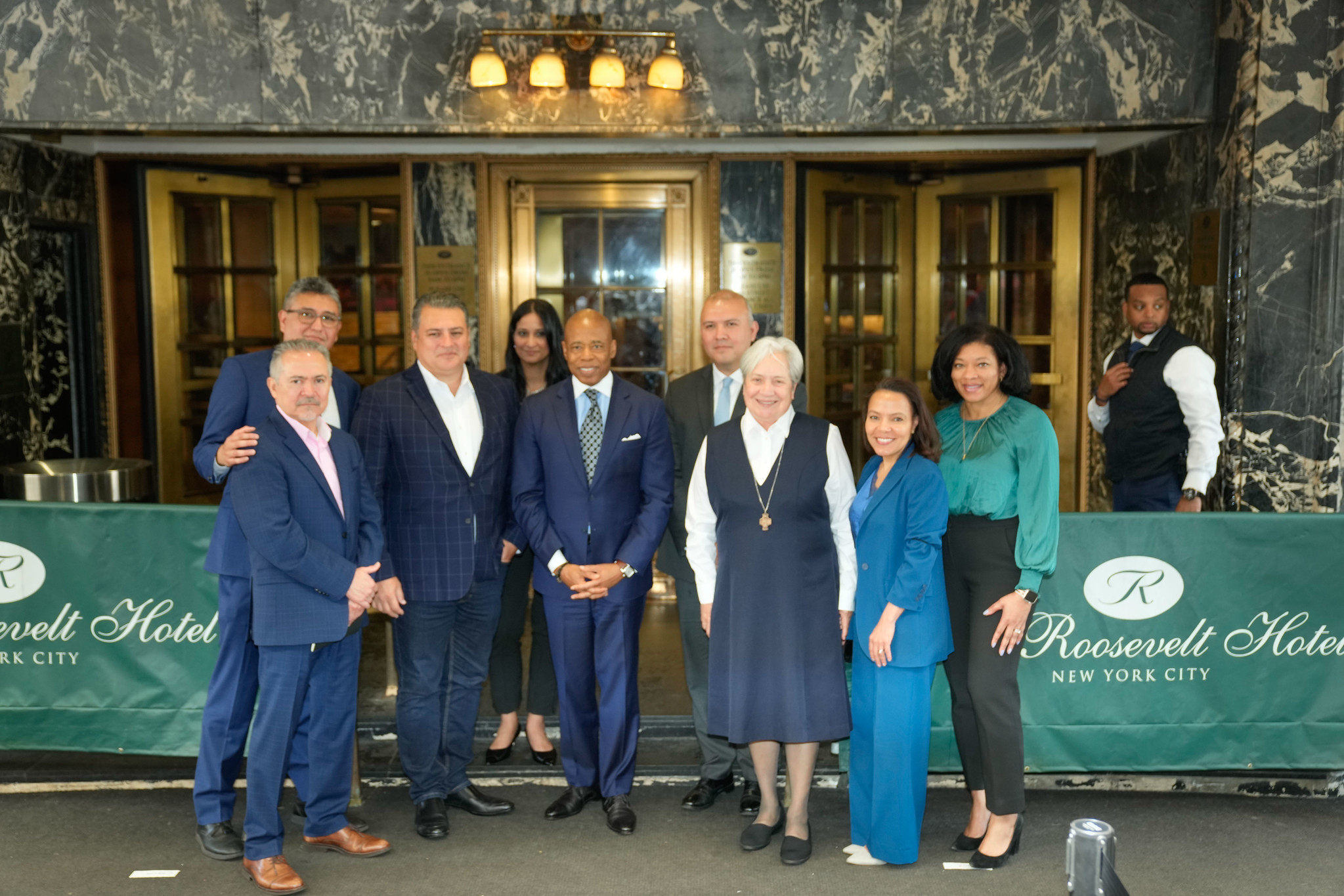
New York City Mayor Eric Adams delivers remarks at a press conference hosted by national Latino leaders to highlight New York City’s response to the asylum seeker humanitarian crisis outside the Roosevelt Hotel in Manhattan on Wednesday, May 1, 2024. Michael Appleton/Mayoral Photography Office
MAYOR ADAMS UNVEILS GREENER, REVITALIZED FULTON MALL FOLLOWING $8 MILLION STREETSCAPE INVESTMENT
City Has Reinvigorated Popular Shopping Corridor, Adding Trees, Improving Tree Pits, and Increasing Seating
Project Reclaims Streets for Greater Pedestrian Use, Creates More Accessible Public Spaces
NEW YORK – New York City Mayor Eric Adams, New York City Department of Parks and Recreation (NYC Parks) Commissioner Iris Rodriguez-Rosa, and the Downtown Brooklyn Partnership (DBP) today unveiled the renovated Fulton Mall streetscape that includes $8 million in upgrades to make the shopping district greener, more pedestrian-friendly, and more livable. The revitalization effort delivers improvements on Fulton Street between Boerum Place and Flatbush Avenue to support the corridor’s active commercial uses and beautify its public spaces by enlarging tree pits, adding trees, installing new benches, and placing permeable pavers around the tree pits.
“Today, we are unveiling a vibrant, pedestrian-friendly economic hub in Downtown Brooklyn that will continue to make our city more livable. This $8 million investment has transformed this busy corridor into a safer, more welcoming space that residents and visitors deserve,” said Mayor Adams. “Our administration is proud to, once again, deliver exactly what working-class New Yorkers are asking for, and today’s announcement continues to develop public spaces with a people-first design that improves the quality of life for all New Yorkers.”
“Every day, New Yorkers look for more ways to enjoy the outdoors. Sometimes that means a park, and sometimes it’s just a walk to the grocery store,” said Deputy Mayor for Operations Jeff Roth. “That’s why a people-first streetscape in Downtown Brooklyn matters — it makes daily life better and getting outside easier. Thank you to our chief public realm officer for leading this work, NYC Parks for the trees and care ahead, and DBP for your partnership. Our administration is proud to keep delivering for New Yorkers every day.”
“Downtown Brooklyn’s streets are its front porch to the world, and with these streetscape improvements we are creating a safer, greener, more welcoming space for everyone who lives, works, and visits here,” said Chief Public Realm Officer Ya-Ting Liu. “This Fulton Streetscape project shows what’s possible when city agencies and the business community prioritize the pedestrian experience, transforming public spaces into places of connection, commerce, and community.”
“The completion of the Fulton Mall streetscape improvements is a major step forward in transforming our neighborhood into a people-first downtown,” said Regina Myer, president, Downtown Brooklyn Partnership. “In just one year, we were able to overhaul the borough’s busiest shopping corridor with a series of smart upgrades to make it greener and more beautiful and accessible to pedestrians. The Fulton Mall work advances key goals of our Downtown Brooklyn Public Realm Action Plan and we’re grateful to our partners at NYC Parks for bringing this project to fruition.”
The $8 million revitalization of Fulton Mall is part of the Adams administration’s $40 million investment in Downtown Brooklyn’s public realm, which includes streetscape improvements, transportation and public space upgrades — such as improved bus service and new public art — and pedestrian and roadway safety enhancements.
Completed in two-block sections over the course of approximately one year, the $8 million investment has greened, beautified, and enhanced the shopping district area with several public realm improvements, including:
- Enlarged planting beds representing a nearly 100 percent increase in planting space with 7,895 new perennial plantings, including oakleaf hydrangea, yarrow, coneflower, creeping juniper, and Japanese forest grass.
- New beds for 79 existing trees and five new trees.
- 39 new radial benches made with wood slats and galvanized steel armrests in 10-foot and 20-foot lengths.
- 24,083 new square feet of permeable paving around planting beds to improve stormwater and flood management in the neighborhood.
The revitalization of Fulton Mall’s streetscape is part of the Adams administration’s work to build and revitalize public spaces across New York City. In addition to this project, Mayor Adams has announced a $50 million investment to improve “The Arches,” a newly opened public space under the Brooklyn Bridge, as well as committed over $400 million to fully transform Fifth Avenue into a world-class, pedestrian-centered boulevard.
TRANSCRIPT: HOSTS RECEPTION CELEBRATING EASTERN EUROPEAN HERITAGE AND CULTURE
Mayor Eric Adams: Thank you so much. Thank you, Fred, and I really want to thank our consul generals who are here and other dignitaries from the Eastern European community. This community means so much to our city.
And being mayor, I often state that it is symbolism and substance. The substance we know are the things that are important to everyone. Keeping our city safe, educating our children, making sure our businesses are able to operate and continue to see the city thrive and grow. And we have accomplished some of those great tasks.
But also, it’s the symbolism, the symbolism that you see yourselves in our city. As Fred alluded to and talked about, this is a city where diversity is important. We are great as a city and as a country because we state, do not abandon your culture when you come to America. In fact, it’s just the opposite. You are not called American-Georgian. You’re not called American-Moldovans. You’re not called America first.
In fact, your country goes first. That is what America states. And that is what we want you to know, that when you put your country and culture first and embrace it with America, you create this great product that we have. And so, when we lift up our Eastern European community, we realize what your contributions are to this country.
In many of your countries, it was the first time after 109 mayors that when I became mayor, we raised your flags at Bowling Green to show how important you are. You believe in what we believe in. You believe in family. You believe in faith. You believe in business. And most importantly, you believe in public safety. As we look at some of our police officers that are here from the Eastern European diaspora, we want to thank them for doing the job of keeping our city safe every day.
And next week, starting this week, we are inviting the entire globe here as we celebrate what we call UNGA, the UN General Assembly. This is an opportunity to put our hospitality on full display here in New York. Nowhere else is the building like the United Nations sitting on our East River, inviting people from all over the globe to come here and celebrate their country and celebrate what America means to them. You have made it possible.
That is why we’re here today to lift up your heritage. And again, I thank you for gracing us with your presence here at Gracie Mansion. Let’s continue to lift up our rich heritage and our rich diversity. Thank you very much. Let’s honor our honorees. Thank you.
New York City Mayor Eric Adams hosts a reception celebrating the heritage and culture of the Eastern European community at Gracie Mansion on Tuesday, July 25, 2023. Photo Credit: Benny Polatseck/Mayoral Photography Office
CITY OF NEW YORK TAKES ADDITIONAL ACTION OPPOSING FEDERAL GOVERNMENT’S MILITARY DEPLOYMENT IN AMERICAN CITIES
New York City and Coalition Again Support California’s Case Against Federal Administration
Brief Contends That Cities — Not Military — Hold Lawful Expertise and Authority Over Domestic Law Enforcement, Are Better Suited to Ensure Public Safety While Protecting First Amendment Rights
NEW YORK – The City of New York — as part of a coalition of 36 localities from around the nation — has filed another amicus brief supporting California Governor Gavin Newsom’s ongoing case against the federal government’s unlawful deployment of the National Guard in Los Angeles. In the brief, the coalition urges the U.S. Court of Appeals for the Ninth Circuit to deny the federal government’s motion to stay a September 2, 2025 district court ruling in Newsom v. Trump, which enjoined the federal government from deploying federal troops in Los Angeles to execute the law in violation of the Posse Comitatus Act. This ruling, the second time the U.S. District Court for the Northern District of California has blocked the federal government’s actions in this case, held that the Trump administration exceeded legal limits that prohibit the use of the military for domestic law enforcement.
“We will always fight to protect our city’s right to make the best public safety decisions for New Yorkers. Already in 2025, the NYPD has safely managed over 3,200 protests without major incidents. We have the greatest police department in the world, and they are more than equipped to handle all public safety concerns that come our way, including protests,” said Mayor Adams. “We do not need a deployment of the National Guard to our city. Instead, we hope to continue to work with the federal government to stop the flow of illegal guns to our city from across the nation. We remain committed to keeping New Yorkers safe through smart, precision-driven policing.”
“Turning the military into a domestic police force with no local oversight sets a dangerous precedent for cities across this nation,” said New York City Corporation Counsel Muriel Goode-Trufant. “As demonstrated in this brief, the unnecessary deployment of armed soldiers in cities violates federal law that has been in place for over a century and threatens the economic and social stability of communities by sowing chaos and fear. We urge the court to deny the Trump administration’s request for a stay so the district court’s injunction can take effect.”
In the amicus brief — prepared by the City of Los Angeles — the coalition argues that the federal government’s use of the military inflicts irreparable harm and encroaches on the authority of states and localities, which are better trained to handle domestic law enforcement. The brief further maintains that the Los Angeles Police Department responded successfully to the wide-scale protests, including the No Kings’ Day protests on June 14, 2025, in which 200,000 people poured onto the streets, and there was no basis for the federal government’s intervention with armed soldiers who are primarily trained to defend America against attack.
Moreover, the brief contends that the deployment of federal troops negatively impacts immigrants who contribute greatly to regional economies. The brief observes that these communities are living in fear, “unable to engage in the simplest daily tasks — going to work or sending children to school — without considering the risk to their safety and freedom.” In Los Angeles, the brief states, more people are staying home, resulting in a “ghost town,” and that the visible decline in economic activities has caused businesses to close and has contributed to a significant reduction in local tax revenue available to fund schools and other vital public services.
The brief warns that other cities may face similar consequences, as the federal government has stated plans for further troop deployments across the nation.
Joining the City of New York and the City of Los Angeles in filing the amicus brief are the cities of Alameda, Bell Gardens, Huntington Park, Long Beach, Monterey Park, Oakland, Salinas, San Diego, San Jose, Santa Monica, and West Hollywood, California; Hartford, Connecticut; Chicago, Illinois; Iowa City, Iowa; Baltimore, Maryland; Boston, Massachusetts; Minneapolis and Saint Paul, Minnesota; Albuquerque, New Mexico; Albany and Rochester, New York; Beaverton and Portland, Oregon; Pittsburgh, Pennsylvania; Providence, Rhode Island; Burlington, Vermont; Seattle, Washington; and Madison, Wisconsin; as well as the counties of Los Angeles, Santa Clara, and Sonoma, California; Boulder, Colorado; and Tacoma, WA; as well as the U.S. Conference of Mayors.
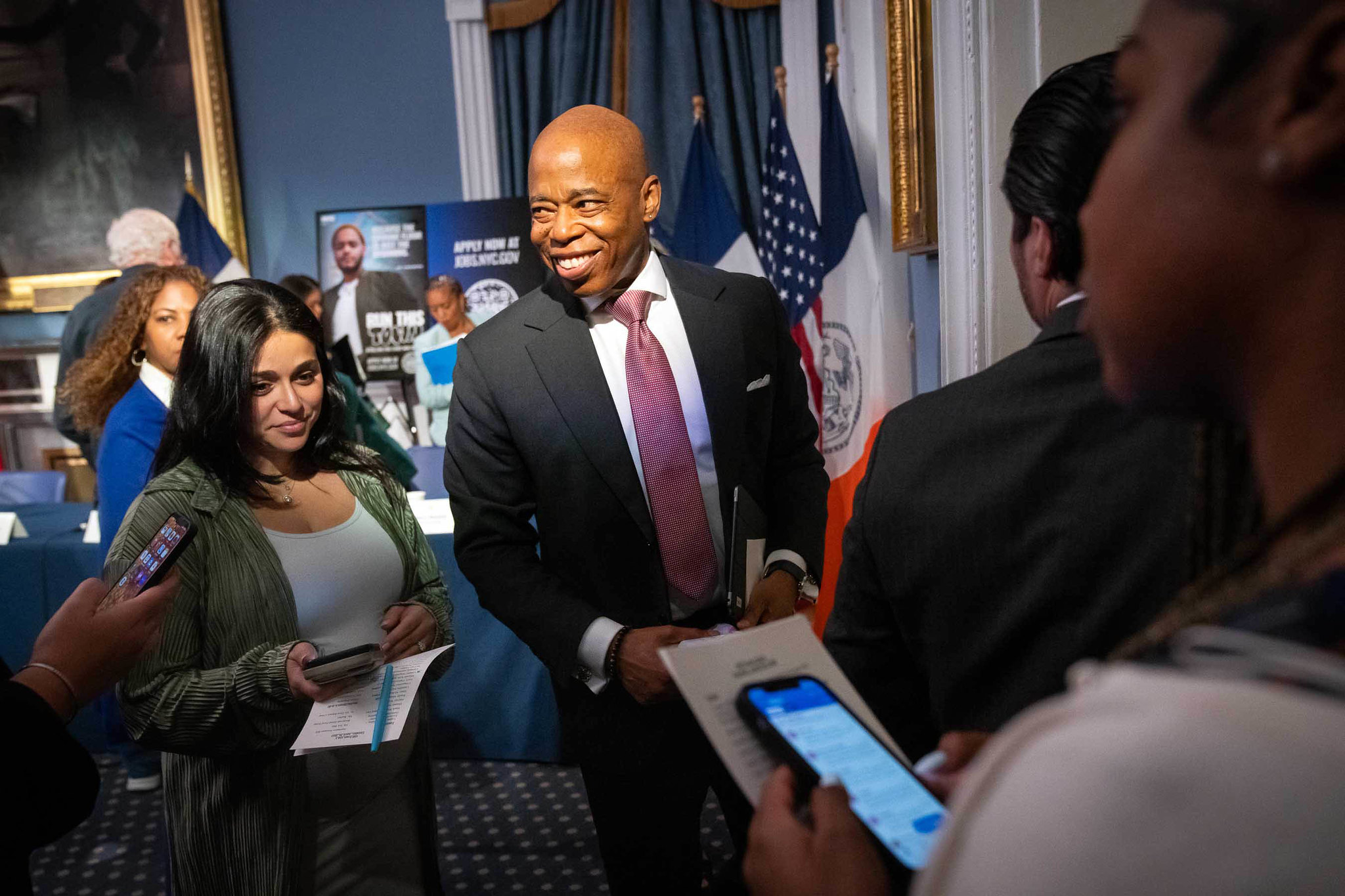
Mayor Eric Adams and senior administration officials hold an in-person media availability. City Hall. Tuesday, April 30, 2024. Credit: Ed Reed/Mayoral Photography Office.
MAYOR ADAMS ISSUES REPORT ANALYZING BILLIONS IN ECONOMIC IMPACT AVAILABLE FOR NYC THROUGH DOWNSTATE CASINO PROPOSALS, LAYS OUT RECOMMENDATIONS TO ENSURE CASINO BENEFITS FOR FIVE BOROUGHS
“Casting the Dice” Provides Detailed Analysis of Each Casino Proposal for New York City, Including Opportunities for Economic Development and Job Creation
Lays Out Both Site-Specific Suggestions and General Recommendations to Make Sure New Yorkers Benefit From a Downstate Casino
NEW YORK – New York City Mayor Eric Adams today issued “Casting the Dice: Casinos in New York City,” a comprehensive report analyzing each of the seven casino proposals located within the five boroughs and laying out clear recommendations to make sure that any casino located within New York City benefits both the surrounding community and the entire city with billions of dollars in economic impact, thousands of jobs, and improvements to local neighborhoods. The report examines the financial, economic, and design impacts of each of the casino proposals; additionally, the report lays out seven general recommendations for all parties involved in the casino licensing process to consider as proposals continue to move forward.
“A casino would bring thousands of additional good-paying union jobs and billions of additional dollars in economic development to New York City, which is why our administration has fought for a fair process with as many competitive bids for the city as possible,” said Mayor Adams. “This report will help make sure that any casino within New York City benefits all of the five boroughs and that our city makes the most of this once-in-a-generation chance to open up a casino downstate.”
“From the start, the Adams administration has worked to make this process fair, transparent, and centered on community needs,” said Deputy Mayor for Housing, Economic Development, and Workforce Adolfo Carrión, Jr. “This report reflects the careful analysis of our city agencies and provides clear recommendations to guide state decision-makers in the months ahead.”
Given the potential benefits of a casino for New York City — including jobs, tourism, economic development, and additional investment in the surrounding areas — the Adams administration has helped promote a fair process with as many competitive casino bids for the city as possible. Additionally, through the Adams administration’s appointments to Community Advisory Committees (CAC) that evaluate each of the individual applications, the city has been able to advance the public interest and evaluate proposals based on equity and potential benefits to the city while mitigating any potential risks. Today’s report builds on that work.
Following a comprehensive review by several city agencies, Casting the Dice offers a comparative analysis of every application, showcasing the potential jobs and economic impact that each casino could have on New York City.
| Bally’s | Coney | Avenir | Caesars | Freedom | QF | Aqueduct | |
| Construction Jobs, Direct | 6,936 | 6,976 | 11,269 | 7,190 | 17,907 | 16,224 | 7,942 |
| Construction Jobs, Indirect & Induced | 3,297 | 3,316 | 5,356 | 3,417 | 8,511 | 7,711 | 3,775 |
| Permanent Jobs, Direct | 1,547 | 1,617 | 1,822 | 2,017 | 2,736 | 2,559 | 1,765 |
| Construction Economic Impact, Net New (Net Present Value) ($M) | $1,623.4 | $1,627.6 | $2,642.9 | $1.676.6 | $4,193.5 | $3,787.9 | $1,855.4 |
| Operations Economic Impact, Net New (30-Year Net Present Value) ($M) | $7,256.8 | $10,674.1 | $9,884.8 | $9,650.6 | $10,113.3 | $11,525.2 | $7,629.7 |
Casting the Dice includes detailed economic analysis showing the impact of each individual casino proposal for New York City. Source: New York City Mayor’s Office.
Following an acceleration of two CAC votes this week by Manhattan elected officials without thorough debate or analysis, two casino proposals failed to advance through the process. Nevertheless, key recommendations in this report were shared with the respective CACs and applicants ahead of the vote and before publication to ensure they had all the information necessary for a vote. The Adams administration continues to encourage all CACs to utilize the full-time allotted for a comprehensive review of all proposals.
Additionally, in order to make sure that every proposal best serves the surrounding community and the city, the report makes concrete recommendations for the land use, design, and urban planning elements of each individual application.
Finally, the report calls on all parties involved in the licensing process — including applicants, the Gaming Facility Location Board, and the New York State Gaming Commission — to incorporate the following principles into their decision making:
- Consider a revised, regular distribution of gaming revenues to make sure that casinos located in New York City benefit all five boroughs.
- Ensure that community benefit funds have clear, accountable government structures.
- Establish meaningful enforcement mechanisms to ensure that commitments and pledges by license applicants are codified and followed.
- Promote transparency and clear oversight in decision-making throughout the process.
- Invest in initiatives that promote quality of life, treat addiction, and address traffic.
- Prioritize participation by minority- and women-owned business enterprises.
- Create detailed workforce plans to ensure that local communities have access to good-paying jobs and other economic benefits from a casino.
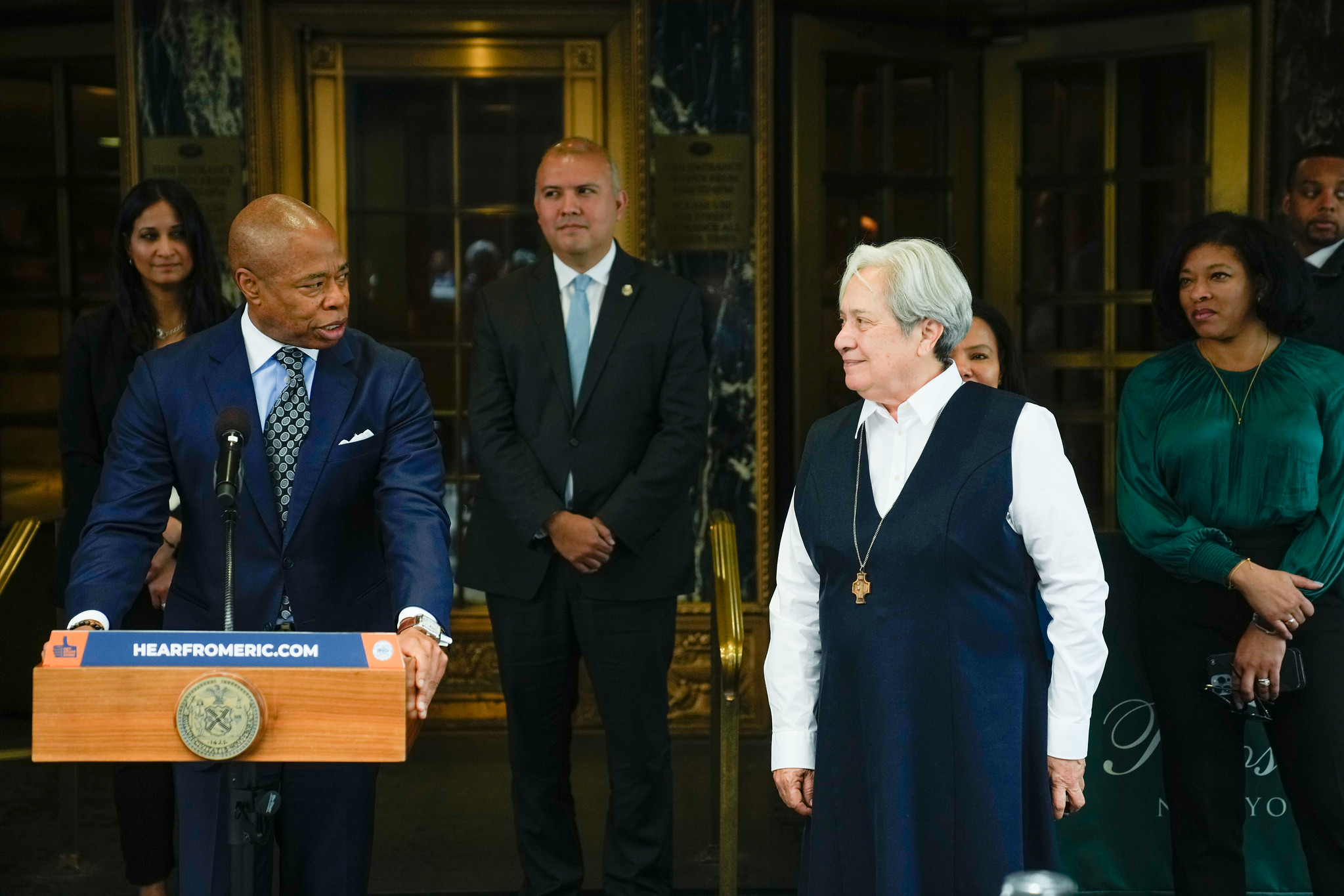
New York City Mayor Eric Adams delivers remarks at a press conference hosted by national Latino leaders to highlight New York City’s response to the asylum seeker humanitarian crisis outside the Roosevelt Hotel in Manhattan on Wednesday, May 1, 2024. Michael Appleton/Mayoral Photography Office
MAYOR ADAMS ANNOUNCES REMOVAL OF OVER 4,000 ILLEGAL FIREARMS FROM NEW YORK CITY STREETS SINCE BEGINNING OF 2025 ALONE, AS RECORD LOW SHOOTINGS CONTINUE
Gun Seizures Have Led to Three Consecutive Years of Shooting and Homicide Declines, Shootings Down 54 Percent, Homicides Down 34 Percent Under Adams Administration
Adams Administration’s Focus on Interagency Collaboration and Targeted Public Safety Efforts Has Resulted in Six Consecutive Quarters of Crime Reductions, Record Lows for Shooting Incidents and Shooting Victims Through First Half of 2025
NEW YORK – New York City Mayor Eric Adams and New York City Police Department (NYPD) Commissioner Jessica S. Tisch today announced that the NYPD has removed more than 4,000 illegal firearms from New York City streets since the start of 2025 alone. This year’s seizures bring the total number of illegal firearms seized since the start of the Adams administration in January 2022 to over 23,700. This success has helped drive a 54 percent decrease in shootings and a 34 percent reduction in homicides citywide under the Adams administration.
“Shooting incidents and shooting victims are at their lowest levels in recorded history, and that is no accident. It is the result of relentless investigative efforts, enforcement, and the continuous seizure of lethal guns by the brave men and women of the NYPD,” said Mayor Adams. “Every one of the 4,000 guns seized represents a life saved, a family protected, and a community safer. And while we are always working to further protect New Yorkers, our results could not be more clear: We are in our seventh straight quarter of major crime reductions, with year-to-date declines in almost every major crime category, and we’ve also seen drops in hate crimes, retail theft, and crime in on our subways and in public housing. Thank you to Commissioner Tisch and the entire NYPD for reaching this milestone and for ensuring that New York City remains the safest big city in America and the best place to raise a family.”
“Removing 4,000 firearms from our streets so far this year is the direct result of the NYPD’s unwavering commitment to keeping New Yorkers safe,” said NYPD Commissioner Tisch. “We know the dangers our police officers face every time they seize one of these deadly weapons, yet they continue to do this work at a historic pace. Since January, New York City has seen its lowest levels of shooting incidents and shooting victims in recorded history. These achievements come from our strategic plan: following the data, dismantling violent gangs, and deploying resources to the communities most threatened by gun violence. I am grateful to Mayor Adams for providing the tools to get these dangerous firearms out of the hands of criminals.”
“Today’s announcement is a significant step forward in our fight to end the proliferation of illegal firearms that have threatened our residents’ safety and our communities wellbeing,” said Bronx Borough President Vanessa L. Gibson. “Removing these weapons from our streets is essential to not only reducing violence but also to restoring trust, rebuilding hope, and reclaiming our streets from the threat of gun violence. I want to thank Mayor Eric Adams and Police Commissioner Jessica Tisch for their continued support and leadership in handling this urgent gun trafficking crisis.”
The NYPD is one of New York City’s first lines of defense against gun violence, and officers continue to save countless lives every day by continuing to take illegal firearms off the streets. The department’s focused enforcement helped make 2024 the fourth-lowest year for shootings in the city’s recorded history. In the first eight months of 2025, New York City saw both the lowest number of shooting incidents and shooting victims ever recorded in an eight-month span, beating the previous recorded low set in 2018. For the first eight months of 2025, shooting incidents decreased by 18.8 percent compared to the same period last year, representing 123 fewer shooting victims.
Beginning on May 5, 2025, the NYPD deployed more than 2,000 officers to 72 summer violence zones in 40 precincts, eight housing police service areas, and 10 transit commands. During the four-plus month deployment, crime in those zones declined 18.3 percent — more than 400 fewer victims, and included decreases in all seven major crimes. Also in the summer violence zones, shooting incidents declined 47.3 percent and shooting victims declined 43.8 percent. Every borough in the city saw crime declines in their respective summer zones, with Staten Island down 70.8 percent, Queens down 36.2 percent, Manhattan down 22.7 percent, Brooklyn down 11.2 percent, and the Bronx down 10.2 percent.
Overall, major crimes also continue to trend downward across the five boroughs. In August 2025, major crime declined 6.7 percent citywide, driven by decreases in most major crime categories, as well as notable reductions in transit crime, housing development crime, hate crimes, and retail theft. From January through August 2025, major crime citywide dropped 4.5 percent compared to the same period last year, resulting in 3,799 fewer victims of major crimes across the five boroughs.
These successes have been supported by the NYPD’s targeted investigations into violent gangs, which have resulted in 55 gang takedowns year-to-date, leading to the arrests of 396 gang members and associates, as well as the seizure of 236 firearms. These efforts are directly contributing to fewer illegal guns on city streets and safer communities across the five boroughs.
Out of the more than 23,700 guns seized since the beginning of the Adams administration, over 1,500 of them have been identified as ghost guns — unserialized, and therefore untraceable, firearms that are assembled through components purchased either as a kit or as separate pieces or manufactured using 3-D printers. These weapons are fully functioning firearms and often end up in the hands of criminals as well as underage purchasers. Incidents involving ghost guns reflect a dangerously escalating trend — one that the NYPD is leading the charge against. The NYPD recovered 17 ghost guns in 2018, 48 in 2019, 150 in 2020, 263 in 2021, 585 in 2022, 394 in 2023, 438 in 2024, and already 199 so far in 2025.
In July 2024, Mayor Adams led a charge supporting an effort urging the U.S. Supreme Court to uphold commonsense ghost gun regulations. Along with Mayors Against Illegal Guns and Manhattan District Attorney Alvin L. Bragg, Jr., Mayor Adams announced the filing of an amicus brief in the U.S. Supreme Court case of Garland v. VanDerStok, in support of federal regulations issued by the Bureau of Alcohol, Tobacco, Firearms and Explosives that require ghost gun parts to have serial numbers and compel background checks for prospective buyers of ghost gun home-assembly kits.
Every firearm taken off a city street is only one part of the equation. Ensuring meaningful consequences for the small percentage of New Yorkers who carry illegal firearms and commit acts of violence is equally critical. The 2019 state legislative changes to discovery were necessary to improve the fairness of the criminal justice system, however, some of the consequences have crippled the system, leading to case dismissals for technical violations and increased case processing times, including for firearm charges. Prior to discovery reform, local district attorneys declined to prosecute or dismissed 32 percent of non-violent felony cases in New York City — that number increased to nearly 52 percent in 2024.
Ending gun violence continues to be Mayor Adams’ top priority. In his first month in office, in January 2022, Mayor Adams released the “Blueprint to End Gun Violence,” which laid out his priorities to immediately address the crisis of guns on New York City streets. Pursuant to the blueprint, in March 2022, the NYPD launched its Neighborhood Safety Teams to focus on gun violence prevention in areas that account for a disproportionate amount of citywide shootings.
Mayor Adams’ comprehensive gun violence strategy also includes upstream solutions guided by the Gun Violence Prevention Task Force he established in June 2022, which focuses on diversion programs, prevention efforts, and expanded opportunities for young people — all targeting the root causes of gun violence to ensure a safer environment for all New Yorkers. The task force’s commitments are formalized in the “Blueprint for Community Safety,” an investment of nearly $500 million to create safer, more resilient communities, with a focus on intervention and prevention.
The Adams administration also leads the Gun Violence Strategies Partnership, a 30+ multi-agency law enforcement partnership focused on strengthening investigations and prosecutions of the most severe gun offenders who drive violence in New York City. Members of the team meet every weekday morning to review felony gun violence arrests from the previous 24 hours and share intelligence to ensure perpetrators are held accountable and New Yorkers are kept safe. The partnership reviewed more than 700 cases in 2024, resulting in 85.5 percent of individuals being held on bail or remanded.
Today’s announcement continues to build on Mayor Adams’ “End the Culture of Anything Goes” campaign, which highlights the work the administration has done to date to change the culture and laws that prevented people with severe mental illness from getting the help they needed, while simultaneously making the investments necessary to support outreach, harm reduction, wraparound services, and housing — all in an effort to make lasting impacts in lives and communities. Mayor Adams is bringing the same energy and approach that proved to be successful in carving a new path to help people with severe mental illness to address other health crises, like gun violence, playing out on city streets.
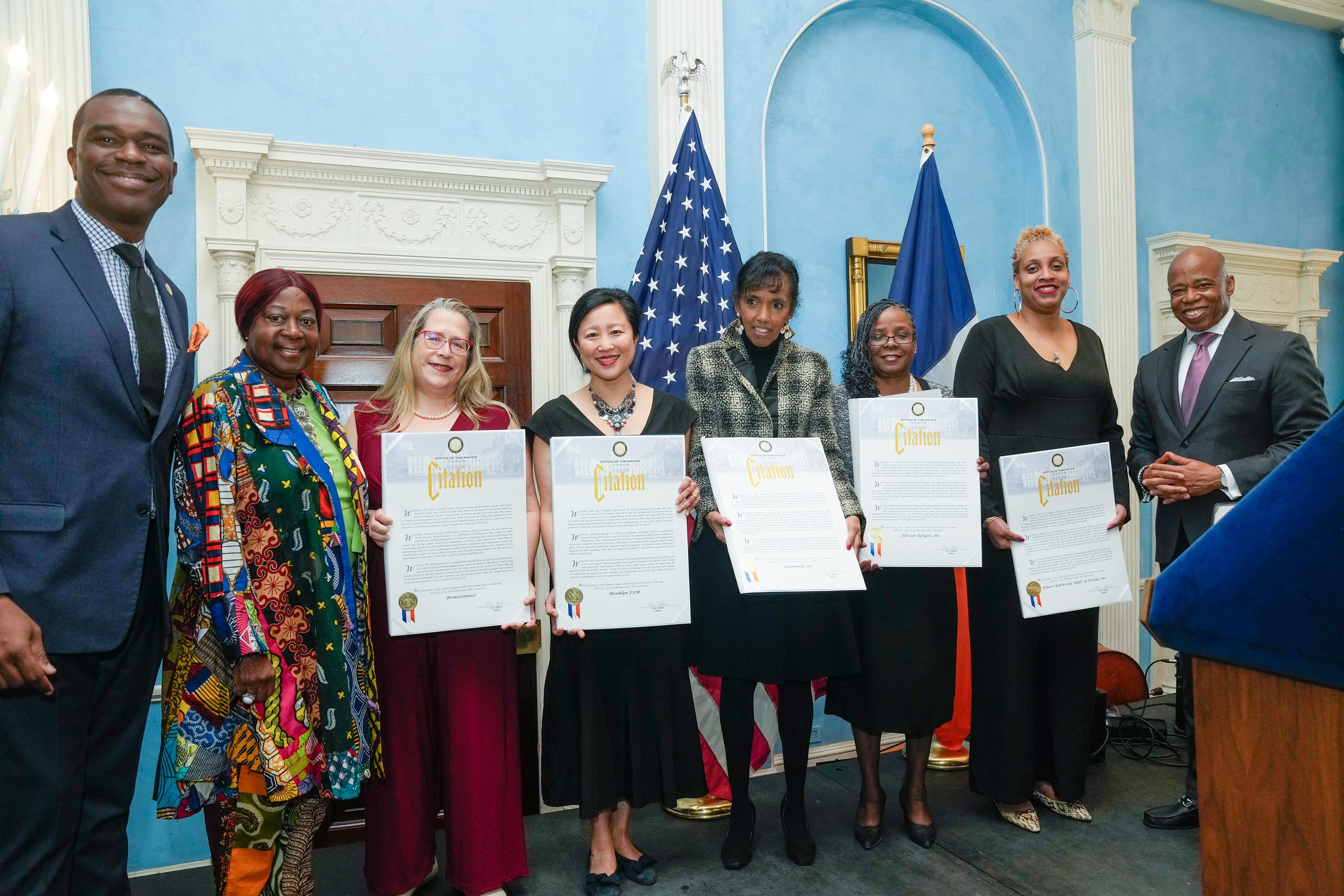
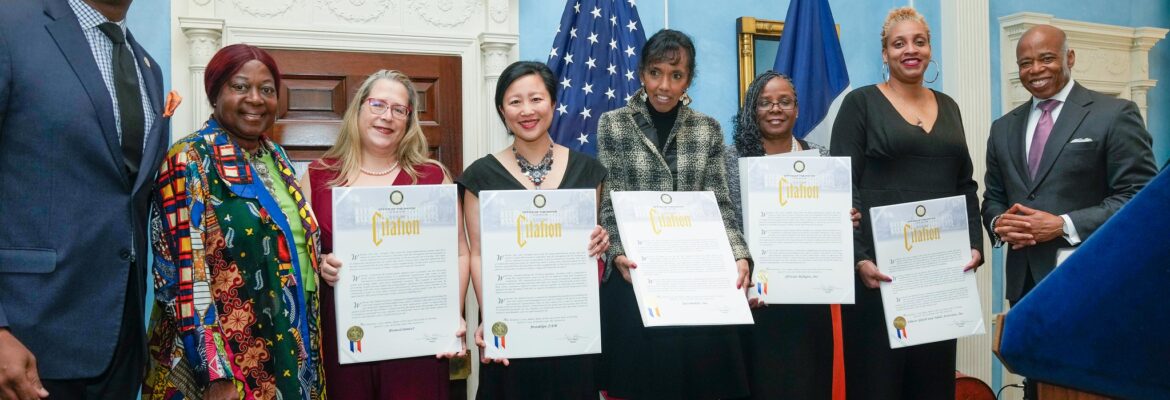
New York City Mayor Eric Adams hosts a reception to celebrate non-profit and faith-based organizations at Gracie Mansion on Tuesday, April 30, 2024. Michael Appleton/Mayoral Photography Office
Banner Image: New York City Mayor Eric Adams hosts a reception to celebrate non-profit and faith-based organizations at Gracie Mansion on Tuesday, April 30, 2024. Image Credit – Michael Appleton/Mayoral Photography Office


There are no comments yet
Why not be the first