
Staten Island, New York, Nationwide: All Older Adults Can Prevent Falls With Funding From Older Americans Act: Senator Gillibrand Applauds Senate Passage
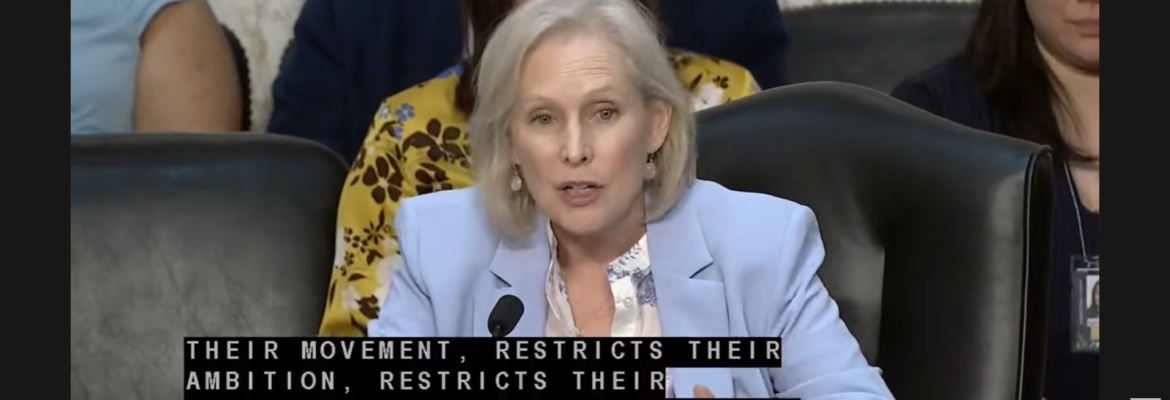
See below for the Senate hearing on fall prevention, along with virtual press conference hosted by Senator Gillibrand after the unanimous bipartisan Senate passage of the bill. In order to become law, this exact bill must be passed by the House of Representatives (if it is amended at all, it must then return to the Senate before continuing on to the president’s desk). The president has expressed support for older Americans, so it is likely he would support this as well (he did sign its last reauthorization during his previous presidency:
At the time of this committee hearing, the Older Americans Act, a bill that has just passed the Senate, had been reintroduced by Senator Gillibrand and others. As we learn in this committee hearing, this Act is extremely important. Every elderly American, 65 and older, can take advantage of many of the programs that are provided by the funding in this bill. This includes senior centers, where older adults can get together at set times and days and do fun activities with groups large and small. This can help greatly with isolation. In addition, as you learn at this hearing, this Act also pays for support systems for older Americans, along with classes on mobility, balance, home modifications, and other strategies to prevent adults from falling at home or out of the house. Unfortunately, falls are a reality for many older people. They can be walking outside to get exercise, and maybe their vision or their balance has declined with age.
They might have a fall, and when they are older, they are more likely to break something or suffer a serious injury and even death. This has the effect of making some older people become afraid to leave their homes. But then this leads to social isolation, which is just as bad and in some cases more detrimental to a person’s health than many diseases. Loneliness and depression have reached epic levels among this population, and things like exercise can help drastically with heart health, cancer prevention, mitigation of chronic diseases such as arthritis, and much more. But if someone has become afraid to venture outside due to a fear of falling, their risk of health complications can become even worse.
It costs the healthcare system annually $80 billion, according to the CDC (Centers for Disease Control and Prevention). Whereas prevention can cost the taxpayer very little, in the area of hundreds of dollars, it can save thousands, since many of the costs for this healthcare are paid by Medicare and sometimes Medicaid – both of which are taxpayer funded.
Some of the ideas were great, including reminding everyone about Lifeline, you know the “I’ve fallen and I can’t get up,” company. That does have a cost to the individual, as do most of the other options discussed. But the YMCA services, which include fall prevention classes, are often free for Medicare Advantage members (as one of the very few benefits available to members of those plans), but have a low cost, under $10 per class, for their other courses. Everyone over a certain age can certainly benefit from these classes, and we will be reaching out to the YMCA for more details about their offerings.
Senator King put forth a very good idea: bath mats and grab bars should be paid for by Medicare or other programs funded by taxpayers. A large portion of the aforementioned falls occur in the bathroom, and an inexpensive bath mat (two is best – one for inside the tub and one for the step outside of the tub) would certainly do quite a lot to prevent this issue. Grab bars are great for people who tend to lose their balance while bathing or showering, or even for people who might have slipped on their own conditoiner once or twice. Having that bar available can be a life saver in those situations. Initial install for these is currently available for a tax credit, but they still have to be installed, which comes with a thousands-of-dollar cost.
See below for Senator Gillibrand’s statement after this hearing, along with her statement on the passage of the Older Americans Act in the Senate, and other politicians’ statements on the same bill:
GILLIBRAND HOLDS AGING COMMITTEE HEARING ON PREVENTING FALLS, REQUESTS STUDY ON EMERGING TECHNOLOGY THAT CAN HELP SENIORS AGE SAFELY
Washington, D.C. – U.S. Senator Kirsten Gillibrand (D-NY), ranking member of the U.S. Senate Aging Committee, held a committee hearing alongside Chairman Rick Scott (R-FL) to examine the threat of falls among older Americans and evaluate how technology, community-based programs, and federal initiatives are improving prevention, early detection, and recovery. The hearing also highlighted the proven impact of Area Agencies on Aging, Administration for Community Living-supported community programs, and private sector innovation.
The hearing follows Gillibrand’s request for a Government Accountability Office (GAO) study about how technology can transform the lives of older adults and people with disabilities.

“Falls pose a significant health risk to our seniors and jeopardize their ability to age safely in the locations of their choice,” said Senator Gillibrand. “Emerging technologies like wearable devices have the potential to significantly improve the lives and safety of older adults and people with disabilities, but we must thoroughly investigate these technologies to understand their limitations. That’s why I requested a GAO study on these technologies and how the federal government can facilitate their adoption.”
As discussed at the Aging Committee hearing, emerging technologies—like artificial intelligence (AI) and wearable devices—have the potential to significantly improve the lives of older adults and adults with disabilities by helping prevent falls and allowing seniors to more easily age in place. For instance, AI might help people with disabilities communicate with others and is being explored as a means to address social isolation for some older adults. Further, wearable devices can allow individuals to live independently by helping older adults monitor their health, detecting falls, and accessing help.
However, these technologies also come with some accessibility challenges that should be thoroughly investigated. Gillibrand’s letter asks the following questions of GAO:
- Which technologies show promise in helping older adults and adults with disabilities live safely and independently in their homes and communities, including in areas such as injury prevention, mitigation, and recovery, promoting health and well-being, and reducing isolation and loneliness?
- What challenges do older adults and adults with disabilities face when adopting these technologies?
- What role can the federal government play in facilitating and monitoring the adoption of these technologies among older adults and adults with disabilities?
Gillibrand’s letter is co-signed by Senators Angus King (I-ME) and Andy Kim (D-NJ).
The text of the letter can be found here.
Below was provided to accompany the virtual press conference, which can be viewed at the end of the above video:
U.S. Senator Kirsten Gillibrand (D-N.Y.) held a virtual press conference to celebrate unanimous Senate passage of her bipartisan Older Americans Act (OAA) Reauthorization Act. The legislation would reauthorize the essential services provided by the OAA, including programs that provide nutrition assistance, meal deliveries, transportation services, caregiver support, long-term care, and more. It now heads to the House of Representatives for a vote.
The OAA has been a lifeline for American seniors since its passage in 1965. Every year, OAA programs deliver over 250 million meals, provide more than 14 million rides, and offer 30 million hours of caregiver support and in-home assistance with daily tasks like bathing and dressing. In total, about one in six older adults across the country rely on OAA-funded services every year.
AT 0:07 – ON THE HARM SENIORS ARE FACING UNDER THE TRUMP ADMINISTRATION:
GILLIBRAND SAID: “Every day, I hear from older New Yorkers who are struggling due to the Trump administration’s recklessness. Over the last two years, cuts to Medicaid and food assistance have pushed many families to the brink. At the same time, rising prices on everything from groceries to gas are making it harder for seniors to put food on the table, fill their cars with gas, and heat and cool their homes. On top of the typical mobility and health challenges that come with aging, this is an extraordinary burden that our seniors are being forced to bear.”
AT 1:40 – ON THE OAA’S BENEFITS TO AMERICAN SENIORS AND TAXPAYERS:
GILLIBRAND SAID: “Every year, OAA programs deliver over 250 million meals, provide more than 14 million rides, and offer 30 million hours of caregiver support and in-home assistance with daily tasks like bathing and dressing. In total, about one in six older adults across the country rely on OAA-funded services every year. As an added bonus, the OAA is incredibly cost-effective. By helping seniors avoid extended hospital stays and care in nursing homes, OAA programs save taxpayers billions of dollars every year. In fact, every dollar invested in OAA services generates over three dollars in community value.”
AT 7:39 – ON PRESIDENT TRUMP’S THREAT TO ILLEGALLY IMPOSE 50% TARIFFS ON CANADIAN GOODS IN RETALIATION FOR WILDFIRES:
GILLIBRAND SAID: “What President Trump is doing is illegal. He is not allowed to issue tariffs because he’s upset about a wildfire. He’s not even supposed to be the one issuing tariffs anyways. It’s supposed to be Congress. So he’s usurped the power of Congress to do what he wants to do, and 50% is really going to hurt New Yorkers, because they’re putting tariffs on food that we eat, on lumber, on the housing that we’re going to build. The cost will rise for housing and food because of those tariffs.”
GILLIBRAND HOLDS VIRTUAL PRESS CONFERENCE CELEBRATING SENATE PASSAGE OF HER BIPARTISAN LEGISLATION TO SUPPORT SENIORS
Washington, D.C. – Today, U.S. Senator Kirsten Gillibrand (D-NY) held a virtual press conference to celebrate unanimous Senate passage of her bipartisan Older Americans Act (OAA) Reauthorization Act. The OAA Reauthorization Act renews funding for the essential services provided by the OAA, including programs that provide nutrition assistance, meal deliveries, transportation services, caregiver support, long-term care, and more.
“The OAA is a lifeline for American seniors, and I am proud to have successfully led the charge for its reauthorization in the Senate,” said Senator Gillibrand. “Our seniors have spent their lives building our communities, raising families, and serving our country. They have earned the right to age with health, dignity, and independence in the settings of their choice—and OAA programs help them do just that. I am proud to see this legislation pass the Senate with unanimous support, and I am calling on the House to take up and pass this legislation immediately.”
The OAA has been a lifeline for American seniors since its passage in 1965. Every year, OAA programs deliver over 250 million meals, provide more than 14 million rides, and offer 30 million hours of caregiver support and in-home assistance with daily tasks like bathing and dressing. In total, about one in six older adults across the country rely on OAA-funded services every year.
However, authorization of the OAA expired at the end of 2024, jeopardizing OAA programs’ long-term future.
Specifically, this year’s OAA Reauthorization Act reauthorizes the following programs through fiscal year 2030:
- the national eldercare locator service;
- regional aging and disability resource centers;
- grants to support counseling and assistance on pensions and other retirement benefits;
- grants to support home-delivered nutrition services like Meals on Wheels;
- programs to facilitate the delivery of supportive services to tribal organizations; and
- programs to prevent elder abuse, neglect, and exploitation.
The bill also modifies existing programs for older individuals to promote innovation and flexibility, strengthen program integrity, and better support family caregivers and direct care workers.
The full text of the bill can be found here.
Senators Sanders, Cassidy Applaud Senate Advancement of Bipartisan Reauthorization of the Older Americans Act
WASHINGTON, July 15 — Sen. Bernie Sanders (I-Vt.), Ranking Member of the Senate Committee on Health, Education, Labor, and Pensions (HELP), and Chairman Bill Cassidy (R-La.) applaud the Senate unanimously passing the Older Americans Act (OAA), a critically important law that provides services supporting the health, independence and dignity of older adults across the nation. The bill’s reauthorization effort was also led by Senators Rick Scott (R-Fla.), Kirsten Gillibrand (D-N.Y.), Susan Collins (R-Maine), Tim Kaine (D-Va.), Ed Markey (D-Mass.), Lisa Murkowski (R-Alaska) and Ben Ray Luján (D-N.M.).
“I’m delighted that the Senate unanimously passed legislation last night to expand and improve the Older Americans Act,” Sanders said. “This legislation begins to pay attention to the urgent unmet needs of seniors in America and what we should do as a nation to reduce the senior poverty rate, prevent hunger, combat loneliness and isolation and improve the health and well-being of some of the most vulnerable people in our country. Not only does the Older Americans Act save lives and ease human suffering, it saves money. In fact, it costs less to feed a senior for an entire year through the Older Americans Act than it does for a senior to spend one night in a hospital. While there is much more that we must do to reduce the senior poverty rate in America and to make sure that every senior in America has access to the services they need this bi-partisan legislation is a very good step forward.”
“The Older Americans Act helps Americans remain independent and connected to the communities they helped build. For more than 60 years, the Older Americans Act has connected seniors with services that help them age with dignity,” Cassidy said. “This bipartisan reauthorization ensures that support continues as the nation’s aging population grows.”
The OAA, first signed into law in 1965, funds a wide range of services. The act has provided vital nutrition, social, economic and health services to millions of older adults for over six decades. Last reauthorized in 2020, OAA expired in the 118th congress. The previous OAA reauthorization effort, also lead by Sanders and Cassidy, passed the Senate unanimously in 2024 but did not pass the House.
The bipartisan reauthorization of the Older American Act marks a major step forward in strengthening the nation’s commitment to older adults. The legislation expands critical nutrition, health and community-based services at a time when millions of older adults are facing growing unmet needs. It would reauthorize OAA programs through fiscal year 2030 and make improvements to better support family caregivers and direct care workers, Tribal seniors and those with disabilities in their communities.


There are no comments yet
Why not be the first