
Staten Islanders, New Yorkers Facing Food Insecurity: Mayor Reminds SNAP Eligible Residents To Reapply Now
The below announcements relate to food insecurity and how it is affecting states, SNAP recipients, and low-income New Yorkers (this unfortunately included 700,000 children who were kicked off of SNAP when their parents lost it due to the new strict work requirements). Some of those who lost their benefits as a result of the new rules may have become eligible by doing charity volunteer work, finding a minimum wage job for a small number of hours and no healthcare benefits (many of the largest and most profitable companies provide part-time employment to many lower-level employees intentionally to save on health insurance plan costs, according to Senator Sanders), or possibly obtaining a waiver due to childcare requirements, disability care for a relative, aging relative care or their age, or other reasons they may qualify for an exemption. It is important to note that those who qualify for SNAP benefits are really very low income, where 130% of the Federal Poverty Level in NYC equals about $430 per week, which is what is the limit to qualify for SNAP. That kind of income, if the sole earner in a family, will barely cover rent in most parts of the city. While someone could be qualified for Section 8 (or housing assistance worth 80% of the rent), the applications for that program have been frozen since 2009 , except in rare cases of proven domestic violence, accompanied by direct referral from an organization assisting survivors. Even then, victims can wait months for a voucher and an available unit, since there are not that many places that accept the vouchers, and there is a negative perception of them among long time residents. While there are several organizations that provide assistance to survivors fleeing domestic violence, they are focused on short-term funding to help someone get back on their feet in a new place. The heavily advertised waitlist reopening for exactly one week did not do much to help the backlog that exists in the Section 8 voucher system, where there aren’t really many new vouchers issued, and there are many more people that qualify for them than actually get them. The situation is not much better in New Jersey.
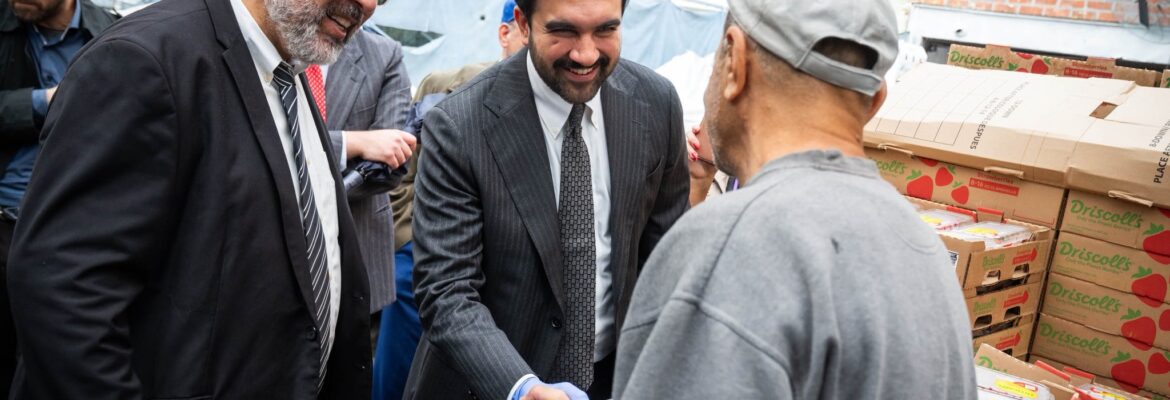
See below for Mayor Mamdani’s outreach announcement to those New Yorkers who have lost their SNAP benefits. The reapplication and renewed eligibility window opened on October 1st. Following that will be Senator Gillibrand’s details about her own food pantry visits Upstate, which were press gaggles and a press conference. You will also find a video below from former Comptroller Brad Lander at the Sukkot ceremony where Mayor Mamdani was invited to attend and speak for a few minutes, as well as distributing food at the pantry for the local community, clips of which are in the video below (Monday, September 28th, Mayor Participates in Food Distribution at Food Pantry in Queens):
Mayor Mamdani Launches Citywide Push to Get SNAP Benefits Back to New Yorkers
New Yorkers who lost benefits under expanded federal work requirements can reapply beginning Oct. 1
City outreach and assistance helped more than 220,000 New Yorkers maintain SNAP, with more than 98% of eligible recipients keeping their benefits
NEW YORK – Mayor Zohran Kwame Mamdani today announced a citywide outreach campaign to help New Yorkers who lost their Supplemental Nutrition Assistance Program (SNAP) benefits under new federal work requirements re-apply for SNAP as they become eligible beginning October 1.
“Food should not be a luxury in New York City. This year, our administration used every tool at our disposal to help New Yorkers hold on to the food assistance they rely on, and more than 220,000 people were able to keep their SNAP benefits,” said Mayor Mamdani. “Now, we’re getting back to work to help New Yorkers who were left behind by these federal cuts get their benefits back. If you lost SNAP, we want you to know: The City is here to help you re-enroll and put food on your table.”
“Nutritious foods should be affordable and accessible to every New Yorker,” said Deputy Mayor for Health and Human Services Dr. Helen Arteaga. “At a time when too many New Yorkers are already struggling to make ends meet, the federal government has created new barriers to accessing food assistance. New York City has stepped up to help, and we will continue doing everything we can to connect New Yorkers with the benefits they need.”
“I’m incredibly proud of the work our teams and community partners did to protect New Yorkers from federal changes that only make it harder for low-income Americans to put food on the table,” said DSS Commissioner Erin Dalton. “We reduced the paperwork burden on New Yorkers and helped hundreds of thousands of people keep their SNAP benefits, preserving more than $800 million in food assistance. Still, 26,500 New Yorkers lost benefits, most of them young men without children. On October 1, they become eligible to reapply, and we’re bringing the same smart, targeted approach to get that number as close to zero as we can. Through an awareness campaign and targeted outreach, we’ll reach these New Yorkers directly and connect them to the city resources that can help.”
This year, Mayor Mamdani directed an unprecedented, citywide response to new federal SNAP eligibility requirements. Since January, the City’s efforts have included:
- Expansive door-knocking and phone-banking campaigns led by the Mayor’s Public Engagement Unit (PEU) that resulted in 10,000 doors knocked and 40,000 person-to-person phone calls.
- Interagency coordination to help SNAP recipients identify and document eligible exemptions, including medical and caregiver exemptions.
- Partnerships with more than 100 community-based organizations to create volunteer, workforce training and service opportunities that satisfy federal work requirements.
- Public awareness campaigns using flyers and palm cards, social media, bus shelters, LinkNYC kiosks, NYC Radio and other City-owned communications channels.
- Information sessions for community partners, including webinars for more than 6,500 partners, nearly 50 training sessions more than 40 pop-up events in communities serving New Yorkers at risk of losing benefits.
As a result, the administration assisted more than 220,000 New Yorkers at risk of losing SNAP benefits, reducing the number of people projected to lose their benefits by 65%. More than 98% of eligible SNAP recipients maintained access to food assistance.

Now, with the re-enrollment window opening, the administration is expanding community-based outreach to reach approximately 26,500 New Yorkers who lost SNAP benefits under the expanded federal work requirements, which took effect on March 1, 2026.
The City’s efforts will focus on reducing administrative burdens, ensuring eligible SNAP recipients receive exemptions and connecting New Yorkers who must comply with work requirements to employment, education, and community service opportunities.
In New York City, 1.6% of SNAP households lost benefits, disproportionately affecting young, single men.
About SNAP Federal Work Requirements
On March 1, as part of President Trump’s “One Big Beautiful Bill,” the federal government expanded SNAP work requirements for Able-Bodied Adults Without Dependents (ABAWDs). As a result, thousands of New Yorkers who were previously exempt must now meet federal work requirements to maintain their benefits.
Affected SNAP recipients can meet the requirements by:
- Working at least 20 hours per week, or 80 hours per month.
- Participating in an approved job training or education program for at least 20 hours per week, or 80 hours per month.
- Volunteering with an approved organization for the required number of hours based on their SNAP benefit amount.
- Participating in other qualifying activities, including approved job search activities.
Beginning in June, newly affected recipients began losing benefits under the federal government’s “three-strike” policy, which reduces or terminates SNAP benefits after three months of noncompliance.
New Yorkers who have lost their SNAP benefits or believe they may qualify for an exemption should call 718-SNAP-NOW (718-762-7669) for assistance. Additional information is available through the ACCESS HRA app, or at nyc.gov/ACCESSHRA.
Mayor Mamdani’s visit to the food pantry, from the Bukharian Community in Kew Gardens, Queens:
KEW GARDENS HILLS, QUEENS — New York City Mayor Zohran Mamdani @nycmayor joined Rabbi Shlomo Nisanov at Kehilat Sephardim of Ahavat Achim in Kew Gardens Hills on Monday, the third day of Sukkot, to help distribute free food to New Yorkers.
The visit highlighted the longstanding food-assistance work carried out through the synagogue and the Kehilat Sephardim Food Pantry, which has served thousands of families in Queens and beyond. The pantry says it distributes thousands of food packages and holiday meals each month to families in need.
Rabbi Nisanov, a longtime spiritual and community leader who is sometimes referred to by members of the Bukharian community as its “unofficial mayor,” has spent years combining religious leadership with charitable work and interfaith outreach.
Zoharan said he’s very proud Rabbi Nisanov is also a member of his Jewish Advisory Council.
According to the text of a post shared by Mayor Mamdani on X, the mayor wrote:
“Moed Tov! Суккот муборак! Today I joined Rabbi Shlomo Nisanov in Kew Gardens to distribute free food to New Yorkers in honor of Sukkot.
Thank you to Rabbi Nisanov for the reminder that community and service deepen our most joyful holidays.”
The mayor’s visit came during Sukkot, which began on September 26 this year and continues through October 4.
For Rabbi Nisanov and the Kehilat Sephardim community, the food distribution was another continuation of years of work helping families celebrate Shabbat and Jewish holidays with food on their tables while also serving New Yorkers from a wide range of backgrounds.
The gathering brought together City Hall and one of Queens’ most active Jewish community institutions around a simple message of Sukkot: celebrating the holiday while making sure neighbors in need are not forgotten.
GILLIBRAND JOINS LEADERS OF NY FOOD BANKS TO CALL OUT TRUMP ADMINISTRATION’S MASSIVE CUTS TO FEDERAL SNAP FUNDING
***Watch News12’s Coverage of Senator Gillibrand’s Press Conference Here***
New York State Will Be Responsible for Estimated $168 Million More Annually as SNAP Cost Responsibilities Shift to State and Local Governments
Washington, D.C. – In case you missed it, on Monday, U.S. Senator Kirsten Gillibrand stood with CEOs from food banks around the state to call out the change in Trump’s “Big Beautiful Bill” that will imminently shift billions of dollars in Supplemental Nutrition Assistance Program (SNAP) cost responsibilities from the federal government onto state and local governments, resulting in major financial burdens on New York State. This comes as President Trump’s reckless war in Iran and chaotic tariffs have raised grocery prices for New York families and made it increasingly difficult to put food on the table.
“President Trump has consistently threatened and cut the essential services that serve as the backbone of our nation,” said Senator Gillibrand. “At a time when people can barely afford a cart of groceries or a tank of gas, this president is making states and localities bear excruciating cost burdens for SNAP programming while he is funding tax cuts for the richest people in the country and pouring billions into a war overseas.”
The change, which is slated to take effect on October 1 and is part of a broader slate of harmful cuts to the SNAP program, will reduce the federal share of SNAP administrative expenses from 50% to 25%, with states and localities now responsible for covering 75% costs. Counties in New York State are expected to be on the hook for $168 million annually as a result.
“It’s a cut that we’re really going to struggle to weather,” City Harvest CEO Jilly Stephens told News12.
More than 2.7 million New Yorkers rely on SNAP to feed their families each month. Without this additional federal support, counties across the state may be forced to raise local taxes or slow down the review of SNAP applications.
“You can think about it in terms of funding, but how we want you to think about it is less food on tables, and less food in lunchboxes,” Kristine Borok, president and CEO of Feeding Westchester, told News12.
“For every meal that we deliver, the SNAP program can deliver nine,” said Stephens. “The food banks across New York State, and across the country, are not in a position to fill the gap.”
Food pantries will need individual and corporate donations in order to fill the need that this expected shift will create. “We want to put out the message – keep stepping up, keep supporting,” Borok said.
“My job is to protect New York families,” Gillibrand said. “If we have families that can’t get enough to eat, that’s immoral, so we’re going to fight very hard on the merits, and we’re going to fight politically.”
GILLIBRAND CELEBRATES $6 MILLION INVESTMENT FOR FOOD BANK FOR NYC’S HUNTS POINT FOOD DISTRIBUTION CENTER
Bronx, NY – Today, U.S. Senator Kirsten Gillibrand, member of the Senate Appropriations Committee, stood with Bronx elected officials and Food Bank For NYC to celebrate the $6 million she secured for major renovations and modernization of Food Bank For NYC’s Hunts Point Food Distribution Center in the Bronx.
“Food Bank For NYC distributes millions of pounds of food to families, seniors, and other New Yorkers in need each year,” said Senator Gillibrand. “I’m proud to have led the effort to secure $6 million in federal funding to support the comprehensive renovation and expansion of the Hunts Point Food Distribution Center, and I’m committed to fighting for more federal resources to expand access to healthy and nutritious food, promote local job creation, and help New Yorkers thrive.”
“This incredible investment in Food Bank For New York City’s Hunts Point warehouse is a commitment to addressing food insecurity and expanding access to nutritious food in communities that need it most,” said New York State Senator Jose M. Serrano. “This critical funding will strengthen our local food distribution infrastructure, helping ensure that Bronx families have reliable access to healthy food while improving the health and well-being of our communities. As the Senator of the 29th Senate District, I am grateful to Senator Kirsten Gillibrand and our fellow elected officials for securing this important investment for our communities.”
“Hunts Point is not only the heart of New York City’s food system; it is critical infrastructure that millions of New Yorkers depend on every day,” said New York State Assemblymember Amanda Septimo. “This $6 million investment will strengthen that infrastructure, expand Food Bank For New York City’s ability to get millions more pounds of food to families, and ensure The Bronx continues to lead the fight against hunger across our city. At a moment when families are feeling enormous pressure at the grocery store, investments that increase our capacity to feed New Yorkers could not be more important.”
“I grew up here in the South Bronx, raised by a single mother who relied on food distributions powered by Food Bank For New York City to help us get by,” said Council Member Justin E. Sanchez. “At a time when the White House is determined to cut programs that feed New Yorkers, their work is more important than ever. Senator Gillibrand’s outstanding investment will strengthen the Food Bank’s infrastructure, expand its capacity, and help ensure it can meet this moment as more New Yorkers are forced to turn to its network for support.”
“We are grateful to Senator Gillibrand for her support of vital federal food and nutrition programs and for helping secure this $6 million investment in Food Bank For New York City’s Hunts Point Food Distribution Center,” said Bob Silvia, Chief Procurement and Operations Officer at Food Bank For NYC. “Investments in both nutrition assistance programs and food distribution infrastructure are essential to ensuring that families can access food when they need it most.”
Food Bank For NYC is the city’s largest hunger relief organization, and its 90,000 square foot Hunts Point Distribution Center is the city’s largest hunger relief logistics hub. Last year, more than 90 million pounds of food was distributed through the Food Bank For NYC network, including nearly 31 million pounds of produce.
Since 2019, visits to New York City food pantries have increased by 82%. Meanwhile the Trump administration has slashed the Supplemental Nutrition Assistance Program (SNAP) and caused prices for groceries to skyrocket. More than 1.6 million people in New York City rely on SNAP, but with new expanded work requirements and eligibility rules, 223,000 New Yorkers are at risk of losing food assistance. Additionally, with the federal government shifting substantial SNAP costs to states, New York State, counties, and the city will be on the hook for an estimated $1.3 billion in administrative and benefits costs annually.



NYC Mayor Zohran Mamdani
Zohran Mamdani was sworn in as Mayor of the City of New York on January 1st, 2026. Prior to becoming Mayor, he represented the 36th New York State Assembly District and its neighborhoods of Astoria, Ditmars-Steinway, and Astoria Heights.
There are no comments yet
Why not be the first